
Instant PayID Withdrawal Australian Casinos: How It Works
 Available in AU
How Instant PayID Withdrawals Work at Australian Casinos
18+. This page discusses offshore-licensed operators. Online casino games are not licensed for supply to Australian residents under the Interactive Gambling Act 2001 — it is the operator, not the player, who is breaking the law by offering them here. Nothing on this page is legal advice.
PayID gets marketed as "instant" so often that the word has stopped meaning anything. It’s worth taking apart, because the instant part is real — but it only covers one half of the trip your money takes.
A withdrawal request doesn’t go straight from your casino balance to your bank account. It goes through two separate systems that have nothing to do with each other, run by different people, on different clocks. One of them really is instant. The other one is a business process, staffed by humans, and it behaves like every other business process: fast when nobody’s busy, slow on a Sunday night.
Confusing the two is where most of the disappointment comes from. Someone reads "PayID — instant" on a promo banner, submits a withdrawal, and then waits four hours wondering what went wrong. Nothing went wrong. They just didn’t know there were two clocks running.
The two-stage structure
Split the process into Stage 1 and Stage 2 and the confusion mostly disappears.
Stage 1 — the casino’s own processing. This is the operator reviewing your request: checking your KYC status, checking wagering is cleared, checking the name on the withdrawal matches the name on the account, and in some cases running a manual look at the request before it’s approved. This stage happens entirely inside the casino’s systems, before any money moves.
Stage 2 — the payment rail. Once the casino approves the withdrawal, it hands the payment over to PayID, which runs on Australia’s New Payments Platform (NPP). A PayID transfer settles through the NPP in under 60 seconds. That part genuinely is instant, and it’s the part the marketing is talking about.


The word "instant" in "instant PayID withdrawal" describes Stage 2 only. It says nothing about Stage 1. A casino can truthfully advertise instant PayID payouts while still taking hours to approve the request that triggers them — and that’s not false advertising, it’s just an incomplete sentence.
How long Stage 1 actually takes
Stage 1 isn’t fixed. According to one industry review of operator conditions, automated approval — where a system checks the request without a person looking at it — typically clears in five to thirty minutes. Manual review, where someone on the payments team has to open the request and sign off on it, runs two to twenty-four hours. Both windows can stretch further for a first withdrawal or a large one, where extra checks get added on top.
That range is wide because it’s describing two different processes wearing the same name. An automated check is software matching fields against rules — verified account, cleared wagering, amount within limits — and either passing or failing it in minutes. A manual check is a person, during their shift, opening a queue and working through it in order. The gap between "thirty minutes" and "twenty-four hours" is the gap between a script and a rostered employee.
Why manual review exists at all, and what it costs you
It would be easy to assume manual review is just friction — a stalling tactic dressed up as security. Having sat on the side that writes these rules, I’ll say it’s not that simple, though it isn’t purely protective either. A manual check on a first or large withdrawal is genuinely there to catch account takeovers, mismatched identities, and bonus abuse before money leaves the building. It’s also, undeniably, a cost-control lever: reviewing the biggest outflows by hand is cheaper than automating every edge case, and slowing the biggest numbers down costs the operator very little goodwill compared to slowing down every payout.
Both things are true at once. That’s the part rarely said out loud.
Legal disclaimer
This information is general in nature. It’s illegal for operators to offer online casino games to Australian residents, though individual players are not breaking the law by accessing offshore sites.
What it means practically: according to that same industry review, first withdrawals above a threshold in the AU$2,000–AU$5,000 range often get pulled into manual review even at casinos that automate everything else. If your first cash-out happens to land above that line, don’t expect the "instant" badge to apply to it. It won’t, and that’s not a malfunction.
The other detail worth knowing: manual-review casinos don’t run a 24/7 desk. They process withdrawals in staffed batches, so a request submitted late on a Sunday night can sit until someone’s rostered on Monday. This isn’t a system failure. It’s a business running on business hours, the same as any other business running on business hours.
The parts that are identical everywhere
Some steps in this workflow are just fixed requirements — not competitive features, not something one casino does better than another. They exist because the license terms and, in a fully regulated market, the underlying law require them.
Verification comes first, always. Every operator requires identity verification with a government-issued ID before releasing any withdrawal, and this typically completes within 24 hours once submitted. There is no route around this step, and no casino that skips it is one worth using — a payout without ID checks isn’t a convenience, it’s a sign the operator isn’t following its own licensing terms.
Incomplete KYC is the single biggest reason withdrawals stall. Not fraud checks, not payment rail congestion — an unfinished verification queue. A player who uploads ID only after requesting their first withdrawal is asking Stage 1 to do two jobs at once: verify the person and process the payment. Splitting those — finishing verification during account setup, before there’s any money on the table — removes the most common delay before it happens.


The name has to match, exactly. The name on the casino account has to match the name on the receiving bank account, card, or crypto exchange, character for character. This isn’t a formality. PayID resolves to a bank account, not to a person’s claim about who they are, and a name mismatch is one of the fastest ways to get a withdrawal frozen for manual review regardless of how automated the rest of the process is. If you signed up with a nickname, a maiden name, or a slightly different spelling of your legal name, fix it before you request a payout, not after.
Why PayID’s speed is a payment-rail fact, not a casino promise
It’s worth separating what PayID itself guarantees from what any given casino adds on top, because the two get bundled together in marketing copy until they sound like the same claim.
PayID is an addressing layer over the NPP — you register a phone number or email against a bank account once, and from then on that identifier resolves to the account instantly at settlement time. The sub-60-second settlement is a property of the NPP infrastructure itself, the same rail that banks and other businesses use for everyday transfers. It has nothing to do with casino software, and no operator can make it faster or slower. When a casino’s payment page says "PayID — instant," that specific claim is simply describing the rail underneath it correctly.
What the casino controls is everything before that point: whether your KYC was cleared in advance, whether the withdrawal amount trips a manual review, whether it’s a Tuesday afternoon or a Sunday midnight. So when two casinos both offer PayID and one pays out faster than the other, the difference isn’t in PayID — it’s entirely in Stage 1, in how that specific operator has built its approval queue.
This is also why PayID isn’t automatically the right tool for every amount. According to the same industry review referenced above, PayID is generally the recommended default for withdrawals under AU$1,000, precisely because smaller amounts are less likely to trip the manual-review threshold and more likely to sail through Stage 1 on the automated track — letting the instant Stage 2 settlement actually show up as instant. For larger sums, that same review points toward USDT on the TRC-20 network instead, on the reasoning that once a withdrawal is big enough to trigger manual checks anyway, a stablecoin rail avoids some of the friction fiat transfers pick up at that size. The comparison between PayID and crypto as withdrawal methods is covered in more detail further down this page — the point here is narrower: the "instant" label attaches to the rail, and the rail is only as fast as what happens before you reach it.
What a clean PayID withdrawal looks like end to end
Put together, a straightforward case runs like this:
- Identity verification completed during sign-up, before any deposit — not triggered by the first withdrawal request.
- Deposit and play, wagering requirements cleared according to the bonus terms accepted at the time.
- Withdrawal requested via PayID, with the receiving bank account registered under the exact same name as the casino account.
- Stage 1: the casino checks the request. If it’s automated and under the manual-review threshold, this takes minutes. If it’s a first withdrawal, a large one, or the operator reviews everything by hand, it takes longer — hours, not minutes, and possibly until the next business shift if submitted late on a weekend.
- Stage 2: once approved, the payment moves over the NPP and lands in the bank account in under a minute.
Every delay complaint I’ve seen traced back to one of the italicized conditions in step 4 not being met — not to PayID, and not to the NPP. The rail did its job in seconds. The queue in front of it did not.
What "instant withdrawal casino" actually promises
According to one industry survey of operator terms, a working set of instant-withdrawal casinos share two traits: Curaçao licensing or an equivalent, with no listing on the ACMA blocked register, and support for at least one genuinely fast payout method for Australian players — PayID, crypto, or both. That’s a description of eligibility, not a guarantee of speed on any individual transaction. It tells you the operator has the rails in place. It doesn’t tell you which stage-1 queue your particular request will land in.
Read it that way, and "instant PayID withdrawal" stops being a promise about your specific payout and becomes what it actually is: a statement about the fastest path available, assuming your account is verified, your wagering is clear, your name matches, and your timing doesn’t collide with a staffing gap. Meet those conditions and the "instant" part of the name does what it says. Miss one, and the delay you hit isn’t PayID’s — it’s Stage 1’s, every time.
This information is general in nature. It’s illegal for operators to offer online casino games to Australian residents, though individual players are not breaking the law by accessing offshore sites. If gambling is causing you harm, contact Gambling Help Online or call 1800 858 858, free and available 24/7.
Pokies and Online Casinos Offering Instant PayID Withdrawals
Pokies players and table game players don’t actually shop for casinos the same way. Someone chasing a progressive jackpot on a Megaways title cares about the game library, the provider mix, the RTP variance across studios. What they check on the payments page is one line: does this operator pay out fast, and does it do it in Australian dollars without a detour through a card network. That’s the audience this section is for — not the crypto‑native high roller from the next section, but the person who wants to spin pokies, cash out, and see the money land in their own bank app.
PayID fits that audience better than almost anything else on offer. It’s a domestic rail, it settles in the currency the player already thinks in, and it doesn’t ask anyone to understand a wallet address first. The catch — and it’s a real one — is that "pokies casino" and "PayID casino" aren’t the same set. A site can have hundreds of slot titles from BGaming, NetGame or LiveVegas and still route every payout through crypto only, or through crypto plus a slower e‑wallet. The two attributes have to be checked separately, because a big game library says nothing about how the money comes back.
What separates a pokies‑heavy operator from a payments‑heavy one
A casino built around slots content optimises for something specific: variety, new releases, provider partnerships. None of that overlaps with cashier engineering. The withdrawal stack — PayID integration, crypto rails, e‑wallet contracts — is a separate piece of infrastructure that some operators invest in and others don’t. According to one industry review of the sector, every operator in its sample of instant‑withdrawal casinos supported at least one fast method for Australian players, whether that was PayID, crypto, or both. That’s a useful baseline, but it’s also a snapshot from one source at one point in time — operators add and drop payment rails often enough that it shouldn’t be read as a fixed market rule. What it does confirm is the split worth checking before signing up: a "fast withdrawal" claim on the homepage doesn’t tell you which rail is fast, or whether PayID is even one of the options.
This is where the marketing language earns its quotation marks. "Instant withdrawals" on a landing page usually means the fastest method the operator supports, tested under favourable conditions. It doesn’t mean every method is instant, and it doesn’t mean PayID is available at all. Read the cashier page, not the hero banner.
Operators worth naming, and what their cashier actually does
Two providers in this space have documented, method‑level detail worth laying out plainly rather than folding into a generic "several operators support X" sentence.
Casinonic runs a mixed cashier: PayID sits alongside MiFinity and a set of cryptocurrencies. That combination matters for a pokies player specifically, because it means there’s a genuine AUD‑native option (PayID) next to a fallback e‑wallet (MiFinity) for situations where PayID isn’t the right fit — a first withdrawal still under review, for instance, or an amount that trips a different limit. Per the operator’s own published figures, crypto payouts are received in 30–60 minutes, while MiFinity withdrawals clear in under four hours. Two different methods, two different speed profiles, both a step removed from the sub‑minute settlement PayID itself offers when it’s Stage 1 that’s clean and the withdrawal is already approved.

Kingmaker takes a different approach: breadth over a single hero method. The operator lists more than 15 withdrawal methods, spanning crypto, e‑wallets such as Jeton and Sticpay, and a handful of fiat options. That’s a lot of surface area, and it’s worth reading as a strength for players who want choice rather than as proof that any one specific method — PayID included — gets favoured treatment. A long methods list is not the same claim as a fast PayID claim. Check the cashier for PayID by name before assuming it’s in that list.
Neither of these two is a "top pick" ranking — that’s the next section’s job, with a shorter, more selective list. This is about what a pokies‑focused player should actually look for on a cashier page before they even open a game.
Reading a cashier page like someone who’s built one
A few habits catch most of the gap between the marketing page and the real payout experience:
- Search the cashier for “PayID” by name. Some sites list it as a bank transfer method or bundle it under “AU domestic transfer.” If the word PayID doesn’t appear anywhere, assume it isn’t supported, regardless of how the homepage phrases “fast withdrawals.”
- Check whether the same limits apply to deposits and withdrawals. A method can be fast for putting money in and slower — or entirely absent — for taking it out. Pokies sites in particular sometimes offer PayID deposits without a matching PayID payout option.
- Look for a stated processing window, not just the word “instant.” Casinonic’s published split between crypto and MiFinity timing is the kind of detail that actually tells a player something. A page that just says “fast” without a number attached is telling you less than it appears to.
- Treat method count as a separate question from method speed. Kingmaker’s 15‑plus methods is a genuinely useful data point for choice, but it doesn’t answer how fast any single one of them clears. Breadth and speed are different promises.
None of this replaces verifying licensing and legitimacy — that’s covered elsewhere — but within the payments question specifically, these are the things that separate a pokies library with a payments afterthought from an operator that actually engineered PayID support into the cashier.
Why this matters more for pokies players than for table game players
Slot sessions tend to be shorter and more frequent than a sit‑down blackjack or live dealer session, and the amounts moving in and out per session are usually smaller. That’s exactly the profile PayID is built for: quick, low‑friction, domestic‑currency transfers that don’t need a crypto exchange step or a multi‑day bank clearing window. A player cashing out after a pokies session doesn’t want to convert winnings to a token, wait for network confirmations, then convert back to spend the money — they want it in their bank account, in dollars, the same afternoon.
That’s not a reason to dismiss crypto rails outright; the comparison between the two belongs to its own discussion. It’s a reason to be specific about which operators actually built PayID into the pokies experience rather than treating it as an enterprise‑tier option buried under e‑wallets and card processors that Australian regulation doesn’t even permit for deposits in the first place.
The honest summary: a big slots catalogue is not a payments claim, and a payments claim is not a slots catalogue. Check both, separately, before deciding where a session ends up.
Top Instant PayID Withdrawal Casinos in Australia
If fast access to your winnings matters, it pays to check how each casino actually handles withdrawals before you sign up, since payout speed and deposit requirements vary widely.
Bonus: up to A$750 + 50 jackpot spins, 35x wagering · Payout speed: crypto ~90 minutes, fiat 1-5 days · Min. deposit: A$30 Kingmaker pairs a sizeable welcome bonus with jackpot spins, and its crypto payouts clear in around 90 minutes while fiat withdrawals take a few days, backed by a low minimum deposit.
License: Curacao Gaming Control Board OGL/2023/174/0082 (Dama N.V.) · Bonus: up to A$5,000 + 300 free spins across 4 deposits SpinsUp is licensed by the Curacao Gaming Control Board and spreads a large bonus package across four deposits, giving newcomers extended value over their first sessions.
License: Curacao Gaming Control Board OGL/2023/176/0095 (Hollycorn N.V.) · Bonus: up to A$11,000 + 300 free spins (code NEO100) Neospin holds a Curacao Gaming Control Board license and offers one of the bigger bonus packages on this list, paired with free spins unlocked via a bonus code.
License: Curacao Gaming Control Board OGL/2023/176/0095 (Hollycorn N.V.) · Bonus: 100% up to A$10,000 + 100 free spins GoldenCrown is Curacao-licensed and backs its offer with a substantial match bonus plus free spins, making it a solid pick for players chasing bigger welcome value.
Bonus: up to A$7,500 + 550 free spins across 10 deposits, 50x wagering · Payout speed: crypto under 1 hour, PayID 1-3 business days · Min. deposit: A$20 (A$30 to qualify for the bonus) Ricky Casino spreads a generous bonus across ten deposits and stands out for payout speed, with crypto withdrawals clearing in under an hour and PayID processed within a few business days on a modest minimum deposit.
License: Curacao Gaming Control Board (TechSolutions Group N.V.) · Bonus: 100% up to A$250 + 100 free spins (1st deposit) Bizzo Casino is licensed under the Curacao Gaming Control Board and offers a straightforward first-deposit bonus with free spins for those wanting a simple entry offer.
License: Curacao eGaming (Roby Games Ltd) · Bonus: 100% up to A$750 + 200 free spins Roby Casino operates under a Curacao eGaming license and provides a solid first-deposit match bonus alongside a batch of free spins.
License: Curacao eGaming (Dama N.V.) · Bonus: up to A$10,000 + 180 free spins, 40x wagering JeetCity Casino holds a Curacao eGaming license and offers one of the larger bonus amounts here along with free spins, though the wagering requirement is on the higher side.
Bonus: 100% up to A$750 + 200 free spins, 35x wagering · Payout speed: crypto 30-120 minutes, fiat 24-72 hours · Min. deposit: A$30 MrPacho combines a matched deposit bonus with free spins and delivers fast crypto payouts alongside quicker-than-average fiat withdrawal times, all on an accessible minimum deposit.
License: Curacao OGL/2024/1335/0780 · Bonus: up to A$1,000 + 150 free spins, wager-free · Min. deposit: EUR 20 Vegaz Casino is licensed in Curacao and offers a wager-free bonus structure, which is a notable convenience for players who want to withdraw winnings without extra playthrough hurdles.
I keep coming back to the same problem when someone asks me for a shortlist: "fastest" is a word every operator claims and almost none of them prove. What I can work with are numbers that came from actual testing, not marketing copy — and there aren’t many of those floating around. So this list is short on purpose. Shorter than it should be, if I’m honest, but longer than what I can’t back up.
None of these numbers are PayID times specifically — that data point doesn’t exist in any testing I’ve seen. What does exist is crypto withdrawal timing, gathered by one industry outlet running its own tests. I’m treating it as a signal about how these operators handle the withdrawal queue generally, not a PayID guarantee.
- Wild Tokyo — median Bitcoin withdrawal time of 13 minutes, per one industry review’s testing.
- GoldenCrown — median Bitcoin withdrawal time of 14 minutes, same review.
- Skycrown — crypto withdrawals reaching the player’s wallet in under 15 minutes during that outlet’s tests.
- Neospin — crypto payouts cleared in 5–10 minutes after approval, according to the same testing round.
That’s the list. Four names, one source of timing data, and a gap where PayID-specific numbers should be.
Why the gap matters
"Instant" gets attached to PayID because the payment rail itself settles in under a minute through the NPP — that part is infrastructure, not marketing. What happens before the money hits the rail is the casino’s own queue, and that’s the part nobody publishes numbers on. A site can run a Bitcoin test with a stopwatch. Nobody’s running the same stopwatch on PayID, because the variable isn’t the network — it’s how fast a human or a script on the operator’s side clicks approve.
So when I say these four appear on a "fastest payout" list, read that as: fast on crypto, tested by one outside party, on one occasion. Whether the same operator pushes a PayID request through in the same window is something I can’t verify and won’t pretend to.
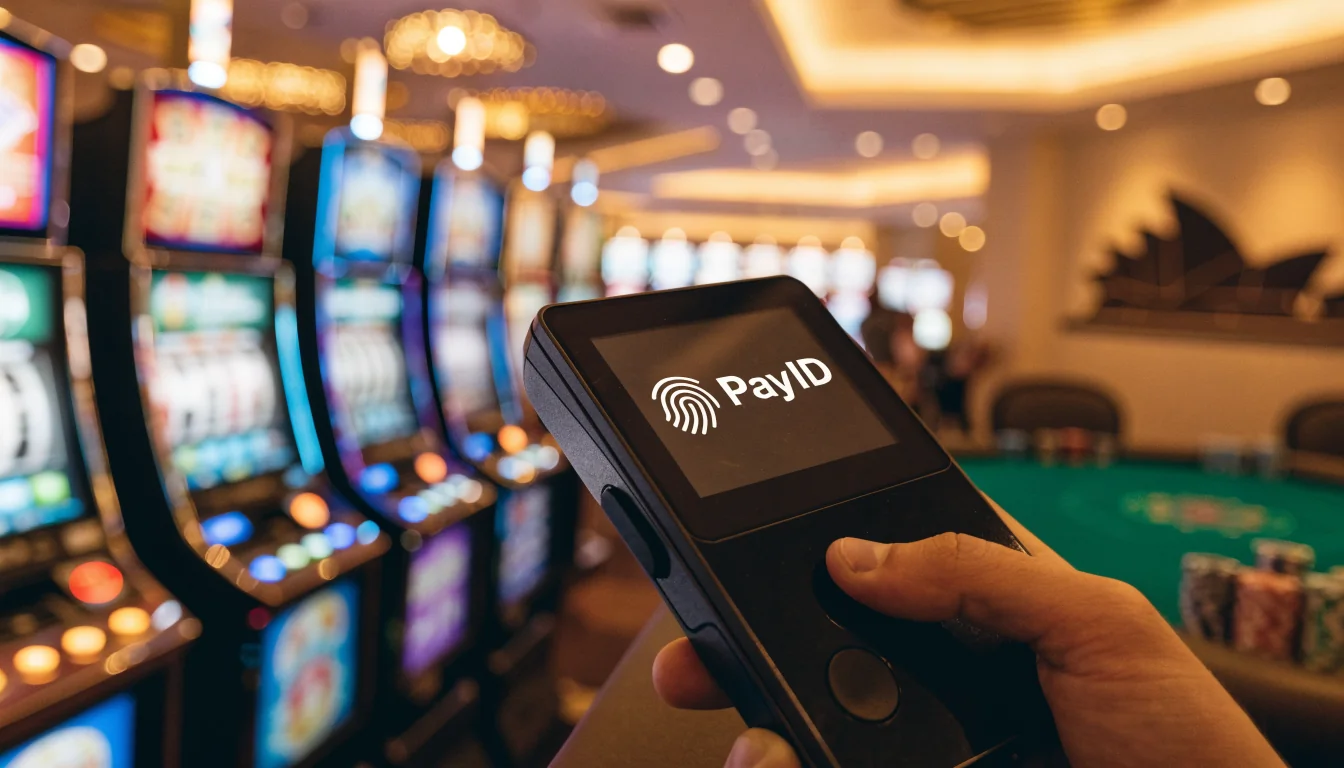
What I’d actually do with this list
Treat it as a starting point, not a verdict. Check that PayID is listed among the withdrawal methods before signing up — it’s covered in the operator breakdown earlier in this piece. Then judge the payout speed yourself on a small first withdrawal, because that’s the only test that tells you anything about your account, your verification status, and the specific night you happened to submit the request.
Everything else is someone else’s stopwatch.
PayID vs Crypto: Which Instant Withdrawal Method Is Best?
PayID settles through Australia’s New Payments Platform in under 60 seconds. That’s the whole pitch, really. No blockchain, no exchange rate, no waiting for confirmations — the money moves the same way a bank transfer to a friend moves, just tagged to a casino account instead. For anyone who’s dealt with the alternative, this speed is the point.
A Bitcoin transaction, by contrast, typically needs 10–60 minutes for blockchain confirmations, according to one industry review. That’s not a flaw in any particular casino’s system — it’s how the network works. Confirmations queue, miners prioritise, and a "fast" crypto payout is still a payout that depends on traffic you don’t control.
So on raw speed, PayID wins. But speed isn’t the only variable, and this is where the "instant" label starts doing more marketing than explaining.
Where crypto earns its place
Bitcoin’s price moves between the moment you request a withdrawal and the moment it lands in your wallet. On a small cash-out that’s noise. On a large one, it’s a real number you didn’t sign up to lose — or gain, if you’re feeling lucky, which isn’t the point of a withdrawal.
That’s the case for USDT on the TRC-20 network for larger amounts, per the same review. A stablecoin removes the price swing entirely: what you withdraw is what you get, converted at a fixed peg rather than whatever Bitcoin happened to be doing that hour. TRC-20 transfers are also reported to cost under AU$1 in fees — cheap enough that the network fee stops being a factor in the decision.
Matching the method to the amount
| PayID | Bitcoin | USDT (TRC-20) | |
|---|---|---|---|
| Settlement | Under 60 seconds | 10–60 min (confirmations) | Minutes, network-dependent |
| Price exposure | None — AUD in, AUD out | Yes, until confirmed | None — pegged value |
| Fees | Standard NPP transfer | Network fee, variable | Reported under AU$1 |
| Best suited to | Smaller, routine withdrawals | Players already holding crypto | Larger withdrawals |
None of this is really a competition. PayID is a bank rail with a nickname; crypto is a different asset class wearing a withdrawal button. For a routine cash-out under four figures, PayID’s speed and zero exposure make the comparison academic — there’s nothing crypto does better at that size. Once the amount grows and volatility starts to matter, a stablecoin does what Bitcoin can’t: hold its value while it moves.
"Instant" is the word every payment method wants attached to it. Worth checking which one earns it and which one just wears it.
The honest split is size, not preference. Small and routine — PayID. Large and value-sensitive — stablecoin. Bitcoin sits in between: fast enough, but carrying a price tag that changes while you wait.
Withdrawal Limits and Verification Rules for PayID Casinos
KYC is the part nobody reads until it costs them a day. I’ve seen the same pattern repeat itself: a player deposits, plays, wins, requests a PayID withdrawal — and only then gets asked for a driver’s licence, a selfie, and a utility bill. Incomplete KYC is the single largest cause of withdrawal delay, and it’s almost always self-inflicted timing, not a hidden trap.
The fix is boring and works anyway: complete identity verification before the first deposit, not after the first win. Upload the ID, wait for confirmation, then fund the account. It costs a few minutes upfront. It saves a queue later.
What "verification" actually means
"Instant" is doing a lot of work in every casino’s marketing. The payment rail is instant — PayID clears through NPP in under a minute. Getting your withdrawal request approved to the point where that rail even activates is a separate question, and that’s where identity checks live.
Standard requirements:
- Government-issued photo ID
- Proof of address, in some cases
- Confirmation that the withdrawal destination belongs to the account holder
That last point is the one people underestimate. The casino account name must exactly match the bank, card, or crypto exchange account name. Not similar. Not "same household." Exact. A withdrawal to a partner’s PayID, a business account, or a maiden name still on file will stall — not because the casino is being difficult, but because AML rules on this market don’t give it a choice.
Why bigger amounts move slower
There’s a threshold effect that catches people who’ve had smooth, fast withdrawals for weeks. First withdrawals above AU$2,000–AU$5,000 often trigger a manual security review, according to figures reported in one industry review — the range varies by operator and isn’t fixed across the market. Below that line, an automated system might approve and release the payout on its own. Above it, someone on staff looks at the account: verification documents, betting pattern, deposit history, source of the withdrawal amount.
This isn’t a PayID-specific rule. It applies to the withdrawal, not the rail it travels on. A crypto payout of the same size faces the same review; PayID doesn’t get waved through just because the transfer itself is fast once approved.
The practical order of operations
- Verify identity at signup, before funding the account.
- Register a PayID linked to the exact name on the casino account.
- Keep withdrawal amounts consistent with what’s already been verified — a sudden jump in size is what invites a second look, not the payment method chosen.
None of this is unique to any one operator. It’s the layer that sits underneath the instant transfer, and it’s the layer that decides whether "instant" describes your experience or someone else’s.
Is PayID or crypto faster for casino withdrawals?
PayID is faster: once the casino approves the request, a PayID transfer settles via the NPP in under 60 seconds, while a Bitcoin transaction typically needs 10–60 minutes for blockchain confirmations. PayID is the recommended default for amounts under AU$1,000; for larger withdrawals USDT on the TRC-20 network is recommended since it avoids price volatility and usually costs under AU$1 in fees.
How long do Australian online casino payouts take?
It depends on two stages: the casino’s own processing (automated in 5–30 minutes, manual review in 2–24 hours, longer for first or large withdrawals) plus the payment rail itself. PayID then settles in under 60 seconds, crypto in roughly 10–60 minutes, and legacy bank transfers take 1–3 business days.
Are Australian fast payout online casinos safe?
The fast payout casinos reviewed are Curaçao-licensed (or equivalent) and not on the ACMA blocked register as of 2026. Note that online casino games aren’t licensed for supply to Australian residents under the Interactive Gambling Act 2001 — it’s the operator, not the player, who is breaking the law by offering them here.
What is the single best thing I can do to speed up my casino withdrawals?
Complete your identity verification before your first deposit. Incomplete KYC is the single largest cause of withdrawal delay, and finishing verification during account setup means the casino only has to process the payment, not verify you at the same time.
Can I get a bonus at a fast payout online casino in Australia?
Yes, but bonus wagering must be cleared before you can withdraw — except Goldenbet’s zero-wagering cash bonus. For example, Wild Tokyo’s bonus requires 50x wagering, a 5-day clearing period, and a maximum bet of AU$8.
Created by the ”Casino Rankings Info” editorial team.