Gambling Casino Sites in Australia: Online Slots Explained
 Available in AU
- Australia’s Online Slots Landscape in 2026
- Understanding Slot Gambling: How It Works and What to Expect
- Slot Machines and Casino Platforms: Technology and Reach
- Popular Casino Games Beyond Slots
- Pokies in Australia: Scale, Profitability, and Impact
- Cryptocurrency and Bitcoin in Australian Online Gambling
- Playing for Real Money: Regulations and Taxation
- Ethereum and Other Digital Assets in Online Casinos
- The Rise of Online Casino Platforms in Australia
- Top Features of Leading Australian Online Casinos
Australia’s Online Slots Landscape in 2026
Ask someone in the industry what "online slots gambling" means in Australia, and you’ll get a longer answer than the question deserves. The phrase gets used loosely — sometimes for offshore casino sites, sometimes for the pokie in the corner of a pub, sometimes for a betting app that added a "casino" tab nobody asked for. They are not the same product, and the confusion is not accidental. It suits everyone involved to keep the terms blurry.
Start with what’s actually large and legal here: electronic gaming machines. Australians bet almost AUD$150 billion on these machines in FY 2020–2021, and lost AUD$12 billion of it — a per-capita loss of AUD$608 across the population. Those numbers describe pokies in pubs, clubs and licensed venues, machines sitting on a gaming floor with a compliance officer somewhere in the building. That’s a domestic industry, taxed, counted, argued about in state parliaments.
Online slots — the kind you’d play on a phone through a casino-style app or website, real money, spinning reels, no venue attached — sit outside that structure entirely. There’s no local licence for it because there’s no local licence to get. The Interactive Gambling Act prohibits operators from offering online casino games, slots included, to people in Australia. What exists instead is an offshore market: platforms licensed in Malta, in Curaçao, in various island jurisdictions, none of them under Australian oversight, all of them technically reachable by anyone with a browser. The law doesn’t touch the player who opens one of these sites. It’s aimed squarely at the business on the other end, which is usually incorporated somewhere it can’t be reached.
That gap between what’s legal to provide and what’s actually accessible is the defining feature of this market, and it’s worth sitting with for a moment rather than rushing past it. A regulator can license a sports betting operator. It can license a lottery. It cannot license an online casino, because Commonwealth law doesn’t allow the category to exist domestically. So when a page promises "top licensed Australian slots sites," read that promise for what it is — there’s no register to check it against, no domestic licence number that would make the claim verifiable. The honest version of that sentence doesn’t get written very often, because it’s a shorter sentence and it sells nothing.

Scale, filtered through unreliable numbers
Sizing the online slots segment specifically — dollars wagered, players active, growth year over year — runs into a wall fast. Nobody publishes it cleanly, and that’s not an oversight; offshore operators aren’t required to report into Australian systems, so there’s no aggregation point where the real figure would even land. What does get published tends to blur online and land-based, or mixes pokies with slots, or comes from a single research house with a stake in the number sounding a particular way.
Two figures illustrate the problem well enough to be worth naming directly, with their source attached rather than smoothed into "market consensus." One estimate puts Australia’s share of the world’s poker machines at around 18% — a figure that comes from a single source (complyadvantage.com) and doesn’t square neatly against the more commonly cited 3% share of the world’s pub and club machines against 0.3% of global population. Both can’t be describing the same count using the same method, which is usually a sign that "poker machines" is being defined differently between them — venue EGMs in one case, something broader in the other. The same source also reports pokies generating $191.2 billion in Australian gambling turnover in 2023. Turnover isn’t revenue and isn’t loss — it’s money cycled through machines, counted every time it’s bet again — so the figure says something about volume of play, not about how much players actually lost or operators kept. Worth knowing, not worth repeating as if it settles anything.
I’d rather name that mess than paper over it with "the market is estimated at" language, because that phrase is usually where a guess gets laundered into a fact. Nobody’s hiding a clean number here. There isn’t one.
No Local Licence
There is no Australian‑registered licence or regulator to verify the legitimacy of online slot operators.
Why "online slots" isn’t one market
The overlap between land-based pokies and offshore online slots creates a strange dynamic. Both are technically the "same game" — reels, paylines, a return-to-player figure baked into the math — but the venue machine sits inside an AML framework, age verification at the door, and state tax revenue lines. The offshore site has none of that infrastructure wrapped around it from an Australian standpoint, whatever its home licence requires elsewhere.
This matters for anyone trying to compare the two as if they’re competing products in the same regulated space. They’re not. One is a domestic industry that shows up in state budgets. The other is a category of consumption that exists because geography and enforcement haven’t caught up with each other — not because anyone designed it to work that way.
What’s changed heading into 2026 isn’t the legal structure, which has held since the Interactive Gambling Act came into force, but the visibility of the offshore side. Mobile access, payment workarounds, and a steady stream of "best casino" content online have made the offshore product easier to find than it was a few years back, even though nothing about its legal status has moved. Easier to find isn’t the same as safer to use, and it’s not the same as regulated, no matter how polished the interface looks.

What this section isn’t claiming
It’s tempting, writing about "the landscape," to reach for a top-ten list — biggest platforms, best payout rates, most popular titles. I won’t do that here, because there isn’t a verified list to draw from: no public register of these offshore operators exists for the Australian market, and RTP figures attached to specific slot titles aren’t something I can confirm against a checked source. Naming platforms without that backing would be exactly the kind of confident-sounding filler this piece is trying to avoid.
What can be said plainly: pokies are a large, measured, taxed domestic industry with real numbers attached to it. Online slots, in the offshore sense most people mean when they type the phrase into a search bar, are a legal grey zone for providers and a legal non-issue for players, sized mostly by guesswork because the people running it have no reason to publish anything more precise. Both facts can be true at once, and confusing them is how most of the misleading claims in this space get started.
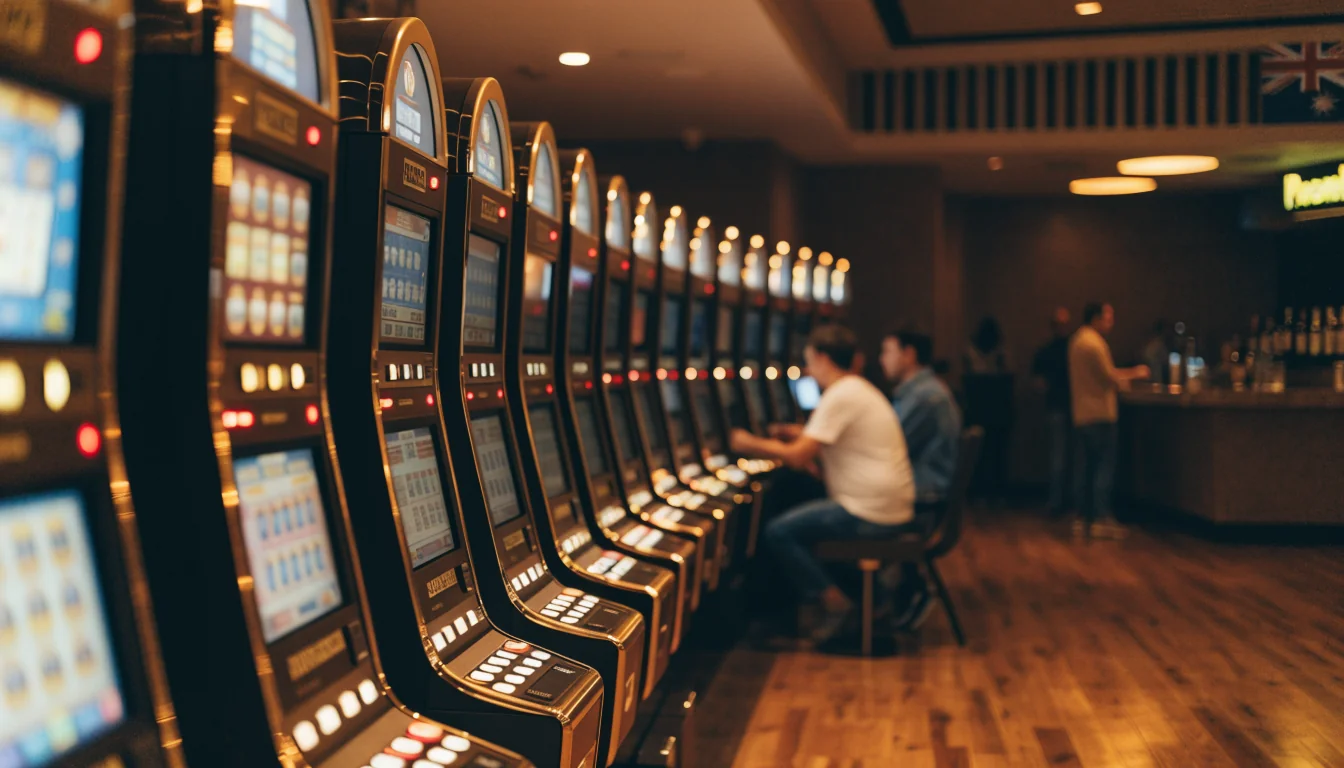
Understanding Slot Gambling: How It Works and What to Expect
Strip away the branding and every slot machine does the same three things: it takes a stake, runs a randomised outcome, and pays or doesn’t. What sits around that core — the licensing, the tax treatment, the compliance checks nobody sees on screen — is where the real differences between markets show up. Australia’s version of this has a specific shape, and it’s worth being precise about it before looking at any actual machine.
The legal line that matters most
The Interactive Gambling Act, passed on 28 June 2001, is the piece of legislation that decides what "slot gambling" even means in this country. It doesn’t ban Australians from spinning a reel. It bans companies from offering online casino-style slots to people who live here. That distinction gets lost constantly, usually by people with a reason to blur it.
What follows from that: there’s no local licence to check, no regulator badge to look for on an online slots site, because the thing being advertised isn’t something Australia licenses in the first place. Pokies in a pub or club are a different, land-based system with its own oversight. Online slot machines run by offshore operators sit outside that system entirely — legally reachable by an individual player, but never licensed here, and never going to be.
What "expect" actually means
Mechanically, an online slot works on a random number generator seeded independently for every spin. There’s no memory between spins, no machine that’s "due." That part is universal and not specific to Australia — it’s just worth stating plainly because so much slot marketing implies otherwise without quite lying.
What is specific to this market is the money side. Gambling winnings are not taxed in Australia. Whatever a player takes off a slot session, win or loss, doesn’t get reported to the Tax Office as income. That’s a settled position, not a grey area, and it’s one reason gambling companies have historically found this market attractive — the tax burden sits on the operator’s turnover and licensing fees, not on the punter’s payout.
Speaking of operator revenue: in 2015–16, gambling contributed 7.7% of state and territory taxation revenue. That number belongs to the states, not to slots specifically, and it’s a reminder that gambling isn’t a moral sideshow in Australian public finance — it’s a line item governments plan around. I’ve sat in rooms where that fact changed how "harm minimisation" got worded. Budgets shape language.
The compliance layer players never see
Behind any legitimate gaming operation — land-based pokies venue or licensed wagering platform — sits a compliance function built around two things: customer verification and patron profiling. Verification confirms who’s actually playing. Profiling tracks whether their behaviour matches what’s expected for that customer, flagging the pattern rather than the person.
Neither of these exists to catch someone having a bad night. They exist because gambling infrastructure — cash-heavy, transaction-dense, historically hard to trace — has been a known laundering channel, and regulators require operators to build friction against that specifically. It’s compliance dressed as "responsible gambling," which it partly is, and partly isn’t.
The shift toward cashless and account-based systems is the clearest expression of this. Account-based play improves traceability — every transaction ties to an identity, a pattern, a history — which is precisely why the industry has been slow and selective about rolling it out. Traceability protects against money laundering. It also removes the anonymity that a chunk of the customer base actively prefers. Two goals, same mechanism, pulling in opposite directions.
Setting expectations honestly
None of this changes what a slot session feels like — spin, wait, outcome. What it changes is what a player should understand is happening around that session: no local licence backing an online casino slot, no tax owed on what comes out of it, and a compliance apparatus working in the background that has almost nothing to do with player experience and almost everything to do with regulatory obligation.
Worth being clear on one more point, because it gets muddled constantly in casual conversation: an individual playing an offshore online slot isn’t doing anything illegal. The 2001 Act was written to constrain operators, not punish players. That’s a narrow legal position, easy to misstate, and it’s the one fact in this section that people get wrong most often — usually in the direction that makes the activity sound riskier for the player than it legally is, or safer than the operator’s legal standing actually justifies.
Two different questions. Worth keeping separate.
Slot Machines and Casino Platforms: Technology and Reach
The hardware side of an electronic gaming machine hasn’t changed much in principle: a note acceptor, a screen, a payout mechanism, and software that runs the reels. What’s changed is what sits behind that screen — a ticketing system, a player account, sometimes a loyalty card reader. That layer is where the machine stops being just a game and starts being a financial instrument. Cash goes in, cash comes out, and the record of what happened in between is only as good as the venue’s systems make it.
This is the part glossy brochures skip. "Entertainment device" is the phrase venues like to use. What it actually is, from a compliance standpoint, is a cash-handling terminal with limited built-in scrutiny of where the cash came from or where it’s going.
Why machines specifically draw AML attention
Public inquiries and sector guidance keep landing on the same conclusion: the high volume of cash transactions running through these machines, combined with limited traceability, makes them attractive for money laundering. It’s not a reputational talking point — it’s the reason regulators treat machine-heavy venues differently from, say, a table game pit.
The mechanics of the abuse are fairly plain once laid out:
- Cash placement with minimal play — a large sum goes into the machine, a handful of spins happen, and the balance is withdrawn as a payout ticket or transfer. The gambling is theatre; the goal is converting cash into something that looks like winnings.
- Purchasing winning tickets — buying a legitimate patron’s payout slip for cash, so the money entering the financial system carries someone else’s win instead of the buyer’s own cash.
- Structuring across venues — spreading the same activity across multiple locations to keep individual transactions under whatever threshold might trigger a closer look.
None of this requires sophisticated software exploits. It requires a machine that accepts cash, prints a ticket, and doesn’t ask hard questions about either.
What the platform layer changes
Where a venue runs "transparent pokies" — account-based systems rather than pure cash-in, cash-out machines — the picture shifts. An account ties play to an identity over time, which means the pattern of large deposit, minimal play, immediate withdrawal becomes visible rather than anonymous. Cash-based machines don’t offer that by design; account-based ones do, provided the operator actually reviews what the system logs rather than just collecting it.
That distinction matters more than brand or manufacturer. Software from established providers is built to run the game fairly and log transactions. Whether those logs get looked at, and by whom, is a decision made at the venue and operator level — not something baked into the reels.
The reach problem
Machines aren’t centralised the way a licensed sportsbook’s platform is. They sit in venues, run largely offline in terms of oversight, and generate a transaction trail that lives in venue-level systems rather than a single national ledger. That fragmentation is precisely what makes structuring across venues viable — no single system sees the whole pattern unless someone is actively piecing it together across locations.
Transaction data from pokies is split across individual venues, making it hard to see overall patterns.
I’ve seen how easy it is for a venue to treat the machine floor as a black box: money goes in at open, money gets counted at close, and everything in between is assumed to be gameplay. It rarely is, entirely. The technology hasn’t caught up with the risk so much as the industry has been slow to point the technology at it.
Fix the visibility problem, and the machine stops being a laundering tool. Ignore it, and the hardware does exactly what it was built to do: move cash quietly.
Popular Casino Games Beyond Slots
Ask anyone who’s spent time behind a cage or a pit and they’ll tell you: the table games draw a different crowd than the machines. Blackjack, roulette, poker, baccarat — these games attract players who want a sense of skill or at least the illusion of reading the odds. That crowd behaves differently, and the controls built around them reflect it.
The legal reality hasn’t changed just because we’ve moved from one game type to another. Table games offered through an online casino format fall under the same federal prohibition as slots. What’s legal is sports betting through a licensed operator, and physical venues that hold their own state licences for on-premises table games. What I’m describing here isn’t a green light for online versions — it’s the landscape of games that exist, and the controls that apply where they’re legally offered.
Where the games differ, and where they don’t
Blackjack and baccarat move fast, with lots of small transactions per hour. Poker involves player-versus-player pots rather than player-versus-house, which changes the shape of the money moving through a table. Roulette sits somewhere between — mechanical, repetitive, easy to bet small or bet large without much scrutiny from anyone just watching the wheel.
What doesn’t change is the underlying compliance logic. Every game format that touches real cash needs some way to answer a basic question: is this person actually playing, or just moving money through the game as a vehicle. That question is the same at a blackjack table as it is at a machine bank, just harder to automate because human dealers and human decisions are involved.
Controls that carry across formats
Customer verification and patron profiling work the same way at a table as they do on a machine floor. Venues build a picture of what a given player normally does — bet sizes, session length, how often they cash out relative to how much they’ve played. A patron who buys in for a large amount and cashes out almost immediately after minimal play looks the same whether it happened at a roulette wheel or a poker machine. The profiling doesn’t care which game generated the pattern; it cares about the pattern itself.
Machines in pubs and clubs are regulated, taxed and report their earnings to state authorities.
Offshore operators are unregulated in Australia, lack local licences and their financials are not publicly disclosed.
Cashless and account-based systems extend to table games wherever venues have rolled them out. An account tied to a verified identity leaves a trail — buy-ins, session length, payout — that a stack of cash never does. I’ve watched pit staff try to reconstruct a night from memory and chip counts alone; it’s slow and it’s guesswork. An account ties the same information to a login. Where "traditional pokies" relied on anonymous cash-in, cash-out, transparent pokies and their table-game equivalents record who did what, and when.
None of this makes table games inherently safer than machines for a player chasing losses. What it does is make certain behaviours harder to hide. A player structuring cash across several games or several sessions to stay under scrutiny thresholds is working against a system that’s watching for exactly that shape of activity, regardless of whether the felt is green or the reels are spinning.
The games themselves — cards, dice, a wheel — haven’t changed much over the decades. What’s changed is who’s watching the money behind them, and how much of that watching now happens automatically rather than by a pit boss eyeballing a table. That shift is quiet, unglamorous, and it’s the actual difference between an old floor and a modern one.
Pokies in Australia: Scale, Profitability, and Impact
Pokies are not a niche pastime here. New South Wales alone runs approximately 95,800 of them across pubs and clubs, and that number belongs to one state, not the country as a whole. Formally these machines are electronic gaming machines, EGMs on any compliance document, but nobody at the bar calls them that. The gap between the technical name and the everyday one tells you something: one is written for regulators, the other is what actually gets used when someone feeds in a note before ordering a beer.
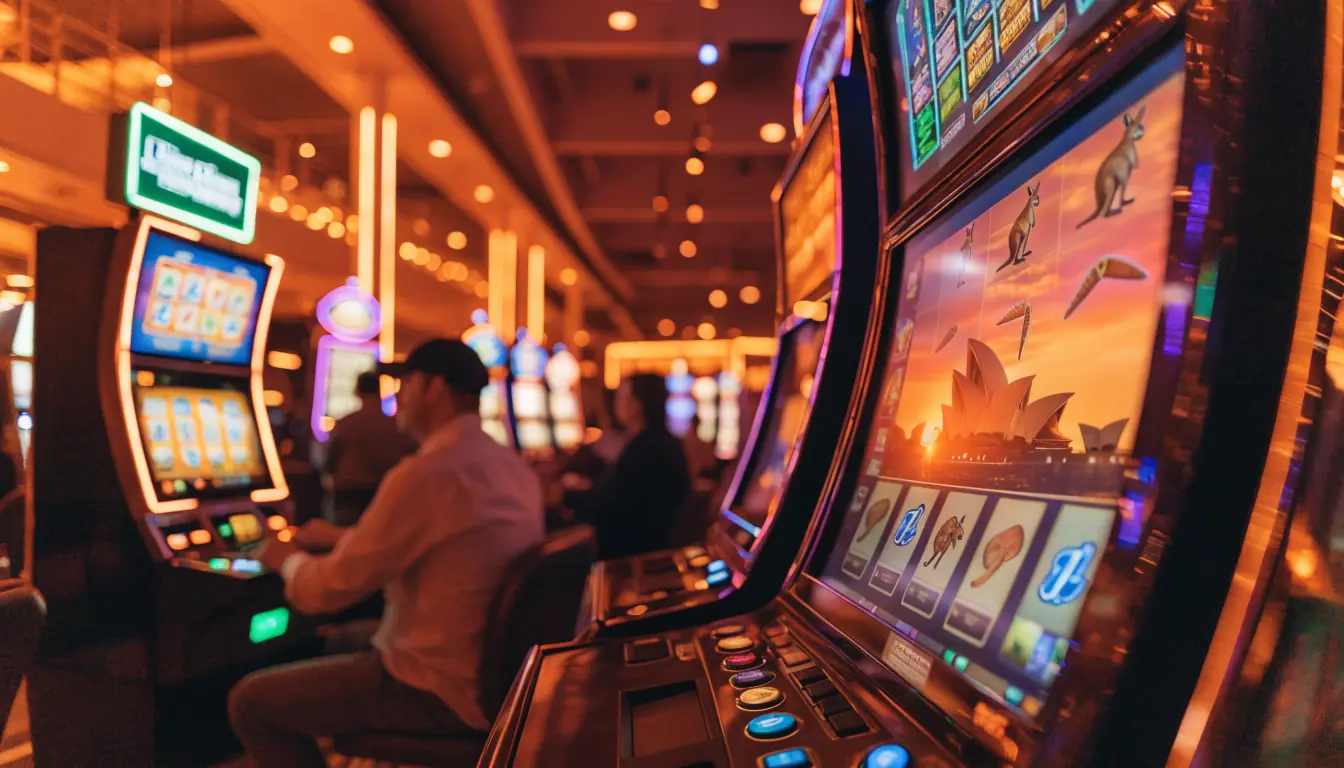
Ownership sits mostly with clubs and pubs, not with casino floors, which is part of what makes the Australian setup unusual. A licensed casino with a card room and a roulette table is a destination you choose to visit. A pokies room attached to a suburban club is just part of the furniture — you go there for the football on the big screen and the machines are simply in the next room. That proximity is the business model. Between December 2017 and May 2018, NSW clubs alone recorded $1.945 billion in net profit from pokies. Not turnover, not amounts wagered — profit, over roughly half a year, from one state’s club sector. That figure explains why any conversation about reforming pokies runs straight into the finances of the venues that depend on them.
Why pokies sit apart from other gambling formats
Everything about a pokies session is built for repetition. Short rounds, low friction between one bet and the next, minimal need to think between spins. Compare that to a hand of blackjack or a horse race, where there’s a pause built into the format — cards get dealt, a race runs its course. A pokie has no such pause unless the player chooses to make one. That structural difference is a large part of why poker machines are identified as the most harmful form of gambling in NSW, ahead of wagering, lotteries, or table games.
"Recreational" is the word venues use in their marketing. What that word skips over is the design intent — pokies aren’t recreational by accident, they’re recreational by specification, tuned for continuous play rather than discrete decisions. I’ve watched people sit at the same machine for a stretch that started as "just killing ten minutes" and stopped being that a long time before they got up.
Scale versus visibility
What’s striking is how invisible this scale is to anyone not looking for it. A single club with a modest pokies room doesn’t look like part of a billion-dollar sector from the inside — it looks like carpet, ambient noise, and a few dozen machines. The economics only become visible when you add up a state’s worth of venues, which is exactly what the NSW profit figures do. Multiply that pattern of small, unremarkable rooms across every suburb, and the aggregate profitability stops being surprising.
None of this concerns online slots as a format — pokies are a specific, physical, venue-based Australian institution, and the money and harm associated with them are tied to that venue model, not to anything played through a browser or an app.
Cryptocurrency and Bitcoin in Australian Online Gambling
Bitcoin gets mentioned constantly around offshore gambling sites, usually next to a promise of "instant, anonymous" play. Neither word survives contact with the law here. The Interactive Gambling Act 2001 prohibits online casino games — slots, blackjack, roulette, poker — for Australian residents regardless of what currency sits behind the deposit. A site accepting Bitcoin for a game of roulette is not offering a crypto-friendly service. It’s offering an illegal one that happens to take crypto.
Local rules also close the door from the compliance side. Operators that are licensed for anything on this market — sports betting, racing, lotteries — are required not to accept digital currencies for deposits or betting. That single line does more work than most people realise: it means no domestically licensed platform, in any vertical, can legally take Bitcoin, Litecoin, or anything else running on a blockchain. If a site is asking for a wallet address, it isn’t operating under an Australian licence. It can’t be — the rule forbids it outright.
Illegal Crypto
Accepting Bitcoin or other digital currencies on a site offering casino games to Australian players breaches local gambling law.
None of this stops offshore casinos from advertising Bitcoin deposits to Australian players. It’s not illegal for an individual to play at an offshore-licensed casino — the law targets the operator, not the person clicking "deposit." But that’s a narrow legal fact, not an endorsement, and it’s often stretched into something it isn’t. "Play safely with Bitcoin" is a phrase built to sound like a safeguard. Strip the marketing and what’s left is an unregulated transaction with no licensed entity standing behind it, no local recourse, and no AML program of the kind that applies to businesses actually operating here.
What actually changes with crypto, and what doesn’t
- Traceability — cash at a pokies venue leaves a paper trail through cage records and player cards. Crypto transactions sit on a public ledger, but wallets aren’t tied to verified identity unless an exchange enforces it, which offshore gambling sites have no obligation to do.
- Chargebacks and disputes — credit card transactions can sometimes be reversed. Crypto payments generally can’t be, which matters if a site disappears or a dispute over winnings goes nowhere.
- Jurisdiction — a licence from Malta or elsewhere governs the operator’s obligations to that regulator, not to an Australian AUSTRAC framework. It’s a different rulebook, not a lighter version of the local one.
I’ve seen the "crypto casino" pitch dressed up as innovation more times than I can count. Underneath, it’s usually the same offshore operation, just routed around the payment restriction that would otherwise block it. The restriction on digital currency deposits exists precisely because cash-like, hard-to-trace payment rails are the same feature that makes pokies attractive for laundering — crypto just moves that risk online.
Nothing about a Bitcoin logo on a homepage changes the legal status of the games behind it. Same law. Different coin.
Playing for Real Money: Regulations and Taxation
Somebody asks, sooner or later, whether real-money online casino gambling is actually legal here. The honest answer sits in the middle. The Interactive Gambling Act 2001 makes it illegal for a company to offer online casino games — slots, roulette, blackjack — to people in Australia, and there is no licence a domestic operator can apply for to run one. But the law was written to catch operators, not players. An individual using an offshore-licensed site isn’t committing an offence. That gap is exactly why "real money" and "regulated" don’t mean the same thing on this market, and why nobody should read one as proof of the other.
One thing does carry over cleanly from land-based gambling to whatever happens online: winnings aren’t taxed. Australia treats gambling as recreation, not income, so there’s no return to file on a payout regardless of where it came from.
The money-laundering side is where scrutiny actually lives, and it doesn’t disappear just because a transaction happens on a screen instead of a machine floor. The same red flags apply: a customer moving more cash than their profile would suggest, or deposit patterns that jump in size without an obvious reason. Those indicators were built around cash-heavy venues, but the logic — spending that doesn’t match the person — travels wherever money moves through gambling accounts.
None of this is advice to "pick a licensed site." There isn’t a domestic licence to check for, and no register to check it against. What exists is a legal boundary around who can offer the product, a tax rule that favours the player, and a set of behaviours regulators watch for regardless of the label on the platform.
Ethereum and Other Digital Assets in Online Casinos
Ethereum comes up in the same conversations Bitcoin does, usually framed as the "next step" for gambling payments — faster settlement, smart contracts, provably fair outcomes. What rarely gets said in the same breath: none of that changes the legal position for an Australian player. The Interactive Gambling Act 2001 prohibits online casino games for residents regardless of what currency moves behind the scenes. A blockchain doesn’t confer a licence.
The compliance problem is actually worse with Ethereum than with Bitcoin, not better. Smart contract wagering and token-based platforms often sit outside any licensing conversation entirely — no operator claiming a jurisdiction, no obvious entity for a regulator to point at. That’s marketed as "decentralisation." What it actually removes is the identity checks and transaction reporting that AUSTRAC-regulated operators are required to run.
Local rules already address this directly, not just in principle: deposits and bets can’t be taken in digital currency on regulated Australian gambling products. Ethereum-based casino offers, by definition, sit outside that permitted set.
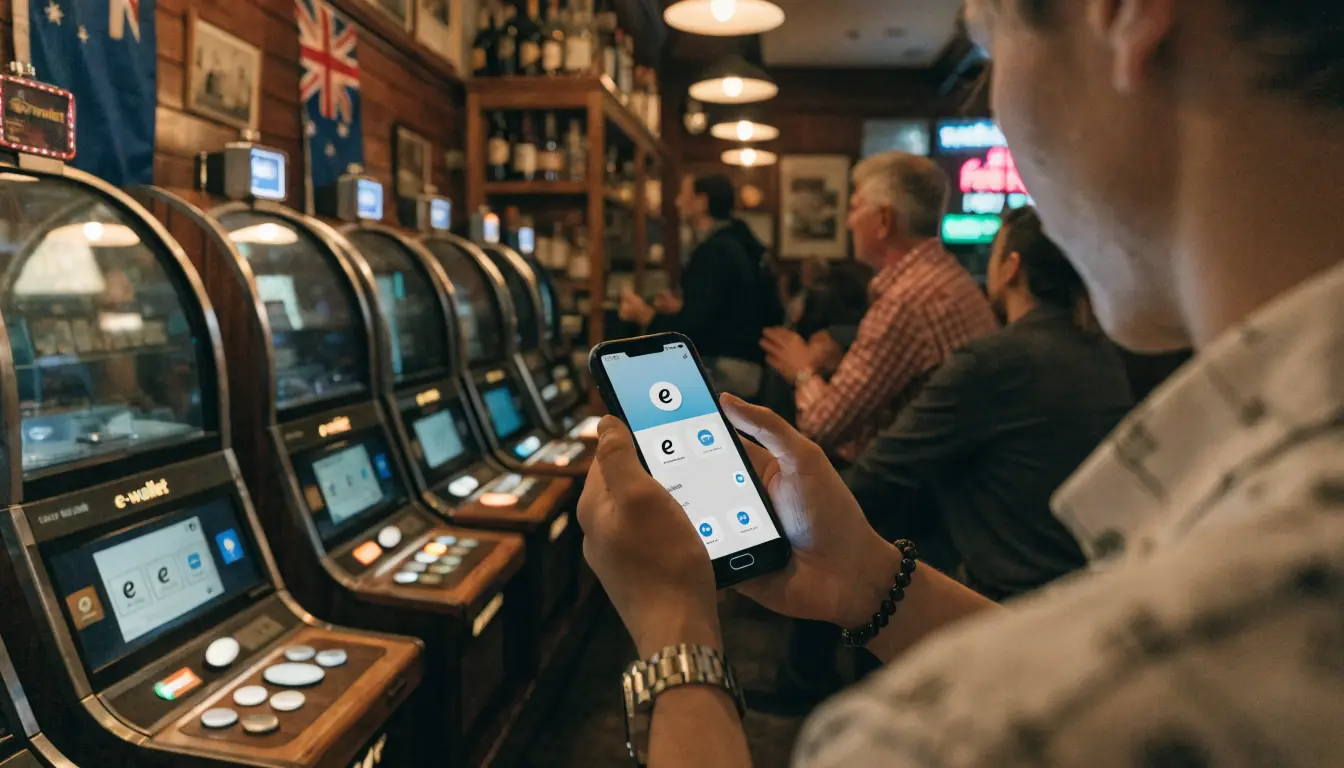
Other tokens circulating in this space — stablecoins, casino-specific coins — carry the same issue in a different wrapper. Traceability depends entirely on where the funds enter and exit the chain, and that’s precisely the point where oversight is weakest.
None of this is a technology story. It’s a jurisdiction story wearing new packaging.
The Rise of Online Casino Platforms in Australia
There’s no such thing as a licensed online casino operating out of Australia, and there never has been. The Interactive Gambling Act 2001 saw to that: it bans the provision of online casino-style games — slots, roulette, blackjack — to anyone living here. No state or territory regulator hands out a licence for this. Not NSW, not the ACT Gambling and Racing Commission, nobody.
What grew instead was something else. Sports betting got its own legal pathway under state and territory licences, and that market expanded fast, feeding real money into public coffers. Gambling revenue made up 7.7% of state and territory taxation revenue back in 2015-16 — and that figure came almost entirely from the parts of the industry the law actually permits: wagering, lotteries, pokies venues. "Online casino gambling" as a taxed, regulated Australian industry doesn’t exist in the way people assume. The tax base is built on licensed betting and machines in clubs, not on roulette wheels hosted on local servers.
Offshore operators fill the gap for players. They sit outside Australian jurisdiction, outside AUSTRAC’s reach, outside any local tax return. Playing on one isn’t illegal for the individual — the law was written to target operators, not punters — but nothing about that arrangement contributes a cent to state revenue.
Growth, in other words, happened somewhere else. Not here.
Top Features of Leading Australian Online Casinos
With so many slot sites vying for Australian players in 2026, it helps to know the core details upfront, licensing, bonus terms, and payout speed, before deciding where to play.
Bonus: up to A$750 + 50 jackpot spins, 35x wagering · Payout speed: crypto ~90 minutes, fiat 1-5 days · Min. deposit: A$30 Kingmaker offers a bonus up to A$750 plus 50 jackpot spins with 35x wagering, and stands out for fast crypto payouts around 90 minutes alongside a low A$30 minimum deposit.
License: Curacao Gaming Control Board OGL/2023/174/0082 (Dama N.V.) · Bonus: up to A$5,000 + 300 free spins across 4 deposits SpinsUp operates under a Curacao Gaming Control Board licence held by Dama N.V., and backs this with a sizeable welcome package of up to A$5,000 plus 300 free spins spread across four deposits.
License: Curacao Gaming Control Board OGL/2023/176/0095 (Hollycorn N.V.) · Bonus: up to A$11,000 + 300 free spins (code NEO100) Neospin is licensed by the Curacao Gaming Control Board via Hollycorn N.V., pairing this with a substantial bonus of up to A$11,000 plus 300 free spins redeemable through a dedicated code.
License: Curacao Gaming Control Board OGL/2023/176/0095 (Hollycorn N.V.) · Bonus: 100% up to A$10,000 + 100 free spins GoldenCrown holds a Curacao Gaming Control Board licence under Hollycorn N.V. and offers a 100% match up to A$10,000 plus 100 free spins for new players.
Bonus: up to A$7,500 + 550 free spins across 10 deposits, 50x wagering · Payout speed: crypto under 1 hour, PayID 1-3 business days · Min. deposit: A$20 (A$30 to qualify for the bonus) Ricky Casino provides an extensive bonus of up to A$7,500 plus 550 free spins across ten deposits with 50x wagering, and supports quick crypto withdrawals under an hour plus PayID processing within a few business days, starting from a A$20 minimum deposit.
License: Curacao Gaming Control Board (TechSolutions Group N.V.) · Bonus: 100% up to A$250 + 100 free spins (1st deposit) Bizzo Casino is licensed through the Curacao Gaming Control Board under TechSolutions Group N.V., offering a first-deposit match of 100% up to A$250 with 100 free spins.
License: Curacao eGaming (Roby Games Ltd) · Bonus: 100% up to A$750 + 200 free spins Roby Casino operates under a Curacao eGaming licence held by Roby Games Ltd, with a 100% bonus up to A$750 plus 200 free spins for newcomers.
License: Curacao eGaming (Dama N.V.) · Bonus: up to A$10,000 + 180 free spins, 40x wagering JeetCity Casino holds a Curacao eGaming licence via Dama N.V. and offers a bonus of up to A$10,000 plus 180 free spins with 40x wagering requirements.
Bonus: 100% up to A$750 + 200 free spins, 35x wagering · Payout speed: crypto 30-120 minutes, fiat 24-72 hours · Min. deposit: A$30 MrPacho features a 100% bonus up to A$750 plus 200 free spins at 35x wagering, with crypto payouts processed within roughly 30 to 120 minutes and fiat handled in a couple of days, starting from a A$30 minimum deposit.
License: Curacao OGL/2024/1335/0780 · Bonus: up to A$1,000 + 150 free spins, wager-free · Min. deposit: EUR 20 Vegaz Casino is licensed under Curacao’s regulatory framework and offers a wager-free bonus of up to A$1,000 plus 150 free spins, with a minimum deposit set in euros.
There’s no domestic licence to point to, no local regulator’s seal to check for — that part I’ve said already and won’t repeat. So what actually separates the operators worth a second look from the ones that fold under scrutiny? It comes down to what they monitor, not what they promise.
The honest ones treat compliance as infrastructure, not decoration. That means transaction monitoring built to catch patterns a human reviewer would miss — someone cashing out small amounts across several venues or accounts in a way that doesn’t match ordinary play. Frequent small redemptions spread across different points of contact are a recognised red flag in this industry, and platforms that take AML seriously build detection for exactly that, whether the money moves through a physical pokie or a digital wallet.
"Player protection" gets printed on a lot of homepages. On the platforms that mean it, you find identity checks that actually gate withdrawals, deposit limits a user can set without hunting through five menus, and staff who understand what a structuring pattern looks like before AUSTRAC has to ask.
None of this makes the underlying activity legal for Australian residents to access domestically. It just tells you which operators are built by people who’ve thought about the mechanics of harm — and which ones haven’t bothered.
Is online gambling legal in Australia?
Online casino games and slots cannot legally be offered to people in Australia — the Interactive Gambling Act, in force since 28 June 2001, prohibits operators from providing them. The law targets the businesses offering the service, not the players, and no domestic online casino licence exists.
What law governs online gambling in Australia?
The Interactive Gambling Act, passed on 28 June 2001. It bans operators from offering online casino games, including slots, to people in Australia, while sports betting and lotteries can be licensed domestically.
Where can I complain about an online casino in Australia?
For gambling-related problems, the BetStop national self-exclusion registry, launched in August 2023, lets you block yourself from all licensed Australian operators — it registered 18,000 users in its first six months. Offshore casino sites sit outside Australian oversight, so there is no domestic regulator to escalate a complaint to.
Are crypto casinos legal in Australia in 2026?
No. The Interactive Gambling Act prohibits any operator from offering online casino games — crypto-based or otherwise — to people in Australia, and there is no domestic licence for the category, so crypto casinos operate offshore without Australian oversight.
Can I play on an Australian online casino on mobile?
There is no licensed Australian online casino to play on — offshore sites and apps are reachable on mobile, but nothing about their legal status has changed heading into 2026, and easier to find doesn’t mean regulated.
Written by the editors at Casino Rankings Info.