
Best Online Casino Payment Methods for Aussies

- Phone‑Based Payment Options for Australian Casinos
- Core Payment Methods: Cards, E‑Wallets, Bank Transfers, and Crypto
- Choosing a Casino Payment Processor and Provider
- Understanding the Payment Flow: Deposits vs. Withdrawals
- How Payment Systems and Platforms Operate in Australia
- Instant Payment Methods: Speed and Availability
- Fastest Australian Casino Payments in 2026
- Payment Gateways: Security and Integration
- Mobile Payments and Apps for Australian Players
- Dedicated Casino Payment Apps and Emerging Solutions
Phone‑Based Payment Options for Australian Casinos
A phone number is not a payment method. It’s a routing address — a way to point money at an account without typing out a BSB and account number every time. That distinction matters more than it sounds, because it’s the entire reason PayID exists, and why it gets lumped in with "phone payments" when it’s actually a layer sitting on top of a normal bank transfer.
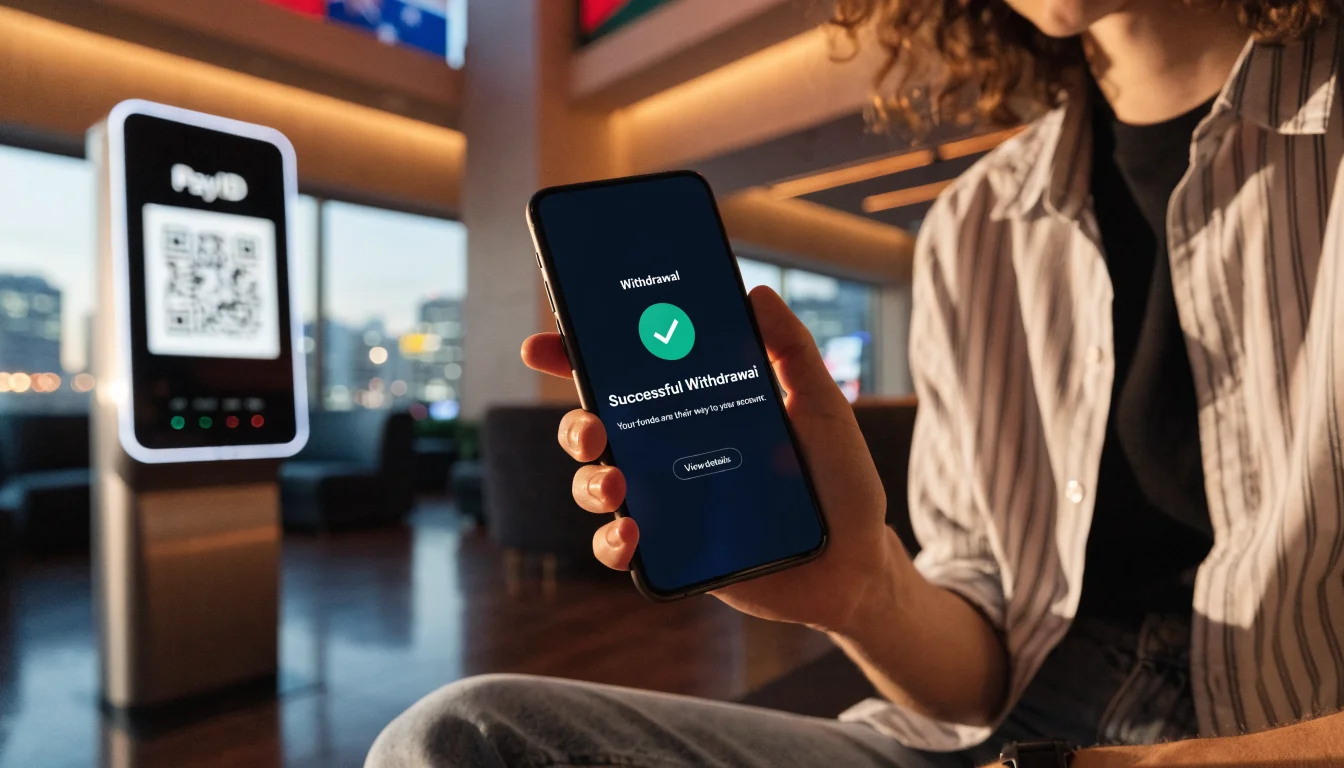
PayID lets someone link a mobile number to a bank account. Instead of entering banking details at the cashier, a player enters a phone number, the system resolves it to the linked account, and the transfer goes through as a standard bank payment underneath. Most offshore operators serving Australian players lean on PayID as their default AUD deposit rail — it’s become close to the default because it removes the friction of manual account entry while keeping the transaction inside the regular banking system. No new ledger, no separate balance sitting somewhere. Just a shortcut to an account you already have.
Since payment speed, minimum deposits and welcome offers vary widely between sites, it pays to check how each casino handles deposits and withdrawals before you sign up.
Bonus: up to A$750 + 50 jackpot spins, 35x wagering · Payout speed: crypto ~90 minutes, fiat 1-5 days · Min. deposit: A$30 Offers a welcome package up to A$750 plus 50 jackpot spins with 35x wagering, and a low A$30 minimum deposit. Crypto payouts land in around 90 minutes, while fiat withdrawals take one to five days.
License: Curacao Gaming Control Board OGL/2023/174/0082 (Dama N.V.) · Bonus: up to A$5,000 + 300 free spins across 4 deposits Holds a Curacao Gaming Control Board licence under Dama N.V. and backs it with a sizeable welcome offer of up to A$5,000 plus 300 free spins spread across four deposits.
License: Curacao Gaming Control Board OGL/2023/176/0095 (Hollycorn N.V.) · Bonus: up to A$11,000 + 300 free spins (code NEO100) Licensed by the Curacao Gaming Control Board via Hollycorn N.V., with a large sign-up bonus reaching A$11,000 plus 300 free spins redeemable via a bonus code.
License: Curacao Gaming Control Board OGL/2023/176/0095 (Hollycorn N.V.) · Bonus: 100% up to A$10,000 + 100 free spins Operates under a Curacao Gaming Control Board licence through Hollycorn N.V., pairing this with a 100% match bonus up to A$10,000 and 100 free spins.
Bonus: up to A$7,500 + 550 free spins across 10 deposits, 50x wagering · Payout speed: crypto under 1 hour, PayID 1-3 business days · Min. deposit: A$20 (A$30 to qualify for the bonus) Provides a generous multi-deposit bonus up to A$7,500 plus 550 free spins over ten deposits with 50x wagering, alongside fast crypto payouts under an hour and PayID withdrawals within a few business days; the minimum deposit is low, though qualifying for the bonus requires a slightly higher amount.
License: Curacao Gaming Control Board (TechSolutions Group N.V.) · Bonus: 100% up to A$250 + 100 free spins (1st deposit) Licensed in Curacao through TechSolutions Group N.V., offering a first-deposit match bonus of 100% up to A$250 plus 100 free spins.
License: Curacao eGaming (Roby Games Ltd) · Bonus: 100% up to A$750 + 200 free spins Holds a Curacao eGaming licence via Roby Games Ltd and offers a 100% bonus up to A$750 with 200 free spins.
License: Curacao eGaming (Dama N.V.) · Bonus: up to A$10,000 + 180 free spins, 40x wagering Licensed under Curacao eGaming through Dama N.V., with a welcome bonus reaching A$10,000 plus 180 free spins and 40x wagering requirements.
Bonus: 100% up to A$750 + 200 free spins, 35x wagering · Payout speed: crypto 30-120 minutes, fiat 24-72 hours · Min. deposit: A$30 Combines a 100% bonus up to A$750 with 200 free spins and 35x wagering, a A$30 minimum deposit, and relatively quick payouts — crypto within a couple of hours and fiat within a few days.
License: Curacao OGL/2024/1335/0780 · Bonus: up to A$1,000 + 150 free spins, wager-free · Min. deposit: EUR 20 Licensed under Curacao OGL/2024/1335/0780, this casino stands out for a wager-free bonus up to A$1,000 plus 150 free spins, with a minimum deposit set in euros.
That’s the part worth sitting with: PayID is not an e‑wallet. An e‑wallet holds a balance you top up and spend from later. PayID holds nothing — it resolves an identifier and moves funds directly between bank accounts, deposit or withdrawal, same rails both directions. If the operator supports it for cash-out as well as deposit, the money lands back in the same account it came from, which lines up with how most Australian operators handle payouts generally: back to source, not to a different rail.
Where mobile numbers show up beyond PayID
A few other services touch the phone number without being "phone payments" in the PayID sense:
- Revolut — a banking app tied to a mobile number for login and identity, not for routing funds the way PayID does. What’s relevant for gambling specifically: Revolut lets a user block gambling transactions or set spending limits inside the app itself. That’s a self‑imposed control, not something the casino enforces — worth knowing before assuming a declined card charge is the casino’s fault when it might be a setting the player switched on months ago and forgot about.
- Jeton and similar mobile‑first wallets — registered against a phone number, functioning more like an e‑wallet than a bank‑linked identifier. These sit closer to the e‑wallet category covered elsewhere and shouldn’t be confused with PayID’s bank‑resolution model.
- MiFinity — another account tied to mobile verification at signup, again operating as a wallet balance rather than a live bank link.
The line between these groups isn’t cosmetic. A PayID transfer moves real bank funds instantly, no balance sits in between. A mobile wallet holds a balance that has to be loaded first, then spent, then withdrawn back out — three steps instead of one, each with its own processing window.
Why the "phone" label creates confusion
I’ve seen players assume that because a service asks for a mobile number, it must be instant and fee‑free like PayID. That’s not a safe assumption. The number is just an identifier — what happens after you enter it depends entirely on what’s linked behind it. A phone number tied to a stored‑value wallet behaves like any other e‑wallet: instant load, but withdrawal timing depends on the operator’s own processing queue, not on the fact that a phone number was involved.
KYC checks are mandatory at every Australian online casino regardless of which payment identifier gets used at the cashier. Linking a mobile number doesn’t shortcut identity verification — it just changes how the deposit is routed. Withdrawals still get held up for the same reasons they always do: verification steps, method-specific limits, or bonus conditions still attached to the balance. The most common reason a withdrawal sits in "pending" longer than expected is one of those two — not the payment rail chosen at deposit time. Phone‑linked methods don’t skip that queue.
Prepaid vouchers, adjacent but separate
Flexepin deserves a mention here because it’s frequently sold and topped up through mobile‑accessible retail networks, and one industry review names it as a popular local option for Australian players this year. But Flexepin itself isn’t phone‑linked in the PayID sense — it’s a prepaid voucher, bought with a code, redeemed at the cashier. No number resolves an account; the PIN is the whole transaction. It’s covered properly under prepaid systems elsewhere in this guide, but it’s worth flagging the difference here so nobody assumes buying a Flexepin voucher through a phone browser makes it a "phone payment" in the PayID sense.
Phone number myth
Do not assume that entering a mobile number guarantees instant, fee‑free transfers; the underlying service may be a wallet with its own processing times.
The practical takeaway: if a cashier page asks only for a mobile number and nothing else, check what’s actually happening behind it before assuming speed or cost. PayID resolves to a bank account and inherits bank‑transfer behaviour. A mobile wallet resolves to a stored balance and inherits e‑wallet behaviour. Same input field, two different systems underneath — and the difference shows up the moment a withdrawal request goes in, not before.
Core Payment Methods: Cards, E‑Wallets, Bank Transfers, and Crypto
Four categories cover almost every deposit a player in Australia will ever make: cards, e‑wallets, bank transfers, and crypto. Each behaves differently once you try to take money back out, and that’s where the real distinction lives — not in how fast a deposit clears, but in how long a withdrawal sits in queue.
Cards
Visa and Mastercard remain the default because everyone already has one. Deposits land instantly — no waiting, no confirmation email, the balance just appears. Withdrawals are a different story. Sending money back to a card can take anywhere from one to five business days, according to processing timelines disclosed by one operator I reviewed. That’s not a flaw in the card network; it’s how card-scheme refund rails work everywhere, casino or not. Worth remembering before you plan a same-week cash-out around a card withdrawal.

E‑wallets
E‑wallets sit between cards and crypto in both speed and friction. Deposits are instant, same as cards. Withdrawals move faster too — one operator’s stated terms put e‑wallet payouts at same-day to 48 hours, noticeably quicker than the card timeline above. The catch is availability: not every e‑wallet provider works with every casino, and which ones do changes by operator. An e‑wallet withdrawal option listed on one site’s terms page might not exist on another’s.
Bank transfers
The slowest of the four, and it’s not close. One industry review put bank transfer withdrawals at up to seven business days — a week where the money is neither in your account nor, from where you’re sitting, doing anything at all. Deposits by bank transfer aren’t instant either, since they depend on the interbank rails rather than a card network. If speed matters, this is the method to avoid for cash-outs, even if it feels like the "safe, traditional" choice.
Crypto
Crypto deposits clear in a few minutes. Withdrawals, per one operator’s disclosed processing window, are usually handled within 24 hours — slower than an e‑wallet cash-out but a long way ahead of a bank transfer. The trade-off isn’t speed, it’s exposure to network fees, which sit outside the casino’s control entirely. A "fast" crypto withdrawal can still cost more than a card one, depending on network congestion at the moment you send it.
Instant deposits, but withdrawals can take 1–5 business days depending on the processor.
Instant deposits and usually same‑day to 48‑hour withdrawals, though availability varies by casino.
Both deposits and withdrawals are slower; withdrawals may take up to 7 business days.
Deposits clear in minutes and withdrawals are typically processed within 24 hours, subject to network fees.
Fees: rarer than the marketing suggests
"No fees" is one of those lines every payments page uses, and it’s mostly true — but mostly isn’t entirely. Fees in Australian casinos are uncommon, not absent. Where they do show up, it’s usually one of four places: crypto network fees, bank transfer fees, FX conversion charges, or e‑wallet withdrawal fees. Most Australian-facing casinos price everything in AUD as the native currency, which sidesteps the FX line item completely — but that’s a currency-matching decision by the operator, not a rule of the payment method itself. Use a currency that doesn’t match, and the conversion fee reappears.
A quick side-by-side
| Method | Deposit speed | Withdrawal speed | Fee risk |
|---|---|---|---|
| Cards (Visa/Mastercard) | Instant | 1–5 business days | Low, mainly FX if currency mismatched |
| E‑wallets | Instant | Same-day to 48 hours | Possible e‑wallet withdrawal fee |
| Bank transfer | Not instant | Up to 7 business days | Possible transfer fee |
| Crypto | Minutes | Within 24 hours | Network fee, variable |
None of these numbers are guarantees — they come from one operator’s stated terms, and terms differ from casino to casino. What stays constant is the pattern: cards and bank transfers are built for a world where money moves in business days, e‑wallets and crypto were built for a world where it doesn’t. Pick the category based on which world you’re withdrawing into, not just which one is easiest to deposit with.
Choosing a Casino Payment Processor and Provider
A casino doesn’t touch your card directly. Between the site’s cashier page and your bank sits a processor — the company that actually moves money, checks it isn’t fraudulent, and settles it into the operator’s account. Players never see this layer unless something breaks. Then it’s the only thing that matters.
I used to think "payment provider" meant one company doing everything. It doesn’t. An operator typically stitches together several: one for cards, another for e-wallets, sometimes a separate one for crypto. That’s why the same casino can process a Visa deposit instantly and then take days to sort out a Mastercard withdrawal — different rails, different rules, different people answering support tickets on the back end. "Seamless payments" is the phrase on the homepage. The reality is a handful of contracts stapled together, and the seams show exactly when you try to cash out.
Why the processor matters more than the logo on the button
You pick a payment method — card, e-wallet, bank transfer. What you’re actually trusting is whoever processes that method for that specific casino. Two sites can both display a Mastercard icon and behave completely differently, because one processor allows Mastercard withdrawals and another routes them back to a different channel entirely. According to one industry review of Australian-facing operators, Mastercard is widely accepted for deposits but can be restricted on the way out — which has nothing to do with the card network and everything to do with the processor’s own settlement agreement.
Availability itself isn’t fixed either. Which of cards, bank transfers, e-wallets or crypto actually show up at checkout depends on the operator and, per the same review, on location — a set that can shrink or grow without much notice. That’s a processor decision, not a casino "choice" in any meaningful sense.
The payment processor determines the real behaviour of a method; identical icons can hide different settlement rules.
What a reliable setup looks like from outside
There’s no public register to check a processor against in Australia, so judgement has to come from what’s visible on the page itself:
- Method-to-method consistency. If a casino lists crypto, and crypto is broadly accepted across Australian operators, check whether it’s treated as a full deposit-and-withdrawal option or deposit-only in practice.
- The same-method pattern. Operators generally require withdrawals to go back through the same channel used to deposit. A processor that can’t confirm this upfront is one that hasn’t thought about the exit, only the entry.
- Encryption baseline, not a selling point. SSL/TLS encryption and PCI-DSS compliance should be standard across every listed method — not a badge to be impressed by, but a minimum to notice the absence of.
- How disputes are handled. A processor is also the party that decides what happens when a payment stalls. If there’s no visible complaints path tied to that, it’s a gap worth noting before depositing, not after.
None of this is glamorous. It’s paperwork, settlement windows, and which bank the processor itself uses — none of it marketed, all of it decisive.
PayPal, POLi, iDEAL — and why they mostly don’t apply here
Searches for these come up often, and the honest answer is short: PayPal doesn’t process Australian casino payments, POLi has largely exited this space, and iDEAL is a European rail with no real footprint on this market. Their absence isn’t a flaw in any one casino’s setup — it’s a gap in what processors here have built. Worth knowing before hunting through a cashier page for a logo that isn’t going to appear.
The one-line test
Before trusting a "payment provider," ask what happens on withdrawal — not deposit. Deposits are the easy leg for any processor to sell. Withdrawals are where the real terms live.
Understanding the Payment Flow: Deposits vs. Withdrawals
Deposits and withdrawals are not mirror images of each other. Money goes in fast, almost always. Getting it back out is a different process, with different checkpoints, and treating the two as symmetrical is where most confusion starts.
A deposit is a one-way push: the player initiates it, the funds land, the balance updates. There’s no one on the other side asking questions in that moment — the casino wants the money in as frictionlessly as possible. That’s why deposits across most payment methods clear quickly, and why players often assume withdrawals will behave the same way. They don’t.
A withdrawal is a request, not a transaction — at least not immediately. It sits in a queue until someone or something approves it. That approval step is where KYC checks come in. Even a player who deposited without any friction can find their first withdrawal held up while the casino confirms identity documents match the account. This isn’t specific to one payment method; it happens regardless of whether the original deposit was a card, an e-wallet, or crypto.
Bonus conditions add a second layer. If a deposit was matched with a promotional offer, the funds — and often the winnings generated from them — stay locked until wagering conditions are cleared. The withdrawal button might be visible and clickable, but the request will bounce back until the account satisfies whatever condition was attached at signup. This is a separate gate from identity verification, and clearing one doesn’t clear the other.
Why timelines diverge
Once verification and bonus conditions are out of the way, the remaining delay comes down to the payment method itself and how the operator processes it on the back end. According to one industry review, the slowest route tends to be a bank transfer, which can take up to seven business days to complete on the withdrawal side — a stark contrast to how quickly the same method usually accepts a deposit. At the other end, the same review notes that the fastest withdrawals in the Australian market land in under two hours, occasionally arriving instantly, though this depends heavily on the operator’s own processing window rather than being a fixed rule across the industry.
Withdrawal delays
Withdrawals can be held up by KYC checks or bonus conditions, regardless of the deposit method used.
That gap — hours versus days — has less to do with the banking rails and more to do with how much manual review sits between "approved" and "sent." A withdrawal that’s already been through KYC and has no bonus attached to it moves through a much shorter path than one flagged for review.
Currency matters more than it looks
Most Australian casinos accept AUD directly, which keeps both sides of the flow simpler. No conversion step means one less thing that can slow a withdrawal down or introduce a fee. Where currency mismatches do exist, they tend to show up on the withdrawal side, adding a processing step that isn’t present on deposit.
None of this is available to anyone under 18 — the minimum gambling age in Australia — and that check is usually bundled into the same identity verification that governs withdrawals in the first place. It’s worth remembering that the deposit flow and the withdrawal flow are, functionally, two different products wearing the same interface.

How Payment Systems and Platforms Operate in Australia
A casino payment system isn’t one thing — it’s three layers stacked on top of each other, and most players only ever see the top one. What you experience as "deposit" and "withdraw" buttons sits above a wagering engine, a voucher or e-wallet rail, and a fee structure that only shows itself when money leaves.
The wagering lock
Deposited funds don’t always behave like cash sitting in a wallet. Once wagering requirements are attached — usually through a bonus — the system tracks how much of that money has been played through before it can be withdrawn. Until the conditions are met, the balance is visible but not fully yours to pull out. This isn’t a glitch or a stalling tactic on the operator’s part; it’s a rule baked into the platform’s logic from the moment the bonus is accepted. I’ve seen players assume a "processing delay" when what’s actually happening is a wagering lock quietly doing its job.
Prepaid vouchers: a closed loop by design
Prepaid voucher systems work differently from cards or e-wallets. A player buys a PIN — in a store or online — and that PIN funds the account up to its fixed value. There’s no bank account, no card number, nothing linked back to identity at the point of purchase. That’s the appeal.
Prepaid voucher limit
Prepaid vouchers such as Flexepin are deposit‑only; winnings must be withdrawn via a different method.
It’s also the limitation. Digital vouchers such as CashtoCode and Neosurf are deposit-only. There’s no reverse flow. Once the value is loaded, the system has no mechanism to send money back to a voucher — because a voucher isn’t an account, it’s a one-way ticket. Any winnings have to exit through a different method entirely, which is worth knowing before relying on vouchers as your only payment option.
Where fees actually come from
On the Australian side, outright fees are uncommon — most platforms are built to absorb them rather than pass them on, since native AUD handling avoids conversion charges. But fees do surface in specific spots:
- Crypto network fees, charged by the blockchain itself, not the casino
- Bank transfer fees, occasionally applied on the receiving end
- FX conversions, when a method isn’t natively priced in AUD
- E-wallet withdrawal fees, set by the wallet provider rather than the operator
None of these are casino-imposed margins in the traditional sense — they’re pass-through costs from the rails underneath. A platform’s payment architecture is really just a set of decisions about which of these costs it eats and which it lets sit with the player.
Regulatory obligations run alongside all of this, largely invisible to the user. Transaction monitoring, reporting thresholds, and identity checks are wired into the system before a withdrawal button even becomes clickable. None of it is optional for the operator. Most of it, the player never sees — until a payout takes longer than expected, and the reason turns out to be structural, not personal.
Instant Payment Methods: Speed and Availability
"Instant" gets printed on every second banner in this industry, and it’s technically true for exactly one half of the transaction. Deposits go in fast, almost without exception. Withdrawals are a different negotiation entirely, and the gap between the two is where most complaints get written.
Deposits are the easy part because the casino has every incentive to make them frictionless. Card payments clear immediately. E-wallet top-ups clear immediately. Crypto lands after network confirmation, which runs to a few minutes rather than hours. None of that variability is really about the payment method — it’s about how quickly the operator wants your money working in its favour, and the answer is always "as fast as possible."

Withdrawals expose the actual architecture. According to one industry review of processing patterns, card withdrawals through Visa or Mastercard can take between one and five business days even though the deposit was instant — the delay sits on the casino’s side, in a review queue, not in the card network’s plumbing. E-wallets tend to move faster on the way out too, with the same review noting that withdrawals typically clear within the same day to 48 hours, though that number moves with how loaded the operator’s verification queue is and whether the account has already passed KYC checks. Crypto withdrawals, per that same source, usually get processed within 24 hours — a wide window for something that settles on-chain in minutes, which tells you where the actual bottleneck lives.
Where "instant" is real
The closest thing to genuine instant withdrawal that the Australian market currently offers is described by one operator-side report as under two hours, occasionally faster, for the small number of methods and accounts that clear every check on the first pass. That’s not a promise, it’s an outcome for players who’ve already done the paperwork.
Main takeaway
Deposits are fast across all methods, but withdrawals depend on verification and the processor, not the payment rail.
Because that’s the actual variable. Speed on paper and speed in practice split at exactly one point: verification status. An account with completed KYC checks and no pending bonus wagering moves through the system with nothing left to hold it back. An account still waiting on a document upload sits in the same queue regardless of which payment method it picked.
Fees don’t usually enter into the speed question directly, but they show up on the same statement — a crypto network fee, an FX conversion, a bank charge — and none of them buy priority processing. Speed is decided upstream of the fee line, at the KYC and compliance stage.
So the honest version of "instant" is narrower than the marketing version:
- Deposits — genuinely instant across cards, e-wallets and most vouchers, with crypto close behind.
- Withdrawals — fast only after verification is done and no bonus terms are still active.
Two different clocks. Only one of them is under the operator’s full control, and it isn’t the one they advertise.
Fastest Australian Casino Payments in 2026
Ask around any operator’s support chat about which method clears fastest, and three names keep coming up: Flexepin, PayID, and Visa. Not because they’re the only fast options — the previous section covered the instant-versus-standard split in general terms — but because these three specifically dominate what Australian players actually reach for this year.

Flexepin sits in the prepaid voucher category, and by one industry account it’s become a popular local option among Australian casino players in 2026. The appeal isn’t complicated: no bank account details touch the casino, no card number sits on file. You buy a code, you enter it, the deposit lands. The trade-off, covered elsewhere in this piece, is that vouchers like this are deposit-only — nothing comes back through the same channel.
PayID has quietly become the default rail for a lot of offshore-facing platforms. According to one industry overview, most offshore operators list PayID as their primary AUD deposit method. That’s worth noting on its own terms: it’s built around a phone number or email acting as a proxy for your bank account, so the deposit itself moves as a same-country transfer rather than through a card network. It’s fast because it’s designed for exactly this — small, immediate, domestic-currency movements — not because a casino has done anything special to speed it up.
Visa remains the one nobody drops. It’s widely accepted for casino payments across Australia, and its ubiquity is precisely the point — it works at essentially every operator that takes cards at all, which none of the newer methods can claim yet. The deposit side is instant, full stop. What happens after you win is a different conversation, and it belongs to the section on deposits versus withdrawals, not here.
Why these three, specifically
| Method | Category | Why it’s on this list |
|---|---|---|
| Flexepin | Prepaid voucher | Named as a popular local option for Australian players in 2026 |
| PayID | Bank-linked transfer | Primary AUD deposit method at most offshore operators, per one industry source |
| Visa | Card network | Widely accepted across the Australian casino market |
None of this is a ranking of "best." It’s a description of what’s actually in front of players right now. A method being fast and common isn’t the same as it being cheap, reversible, or available for cashing out — that’s a separate accounting, done in the sections either side of this one.
One caveat worth saying plainly: acceptance and popularity shift operator to operator. What’s listed as primary at one platform may not even appear at another. Nobody publishes a single authoritative ranking of which method is fastest across the whole Australian market — only individual operators’ own processing notes, and those change.
Payment Gateways: Security and Integration
A payment gateway is the layer nobody markets, because there’s nothing to market — it’s plumbing. It sits between the casino’s cashier page and the bank, card network or crypto node, translating a deposit request into something the money side can actually process, then translating the answer back into "approved" or "declined." Players never see it. That’s the point.
Gateway compliance
A non‑PCI‑DSS compliant gateway can expose card data, making the whole payment flow insecure.
What matters underneath is whether that plumbing is encrypted end to end. Every payment option worth using here runs on SSL/TLS encryption and holds PCI‑DSS compliance — the standard that governs how card data gets stored, transmitted and, ideally, never touched by hands that don’t need to touch it. If a site can’t show this, the rest of its "secure checkout" language is decoration.
Card traffic vs. crypto traffic
The gateway handles these two very differently, and that split explains a lot of what players run into at withdrawal time.
Card traffic goes through a tokenisation step — the gateway swaps the real card number for a token before it ever reaches the casino’s own servers, so a breach on the casino side doesn’t expose the card itself. Mastercard is widely accepted for casino payments in Australia through this route, though according to one industry review it can be more restricted on the withdrawal side than on deposits — worth knowing before assuming a card that took a deposit will just as easily take money back.
Crypto traffic skips the card network entirely. The gateway (or a bolted‑on crypto processor) watches the blockchain for a confirmed transaction instead of asking a bank to authorise one. No chargeback mechanism, no card-scheme fee, no intermediary bank to stall the transfer. Cryptocurrency payments are widely accepted in Australian online casinos precisely because this path is simpler for the operator to run — fewer parties, fewer disputes.
What the compliance layer actually buys you
PCI‑DSS isn’t a badge for the footer. It’s an audited set of rules about network segmentation, encryption key management and access logging — the boring stuff that determines whether a database dump years from now includes anyone’s card details. A gateway that’s compliant has been checked against that. One that isn’t hasn’t, and no amount of "bank‑level security" copy changes that.
None of this tells a player which provider to pick — that’s a separate question, and it depends on fees, payout speed and what the casino itself supports. The gateway question is narrower: is the pipe encrypted, is it audited, and does it treat card data and crypto transactions with the separation each actually requires. Get that wrong, and every other feature built on top of it is cosmetic.
Mobile Payments and Apps for Australian Players
A phone number gets money moving. An app decides what happens after. That’s the line between the two — and worth keeping straight, because "mobile payment" gets used for both and they solve different problems.
The app layer is where banking apps and dedicated wallet apps live: Revolut, MiFinity, Skrill’s mobile client, Google Pay and Apple Pay where operators accept them. These aren’t just a phone number attached to a bank account — they’re full interfaces with their own balances, their own verification steps, and in some cases their own controls over what the money can be spent on. Revolut, for one, lets a user block gambling transactions or cap spending inside the app itself. That’s not a casino feature. It’s a bank feature sitting upstream of the casino, and it works whether the operator likes it or not.
Best practice
Always verify the processor’s withdrawal policy before depositing to avoid unexpected delays.
That matters more on mobile than it does on desktop, because mobile is where most of this spending actually happens now, and it’s where the friction shows up first. An app that flags a transaction, holds it for review, or blocks a merchant category won’t explain itself in detail — it just won’t go through. Worth knowing before assuming a declined deposit is the casino’s fault.
Where verification gets harder
KYC checks don’t get lighter on a phone. If anything they get more annoying: uploading an ID photo, confirming a selfie match, keying in details on a small screen. According to industry-wide reporting on the sector, the most common reason a withdrawal sits in "pending" isn’t the payment method — it’s an unresolved verification step or a bonus condition still in play. Mobile changes none of that. It just changes how much you swear at your screen while doing it.

PayID sits underneath, not inside
Worth separating clearly: PayID itself isn’t an app. It’s a linking layer — a phone number or email tied to a bank account, used from within whatever banking app the account holder already has. According to the same industry reporting, most offshore operators use it as their primary AUD deposit rail. What makes it feel "mobile" is that it’s typically initiated from a banking app on a phone, not that it’s a payment app in its own right. That distinction gets lost constantly, including in marketing copy that should know better.
Apps that ask for less friction, and what that costs
Wallet apps built for speed — fewer confirmation steps, saved payment details, one-tap deposits — trade some of that friction for convenience. Nothing wrong with that on its own. But faster deposit flows don’t shorten KYC on the withdrawal side. The check still happens somewhere. It just gets moved to the point where money leaves, not where it comes in.
Dedicated Casino Payment Apps and Emerging Solutions
Some tools weren’t built for gambling and just happen to work well for it. Others exist specifically because operators asked for something better than a card form. Worth telling the two apart.
PayID falls into the second category, sort of. It’s a national addressing layer sitting on top of the existing banking system, not a new rail — you register a phone number or email against your bank account and use that instead of a BSB and account number. According to a payments-provider agreement I’ve seen, most offshore operators list it as their primary AUD deposit method. That’s not a regulatory mandate, just what the market has settled on because it lines up with how AUSTRAC wants transactions traced back to a real identity.
Flexepin is a different animal entirely — a prepaid voucher, bought with cash or card, redeemed as a code. No bank link, no app to install, no account to open. One industry roundup I checked flagged it as a popular local option for Australian players going into 2026. I’d treat that as one observer’s read rather than a settled fact, because voucher popularity shifts fast when a competing option launches.

Crypto-focused apps are the newer edge of this list. Wallets built around Bitcoin or stablecoin transfers give a casino an address, generate a QR code, and confirm on-chain — no bank in the loop at all. Cryptocurrency payments are widely accepted across Australian online casinos at this point, which says more about how comfortable operators have gotten with the rails than about any endorsement of the coins themselves.
What these three have in common is that none of them route through a card network. That matters because card networks are where most of the friction lives — declines, chargebacks, issuer blocks on gambling merchant codes. PayID, vouchers and crypto sidestep that layer entirely, each in its own way.
Names like EcoPayz, Paysafecard, UPI and ACH show up in searches from players used to other markets. I won’t pretend to know which of them a given Australian-facing operator supports — that’s a detail each site publishes on its own cashier page, and it changes without notice. Check there before assuming.
What payment methods are available for Australian players at online casinos?
The main options are Visa and Mastercard cards, e-wallets like Jeton and MiFinity, bank transfers including PayID, cryptocurrencies, and prepaid vouchers such as Flexepin, CashtoCode and Neosurf. PayID has become the default AUD deposit rail at most offshore operators because it links a phone number to your bank account and moves funds directly without holding a balance.
Are my personal and financial details safe?
Yes — all featured payment options use SSL/TLS encryption and PCI-DSS compliance, and KYC identity checks are mandatory at every Australian online casino. Methods like PayID route money through the regular banking system rather than a separate stored balance.
Are crypto casinos legal in Australia in 2026?
No — online casino-style games, including slots, poker, blackjack and roulette, are prohibited for Australian residents under the Interactive Gambling Act 2001, and crypto payments don’t change that. Cryptocurrency deposits and withdrawals are nonetheless widely accepted at offshore casinos serving Aussies.