
Best Paying Online Pokies in Australia: What to Know

Australian Casino Market Overview
Search for the best paying online casino in Australia and the results split into two camps almost immediately. One camp is a wall of "licensed and regulated" badges pointing at jurisdictions that, on close reading, have nothing to do with Australia. The other is a long list of offshore brands that never mention a domestic licence at all, because there isn’t one to mention. Neither camp is lying outright. They’re just describing a market that most players never get a straight explanation of before they deposit.
Here’s the part that rarely makes it into the marketing copy: there is no such thing as an Australian-licensed online casino. Not a small one, not a big one, not one that’s "pending approval." The federal government does not issue licences for online casino games — slots, roulette, blackjack, poker — to be offered to people living in Australia. It’s not a gap in enforcement or an oversight waiting to be fixed. It’s the design.
The law that shapes everything else
The Interactive Gambling Act 2001 is the piece of legislation doing the work here, and it’s worth naming directly because so much of what gets written about "best paying" casinos in Australia skips past it entirely. The IGA is the primary Commonwealth law governing online gambling in the country, and it was built around harm minimisation rather than market growth. That framing matters — it explains why the Act reads like a restriction list rather than a licensing pathway.
When chasing the best paying pokies in 2026, payout speed, deposit requirements and the real value behind a welcome bonus matter far more than flashy branding — here’s what stands out about each site on that front.
Bonus: up to A$750 + 50 jackpot spins, 35x wagering · Payout speed: crypto ~90 minutes, fiat 1-5 days · Min. deposit: A$30 Offers up to A$750 plus 50 jackpot spins with 35x wagering, and stands out for fast crypto payouts around 90 minutes alongside a low A$30 minimum deposit.
License: Curacao Gaming Control Board OGL/2023/174/0082 (Dama N.V.) · Bonus: up to A$5,000 + 300 free spins across 4 deposits Licensed under the Curacao Gaming Control Board via Dama N.V., with a sizeable welcome package of up to A$5,000 and 300 free spins spread across four deposits.
License: Curacao Gaming Control Board OGL/2023/176/0095 (Hollycorn N.V.) · Bonus: up to A$11,000 + 300 free spins (code NEO100) Operating under a Curacao Gaming Control Board licence through Hollycorn N.V., it backs its offering with a large up to A$11,000 bonus plus 300 free spins redeemable via a bonus code.
License: Curacao Gaming Control Board OGL/2023/176/0095 (Hollycorn N.V.) · Bonus: 100% up to A$10,000 + 100 free spins Licensed by the Curacao Gaming Control Board under Hollycorn N.V., with a straightforward 100% match up to A$10,000 alongside 100 free spins.
Bonus: up to A$7,500 + 550 free spins across 10 deposits, 50x wagering · Payout speed: crypto under 1 hour, PayID 1-3 business days · Min. deposit: A$20 (A$30 to qualify for the bonus) Provides a substantial bonus of up to A$7,500 and 550 free spins across ten deposits with 50x wagering, backed by crypto payouts under an hour and PayID processing within a few business days, with a low entry deposit.
License: Curacao Gaming Control Board (TechSolutions Group N.V.) · Bonus: 100% up to A$250 + 100 free spins (1st deposit) Licensed through the Curacao Gaming Control Board via TechSolutions Group N.V., offering a modest first-deposit match up to A$250 plus 100 free spins.
License: Curacao eGaming (Roby Games Ltd) · Bonus: 100% up to A$750 + 200 free spins Holds a Curacao eGaming licence under Roby Games Ltd, pairing a 100% bonus up to A$750 with 200 free spins.
License: Curacao eGaming (Dama N.V.) · Bonus: up to A$10,000 + 180 free spins, 40x wagering Licensed under Curacao eGaming through Dama N.V., featuring a generous bonus of up to A$10,000 with 180 free spins and 40x wagering requirements.
Bonus: 100% up to A$750 + 200 free spins, 35x wagering · Payout speed: crypto 30-120 minutes, fiat 24-72 hours · Min. deposit: A$30 Delivers a 100% bonus up to A$750 with 200 free spins at 35x wagering, complemented by quick crypto withdrawals within a couple of hours and fiat payouts processed in one to three days, with an accessible A$30 minimum deposit.
License: Curacao OGL/2024/1335/0780 · Bonus: up to A$1,000 + 150 free spins, wager-free · Min. deposit: EUR 20 Licensed under Curacao with a wager-free bonus of up to A$1,000 plus 150 free spins, making it notable for a low-friction bonus structure.
I’ll flag something here rather than smooth over it: some sources cite this law as the Interactive Gambling Act 1997, others as the 2001 Act, when describing the prohibition on offering online casino games to Australian residents. The substance is the same either way — casino-style games have been off-limits for domestic operators for a long time — but the naming isn’t consistent across the material out there, and I’d rather say that plainly than pretend one version is the only one in circulation.
What the Act actually prohibits, in plain terms:
- Online casino-style games — slots, poker, blackjack, roulette — offered to Australian residents
- In-play (live) online betting, prohibited federally regardless of the operator’s location
- Any domestic operator applying for a licence to run these games commercially
The Australian Communications and Media Authority, ACMA, is the body enforcing this. Its job isn’t to license casino operators — there’s nothing for it to license — it’s to identify unlicensed offshore operators actively marketing casino services to Australians and act against that activity. "Actively offering" is the operative phrase. The Act is aimed at the businesses doing the offering, not at the people receiving the offer. That distinction becomes more important in the next section, but it needs to be on the table now because it’s the single most misunderstood part of the whole framework.
Why "licensed in Australia" is a phrase that shouldn’t appear on a casino site
If a site claims to be an Australian-licensed online casino, that claim is false on its face. There is no licence to hold. This isn’t a technicality — it’s the reason every legitimate real-money casino a resident might use is, by definition, operating from somewhere else. Curacao and Malta come up repeatedly as the licensing jurisdictions behind offshore platforms, which is a separate regulatory question from whether Australia permits domestic operators to exist. It doesn’t.

This also means the usual advice — "check that your casino is licensed and regulated" — needs a caveat that most pages offering it don’t include. Checking a licence only tells you something if there’s a register to check it against. Australia doesn’t maintain a public registry of licensed online casino operators, because it doesn’t license any. So the advice isn’t wrong exactly, it’s just pointed at the wrong jurisdiction if it implies an Australian licence is what to look for. Any licence involved is going to be foreign — Curacao, Malta, or similar — and verifying it means checking that jurisdiction’s records, not an Australian one.
What changed, and what the sourcing on it actually looks like
Two more specific claims circulate about amendments to the IGA, and I want to be direct about how solid the sourcing is on each, because "the law changed" gets repeated a lot more confidently than the underlying evidence supports.
Disputed amendment date
The article notes two different years (2023 and 2024) for IGA amendments. Because the exact date is unclear, writers should explicitly state the uncertainty rather than presenting one year as a fact.
One version holds that 2023 amendments to the Interactive Gambling Act aimed to stop operators from accepting digital currency payments from Australian customers. Another version places a similar change in June 2024, framing it as a prohibition on both cryptocurrencies and credit cards on Australian-licensed gambling sites. These aren’t necessarily contradictory — a restriction could have been proposed in one year and formalised in another — but the point stands regardless of the exact date: this comes from a single industry writeup rather than something I’d treat as an established, cross-confirmed timeline. Where a law’s effective date is unclear, the correct thing to do about it is say so, not average the two years and present a guess as a fact.
What’s not in dispute, and doesn’t depend on the disputed date: Australian-licensed gambling operators cannot accept credit cards or digital currencies for deposits or bets. That restriction applies to the domestically licensed sports betting and lottery operators — the businesses that actually can hold an Australian licence. It has no bearing on offshore casino platforms, because those platforms sit outside the Australian licensing system by definition and were never going to be covered by a rule written for licence-holders.
Casino games versus everything else Australia does license
The blanket "gambling is illegal in Australia" framing that shows up in a lot of casual writing is inaccurate, and worth correcting because it makes the actual rules harder to remember. Australia doesn’t ban gambling. It bans specific categories from being offered online by domestic operators, while licensing others outright.
| Activity | Domestic licensing status |
|---|---|
| Online casino games (slots, roulette, blackjack, poker) | Prohibited — no domestic licence exists |
| In-play (live) online betting | Prohibited federally |
| Pre-match sports and racing betting | Licensed at state/territory level |
| Online lotteries | Licensed, exempt from the casino-style restrictions |
That table is the whole shape of the market in one place. Sports betting apps with Australian licences are everywhere, advertised on television during matches, and that’s legal because sports and racing wagering sit in a completely different regulatory box from casino games. Lotteries sit in their own box too. Slots don’t get a box at all — not a licensed one, anyway.
I mention this because the phrase "best paying online casino Australia" gets used loosely enough that some readers land on it expecting a shortlist of Australian-licensed casinos ranked by payout. That list doesn’t exist, and building an article around pretending it does would be worse than saying nothing. What exists instead is a market made entirely of offshore operators, and the meaningful comparison isn’t "domestic vs offshore" — it’s what offshore licensing actually involves, which the next section covers.
The enforcement gap that shapes the whole landscape
None of this means the restriction has kept Australians out of online casino games. It’s meant something narrower and, from a market-structure standpoint, more interesting: it’s kept the licensed, accountable, taxpaying version of the industry out of Australia while doing very little to stop residents from reaching the same games through operators based elsewhere. ACMA’s enforcement power reaches Australian-based businesses. It has far less reach into a platform incorporated in Curacao, hosted outside Australian jurisdiction, and marketing globally rather than specifically at Australian residents.
The enforcement gap described means Australian regulators can act against domestic businesses offering illegal services, but they cannot directly stop offshore operators that market to Australian players.
That gap is why "best paying online casino" as a search phrase returns almost entirely offshore results, and why every operator name that comes up later in this discussion is going to be a foreign-licensed one. It’s not evasion of the rules so much as the predictable outcome of where the rules actually reach. A law that restricts who can offer a service domestically doesn’t restrict who can offer it from abroad, and Australia’s regulators have never claimed otherwise — ACMA’s own enforcement language is built around "unlicensed offshore operators actively offering," which implicitly concedes that offshore offering itself isn’t something it can switch off.
I’ve seen this framed as a failure of policy in some writeups, and I think that’s the wrong read. The Interactive Gambling Act wasn’t written to eliminate access — it was written, by its own stated purpose, around harm minimisation, which is a narrower and more achievable goal than prohibition. Keeping licensed, advertised, locally accountable casino operators out of the domestic market is something the Act does effectively. Stopping determined players from reaching offshore platforms was never really on the table, and the law doesn’t pretend otherwise.
What this means before going any further
Anyone comparing "best paying" casino options in Australia needs to start from an accurate map, not a hopeful one. There is no domestic licence to look for. There is no local regulator vetting payout rates on Australian soil. Every real-money casino a resident can actually use is going to carry a foreign licence, foreign hosting, and terms written under a different jurisdiction’s rules than the ones Parliament wrote for local operators.
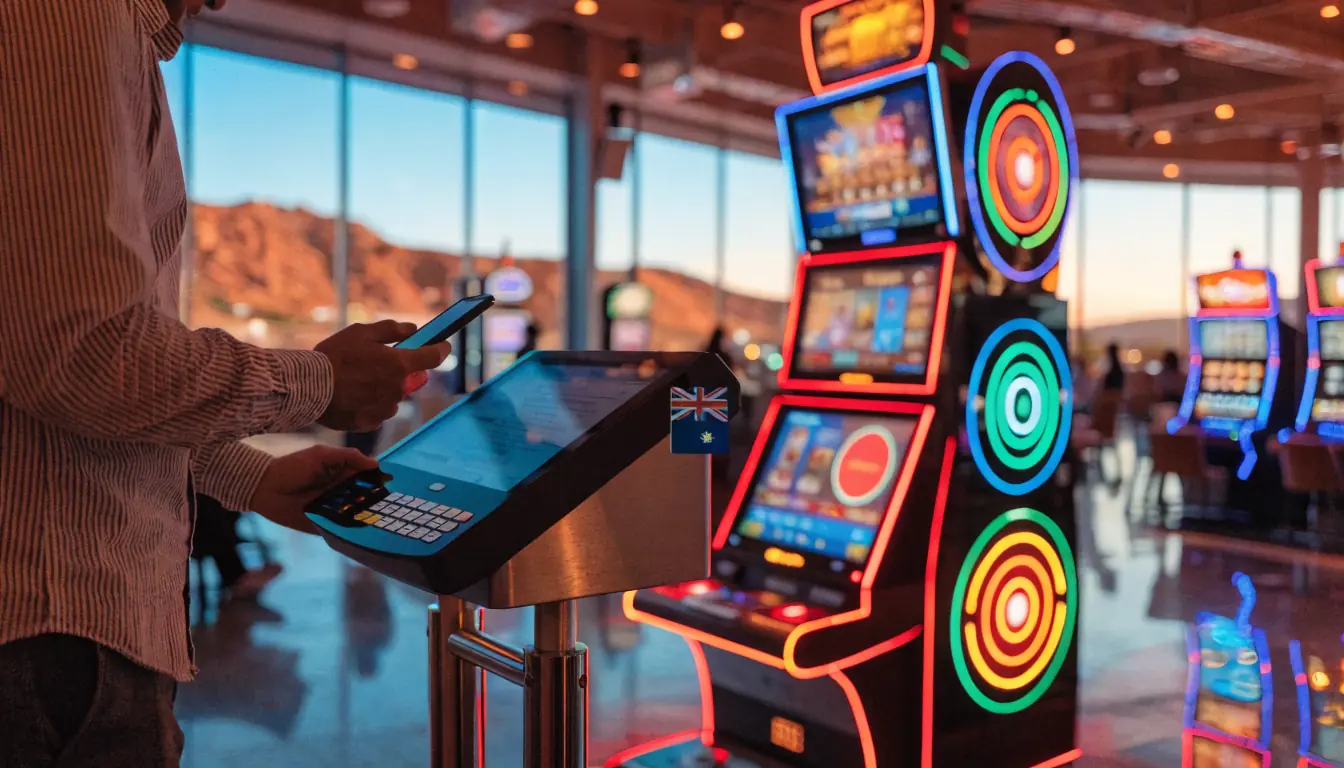
That’s not a reason to panic about legality on the player side — the law’s own target is the operator, not the person clicking play, which the next section deals with directly. But it is a reason to be precise about what "regulated" means when it appears on a casino homepage, and to stop expecting a market that federal law was specifically built not to create.
Legal Access for Australian Players
Here’s the part that trips people up when they’re hunting for the best paying online slots for AU players: the law was never written to punish the person pressing spin. It was written to stop a company from setting up shop.
The Interactive Gambling Act targets whoever offers the game, not whoever plays it. No local operator can hold a licence to run an online casino for Australian residents — that door is closed, permanently, and no amount of searching for "best paying online casinos for AU players" will find a legal domestic one, because it doesn’t exist. What does exist, and what the law leaves untouched, is an Australian resident opening an account with an offshore-licensed crypto casino and playing there.
That’s not a loophole. It’s the actual shape of the rule. Regulators went after supply, not demand, and the practical result is that offshore platforms — the ones running on Curacao or Malta licences — remain open to Australian players without either side breaking Commonwealth law.
Worth separating from the bigger regulatory picture: this isn’t a statement about how those platforms pay out, how fast withdrawals clear, or which ones are worth your time. It’s narrower than that — it’s just the legal floor. Anyone chasing the best paying cash online casinos for AU players still has to do the homework on the operator itself. The law only answers one question: can you play. It doesn’t answer whether you should trust the site doing the paying.
Legal risk
Running or promoting an unlicensed online casino in Australia breaches the Interactive Gambling Act and can result in criminal prosecution and heavy fines.
That question gets harder once crypto enters the picture — which is where the banking side of this actually starts to matter.
Crypto‑Enabled Payments for Online Pokies
Banking is where most players actually feel the difference between an offshore crypto casino and anything trying to imitate a "regulated" experience from a distance. I have moved funds both ways — card to casino, wallet to casino — and the gap is not marketing. It is structural. Card‑led systems route a deposit through several intermediaries before it lands anywhere near a game. A crypto transfer goes from wallet to wallet, with the blockchain itself doing the confirmation work that a bank would otherwise sit on.
That directness is the whole appeal. It also means the room for user error moves from the middleman’s side to yours.
How the transfer actually works
A deposit starts the same way regardless of coin: the casino gives a wallet address, you send from your own wallet or an exchange, and the network confirms the transaction. There is no form asking for a card number, no waiting on a bank’s fraud filter. The casino credits the account once the blockchain says the transfer is final, and on most chains that happens quickly enough that you can start playing in the same session you funded it.


Withdrawals run the same route in reverse. This is where the two things people say about crypto casino payouts start to diverge, and it is worth being honest about the disagreement rather than picking a side. One version, repeated often, is that withdrawals are close to instant — minutes, low fees, no drama. The other version is more cautious: withdrawal speed depends on the casino’s own approval step before it ever touches the blockchain, and that step can add delay regardless of how fast the network itself is. Both can be true at the same casino on different days. The blockchain doesn’t stall; the operator’s internal review sometimes does. Worth knowing before treating "instant" as a guarantee.
Which coins actually get accepted
Bitcoin remains the default. It’s the coin every crypto casino supports, the one most payment pages list first, and the one with the deepest liquidity if you’re converting back to cash later. Beyond Bitcoin, the accepted list usually widens fast: Ethereum, Litecoin, USDT, Dogecoin, Solana, Ripple, and a scattering of other altcoins depending on the platform.
USDT deserves its own mention, because it behaves differently from the rest. As a stablecoin pegged to a fiat value, it removes the price‑swing risk that comes with holding Bitcoin or Ethereum between deposit and play. If a balance sitting in a casino account for a few days matters to you, that stability is not a small detail — it’s the difference between the same balance and a smaller one, purely from market movement that has nothing to do with the games.
Wrong network
Sending a crypto token (e.g., USDT) on the wrong blockchain address leads to irreversible loss of funds; always verify the network before confirming a transfer.
Where people actually lose money — not to the house, to their own transfer
None of the following is a house edge or a bad bet. It’s money lost to process, and it’s avoidable.
- Sending on the wrong network. USDT alone exists on several different blockchains — Ethereum, Tron, Solana, and others — and the address format doesn’t always warn you if you’ve picked the wrong one. Send an Ethereum‑network token to a Tron address and the funds can be gone, not delayed. This is the single most common mistake, and it’s also the least forgivable one, because there’s no support line on a blockchain that can undo it.
- Ignoring the fee before confirming. Network fees move with congestion. A transfer that would cost next to nothing at a quiet hour can cost noticeably more when the network is busy, and casinos generally don’t absorb that difference for you. Check the fee the wallet is quoting before hitting send, not after.
- Assuming crypto means no identity checks. This is the mistake that surprises people the most, and it shouldn’t. Paying in Bitcoin doesn’t opt you out of verification — it changes when the casino asks, not whether it asks. Most platforms still want ID before releasing a withdrawal of any size. “No KYC” gets thrown around as a selling point on some sites, but treat it as a claim to verify against the actual withdrawal terms, not as a fixed rule across the industry.
Speed versus certainty
The honest way to describe crypto banking for pokies is: fast on the network side, variable on the operator side. The blockchain doesn’t have opening hours, doesn’t have a weekend backlog, and doesn’t ask why you’re moving money. Confirmation on most chains lands within minutes. What happens between "confirmed" and "credited to your play balance" is entirely up to the casino’s own processing, and that’s the part no wallet can speed up.
Same logic applies coming out. A withdrawal request doesn’t disappear into a queue the way a card refund sometimes does — but it also isn’t guaranteed to clear the moment you click the button. Some platforms process it fast enough that "instant" is a fair word. Others sit on it for review first. Read the casino’s own payout terms before assuming which one you’ve signed up for.
None of this replaces the ID check most withdrawals still require, and none of it changes the blockchain you’re sending on — get that part wrong and speed becomes irrelevant.

High‑Paying Online Slots Explained
"Best paying" gets thrown around by every operator’s marketing copy as if it were a fixed property of a game, printed somewhere in stone. It isn’t. What actually determines whether a slot pays well comes down to how the outcome is generated and who, if anyone, can touch that process after the fact.
That’s the real question behind searches for the best paying online slots, best paying video slots, or the best paying slot websites: not which logo looks trustworthy, but whether the math behind the spin can be checked at all.
What "provably fair" actually means
Reputable crypto casinos run on provably fair algorithms. In practice, this means every spin produces a cryptographic hash — a fingerprint of the random seed used to generate that result — and a player can verify, after the fact, that the outcome wasn’t altered between the bet and the payout. The casino commits to a hash before the round, reveals the seed after, and the player can run the check independently.
That’s a meaningfully different claim from "trust our RNG." A traditional online slot asks the player to believe the operator’s random number generator is honest and unmodified. A provably fair slot lets the player confirm it, spin by spin, using the same hash the casino itself published beforehand.
provably fair
A provably‑fair system generates a cryptographic hash for each spin, allowing the player to verify after the fact that the outcome was not altered by the operator.
"Verified" is doing real work here. It’s not a badge sitting in a footer. It’s a hash the player can paste into an independent checker and get a yes or no answer.
Decentralised platforms take it a step further
Some crypto casino platforms don’t stop at letting players verify outcomes — they remove the single point of control altogether. On these decentralised protocols, no one company holds the funds or decides the outcome. The game logic runs on-chain or through a smart contract structure, and payouts execute automatically once the conditions are met.
This matters for the "best paying" question because it changes who could theoretically interfere. On a conventional platform, even a provably fair one, the operator still holds the bankroll and still controls the front end players interact with. On a decentralised one, that layer of control isn’t there to begin with — there’s no back office that can quietly adjust a game’s behaviour, because there’s no back office holding the keys.
None of this means every slot on a decentralised platform pays better than every slot on a conventional one. It means the mechanism that would let anyone manipulate payouts is either checkable or absent. That’s a different guarantee than "high paying," and worth keeping separate in your head.
Where the two ideas fit together
| Feature | What it verifies | What it doesn’t verify |
|---|---|---|
| Provably fair hash | The specific spin’s outcome wasn’t tampered with after the bet | Long-run payout behaviour of the game itself |
| Decentralised protocol | No single party controls funds or the outcome engine | Whether the underlying game design favours the player |
Both are about trust in the mechanism, not a promise about the size of the payout. A game can be fully provably fair and still be a game you personally don’t enjoy playing. Fairness and generosity are not the same axis, even though marketing copy likes to collapse them into one.
This is also where "best paying slot" as a search phrase runs into a wall: there’s no independent, published ranking of specific slot titles by real-world payout that would let anyone name names here with a straight face. What can be said honestly is narrower — how to check whether the mechanism behind any given slot is one you can verify, versus one you’re simply asked to trust.
What to actually check before playing
- Whether the platform publishes a provably fair system, and whether it explains — in plain terms, not just a badge — how to verify a hash yourself.
- Whether the game runs through a decentralised protocol, and if so, what part of the process is on-chain versus handled by the operator’s own servers.
- Whether verification is something you can do yourself, right now, on a given spin, or something the site just claims in a paragraph of copy.
None of that requires taking anyone’s word for it. That’s the point of the whole mechanism. A slot that’s genuinely built this way gives you the tools to check it; one that isn’t gives you an adjective instead.
The difference between those two is the entire difference between a "best paying" claim and a paying game.
Slot Machines vs Pokie Machines – Payback Mechanics
"Pokie" and "slot machine" get used as if they’re the same object. They’re not, and the difference matters more than the terminology suggests.
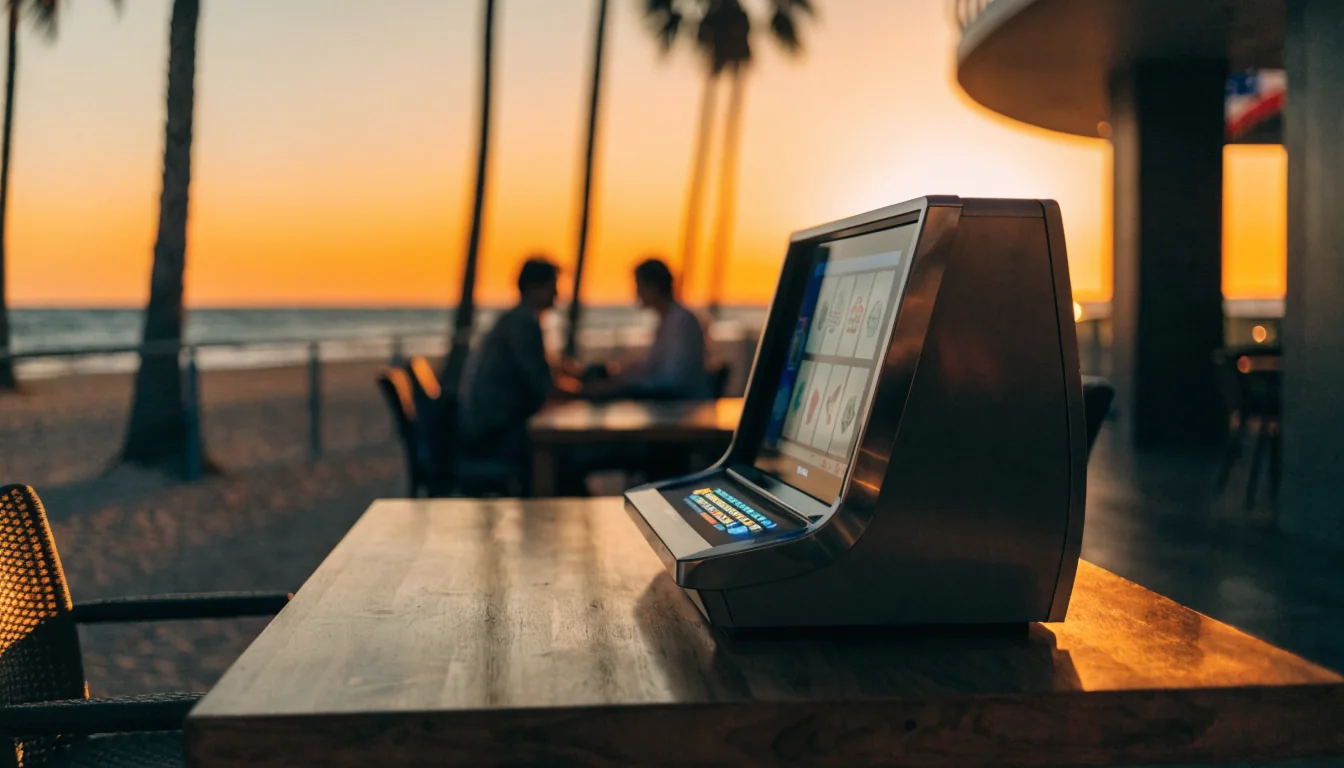
A pokie machine, in the Australian sense, is a physical cabinet sitting in a venue — a pub, a club, a licensed gaming room. Its payback mechanics are set by the machine’s software, tested and certified before it ever hits a floor, and locked in place for as long as it operates there. Nobody at the venue is adjusting anything on a given Tuesday night. The math runs on rails.
Physical cabinet, licensed by Australian authorities, with fixed RTP certified on‑site.
Runs on a server abroad, licensed in jurisdictions such as Curacao or Malta, RTP is declared by the operator.
Game logic lives on‑chain, no single operator controls funds; fairness is enforced by the smart contract.
A slot machine, in the sense this article means it, is a digital game running on a server somewhere offshore. Different regulator, different oversight body, different — often much less visible — path to figuring out who actually checked the math. That gap is the whole story of this section.
Where the licence actually sits
No Australian body issues a licence for online casino games. That’s not a gap in enforcement, it’s the actual law — there’s nothing to hold and nothing to check locally. So every online slot an Australian plays is running under someone else’s rulebook. Many crypto casinos operate offshore and are licensed in jurisdictions such as Curacao or Malta. That’s not a red flag by default. It’s just a different chain of accountability, one where the regulator is a foreign body, and the terms of certification are theirs to define, not Canberra’s.
Compare that to a pokie machine on a club floor. Its testing regime, its certification, its physical inspection — all domestic, all under a licence that actually names an Australian jurisdiction. Two payback systems, two accountability structures, and conflating them because both have spinning reels is where a lot of confusion starts.

What AML/CTF changes are doing to the picture
Something has shifted recently on the compliance side. By one industry account, AML/CTF changes coming into effect in 2026 add reporting obligations across the gambling sector — mainly landing on providers rather than players. That’s a single source describing a single moving target, not a settled industry-wide rule, and it’s worth saying plainly: nobody outside that provider-facing reporting chain has published a clear picture of exactly how far it reaches or which operators it touches first.
What it means practically, if it holds: providers carry more paperwork, more identity and transaction reporting, before funds move. It doesn’t rewrite how a slot’s payback percentage is calculated. It changes who has to document what, and when. Payback mechanics and compliance mechanics are different layers — one lives in the game’s math model, the other lives in the operator’s back office. Confusing the two makes people expect games to "pay differently" because of a reporting rule that has nothing to do with reel weighting.
The comparison, stripped down
| Pokie machine (AU venue) | Slot machine (offshore online) | |
|---|---|---|
| Where it’s licensed | Local jurisdiction, physically inspected | Offshore — Curacao, Malta, others |
| Who certifies the math | Domestic testing body | Offshore regulator’s own standards |
| Who’s affected by new AML/CTF reporting | Venue-level compliance, separately regulated | Providers, per one industry account for 2026 |
| Physical vs digital | Physical cabinet, fixed floor | Server-side game, accessed remotely |
None of this tells you a given machine or game pays better. It tells you where to look if you want to know who stands behind the number. For a pokie, that’s a name you can actually locate. For an offshore slot, it’s a licensing body most players have never had reason to research.
The instinct to treat "regulated" as a stamp of safety runs into a wall here — there’s no local licence to check, no register to search, because none exists for this category of product in Australia. That’s not a technicality. It’s the reason offshore slots and venue pokies can’t be graded on the same scale, no matter how similar they look on a screen.
Different rulebooks. Different bodies signing off. Same reels.
Paying Slot Games & Crypto Incentives
Ask what makes one slot "pay better" than another and most answers stop at RTP. That’s half the picture. The other half is what a crypto casino wraps around the game itself — and that’s where the token economy comes in.
Token staking considerations
Before locking funds into a casino’s native token, check:
- The token trades on external exchanges; otherwise it functions only as a loyalty point.
- What governance decisions the token actually influences (fees, game list, etc.).
- Whether staking imposes withdrawal lock‑ups or other restrictions that could affect liquidity.
A handful of platforms now issue their own native tokens alongside the usual roster of accepted coins. Hold or stake that token and, on some platforms, you get more than a discount — governance rights, a vote on how the platform runs, sit next to the staking reward itself. That’s a genuinely different incentive structure from a matched deposit or a set of free spins. A bonus expires. A stake keeps generating as long as you hold it.
I’d treat "governance rights" with the same scepticism I’d apply to any other marketing line — it sounds like ownership, it usually functions like a loyalty tier with better branding. Read what the vote actually controls before assuming it means anything.
Where this actually shows up
Not every crypto casino bothers with a token. Most just run standard slot catalogues with crypto as the payment rail, nothing more. The ones building staking layers on top tend to be the platforms leaning hardest into being "crypto-native" rather than a card-based casino that added Bitcoin as an afterthought.
According to one industry roundup, the casinos currently positioned this way for Australian players include GoldEx, King Johnnie, and Stellar Spins. I’d treat that as one observer’s snapshot rather than a settled ranking — this is a market where operators rotate promotions and token programs change without much notice, and a list compiled today reads differently in six months.
What to check before staking anything
A staking reward is only as good as the token behind it. Before locking funds into any native-token programme, worth confirming:
- Whether the token trades outside the casino’s own ecosystem. A token with no external market is a loyalty point wearing a costume.
- What “governance” actually decides. Fee structures, game additions, nothing at all — the scope varies by platform.
- Whether staking locks withdrawals. Some structures tie your stake to a holding period; that’s a real cost if you need the funds back quickly.
None of this replaces checking the slot’s own paytable and provider first — that’s still the base of whether a game pays well. The token layer is an add-on, not a substitute.
Worth saying plainly: nobody publishes a standardised comparison of these staking terms across operators. Each platform sets its own, and there’s no regulator collecting them into one table. You’re reading the operator’s own page, full stop.
Real‑Money Slots with the Highest Payouts in 2026
Return matters less than what happens after a win. A slot can post a strong theoretical payback and still leave money sitting in limbo if the casino behind it is slow to release funds.
Crypto casinos change that equation on the withdrawal side, not the reel side. Deposits confirm quickly, often within minutes, so play starts without the usual card-processing wait. Withdrawals are where the real difference shows: most crypto casinos clear payouts instantly or within hours, and fees stay low compared to card or bank rails. That said, sources don’t fully agree here — some describe withdrawals as near-instant, others note that timing still depends on the casino’s own approval step before the blockchain even gets involved. Both are true at once. The chain moves fast; the operator’s queue is the variable.
For real-money play, that queue matters more than the slot’s name. A "high-paying" title is only as good as the exit.
Fast confirmation, low fees, honest queue.
Are crypto casinos legal in Australia in 2026?
Yes, Australian players can legally access offshore crypto casinos, since the Interactive Gambling Act 2001 targets operators offering casino services, not individual players, and there is no criminal penalty for playing at offshore sites. However, no online casino can be licensed domestically in Australia, so every crypto casino serving Australians operates from jurisdictions such as Curacao or Malta.
Is using a crypto casino legal for Australian players?
Yes — the law prohibits operators from offering online casino games to Australian residents, but it does not penalise individual players, so Australians are not committing an offence by playing at offshore-licensed crypto casinos.
How do recommended online casinos ensure game fairness?
Reputable crypto casinos use provably fair algorithms that let players verify the randomness of each result through cryptographic hashes, and some operate on decentralised protocols where no single company controls funds or outcomes.
Can I play crypto casino games on my mobile device?
Yes, crypto casino games are playable on mobile devices — deposits in Bitcoin, Ethereum, Litecoin, USDT and other supported coins are typically confirmed within minutes, and withdrawals often clear in minutes or a few hours with low fees.