
Casinos That Accept Mastercard Debit in Australia

- Australian Regulatory Landscape for Mastercard Debit Use
- Why Australian Casinos Accept Mastercard Debit in 2026
- How Mastercard Deposits Work – Speed, Security and Limits
- Online Pokies that Support Mastercard Payments
- Mastercard-Compatible Slot Games and Providers
- Instant Withdrawals: What’s Possible with Mastercard
- Withdrawing to Your Mastercard Debit – What You Need to Know
- Top Mastercard Deposit Bonuses You Can Claim
- Casino Sites That Accept Mastercard Debit
- Paying with Mastercard – Practical Tips and Common Issues
Australian Regulatory Landscape for Mastercard Debit Use
No domestic licence exists for online casino games in Australia. The Interactive Gambling Act 2001 targets operators, not the players who use them — sitting down at an offshore table is not itself an offence, even though the law was built for harm minimisation rather than approval of the activity.
What changed the picture for card payments specifically is the National Consumer Credit Protection Amendment Act 2024. It prohibits credit-card gambling outright, closing off a route that used to let players stake borrowed money. Debit cards weren’t touched the same way, which is why Mastercard debit still moves funds where a Mastercard credit product won’t.
That said, banks read the same law and often act ahead of it. Many Australian banks now flag or block transactions heading to offshore gambling merchants by default, regardless of card type. So a debit card being legal to use doesn’t guarantee your bank will let the transaction through on the first attempt.
Why Australian Casinos Accept Mastercard Debit in 2026
Ask why a payment option shows up on a casino’s cashier page and the honest answer is rarely "because it’s the best technology." It’s because the option already sits in the customer’s pocket. Mastercard debit ticks that box for a huge share of the Australian market, and that alone explains most of its presence on deposit menus.
One industry review of payment options put Mastercard’s acceptance rate at 90% of Australian online casinos — a figure worth treating as a snapshot from a single source rather than a market-wide guarantee, since operator lists change month to month. Still, even as a rough indicator, it tells you something operators already know: building a cashier around a card that most adults already carry costs less in support tickets and abandoned deposits than pushing people toward something unfamiliar.


Trust built before the transaction
Nobody has to explain to a new player what Mastercard is. That familiarity does work that marketing budgets can’t buy. A player who’s used the card for groceries, bills and online shopping doesn’t need convincing that the transaction interface is legitimate — the trust transferred long before they ever opened a casino account. Operators know this, which is why the card logo tends to sit near the top of the cashier page rather than buried under newer, flashier options.
Mastercard’s own security layer reinforces that trust rather than sitting separately from it. Transactions run through Mastercard ID Check (3D Secure 2.0), backed by real-time fraud monitoring and bank-level encryption — the same infrastructure a cardholder relies on for any other online purchase. For a casino operator, offering a payment method with security already handled at the network level means fewer disputes to manage and fewer players who bail out mid-deposit because a checkout screen feels unfamiliar.

A method built to work with the ban, not around it
The card’s staying power in this market also comes down to timing. With credit-card gambling now off the table under the National Consumer Credit Protection Amendment Act 2024, debit cards became the practical route for anyone who wants to keep using card payments rather than switch entirely to bank transfers or e-wallets. Mastercard debit fits that gap cleanly: same card number format, same checkout flow players already know, just drawing from the cardholder’s own balance instead of a credit line. Operators didn’t need to redesign anything to stay compliant — they just needed to make sure the debit variant was clearly what showed up at checkout.
That’s a big part of why one industry review flagged Mastercard debit as often the strongest deposit-first tool for Australian players specifically — not the fastest in every case, not the cheapest, but the one requiring the least friction between deciding to deposit and having funds show up. Again, that’s one source’s framing rather than a verdict every operator would sign off on, but it lines up with what a familiar, already-verified card tends to deliver in practice.
Banks often flag or block offshore gambling transactions even when Mastercard debit is legal, which can cause a deposit to be declined at checkout.
Responsible gambling sits inside the rails, not bolted on
There’s a quieter reason operators lean on Mastercard too: the card network itself gives banks the ability to set limits or block gambling transactions outright. That’s not a feature the casino built — it’s baked into how Mastercard works with issuing banks. For an industry under constant scrutiny over player protection, being able to point to a payment rail that supports account-level restrictions, rather than fighting against them, is a genuine operational advantage. It means the casino isn’t the only line of defence against problem spending; the card issuer can be too.
Familiarity beats novelty, most of the time
None of this makes Mastercard debit unique. Visa sits in the same category for the same reasons — instant processing, a checkout flow nobody has to learn, and a brand every bank customer already recognises. Both cards remain popular for exactly that combination of speed and familiarity, and Australian casinos that want a low-friction cashier tend to carry both rather than pick a side.
The acceptance itself is a business decision, not a technical one. How the deposit actually moves once a player taps "confirm" is a different conversation.
How Mastercard Deposits Work – Speed, Security and Limits
The mechanics behind a Mastercard deposit are simpler than the marketing around them suggests. Enter the card number, expiry, CVV, confirm the amount, authorise the payment — that’s the whole flow. No new account to open, no separate app to install first. Which is exactly why the card stayed relevant while newer payment rails came and went.
Speed
Deposits typically clear within a minute. That’s not a courtesy the casino extends — it’s how the card network is built. The authorisation request goes from the casino’s payment processor to the card issuer, gets an instant yes or no, and the funds move accordingly. One operator I looked at quotes deposit times ranging from instant up to fifteen minutes, which tells you the "instant" label still has some elasticity in practice depending on the processor sitting between the casino and the bank.

Compare that to a bank transfer sitting in a queue overnight, and it’s obvious why debit cards remain what one industry review called the strongest deposit-first method for Australian players. Strongest for getting money in. Nothing said yet about getting money out — that’s a different mechanism, covered later.
Security
Every Mastercard deposit goes through Mastercard ID Check, the network’s implementation of 3D Secure 2.0. In practice this means a prompt from the bank’s own app or a one-time code sent by SMS before the payment finalises. The casino never sees or stores the code. Neither does the payment processor, technically — the verification happens in a channel between the cardholder and the issuing bank, outside the casino’s system entirely.
This matters more than it sounds. A stolen card number alone isn’t enough to move money anymore. Whoever’s using the card needs access to the phone or banking app tied to it. It’s an inconvenience wrapped as a feature — and in this case, the inconvenience is the point.
Mastercard ID Check (3D Secure 2.0) requires a one‑time code or app confirmation, adding an extra verification step before the deposit is finalised.
Behind that verification step sits the standard second layer: encryption on the transmission itself, plus real-time monitoring on the issuer’s side watching for the kind of pattern that flags fraud — unusual amount, unusual location, unusual frequency. None of that is casino-specific. It’s the same infrastructure protecting a card at a petrol station or a supermarket checkout, just pointed at a gambling operator’s payment page instead.
Limits
There’s no single number to quote here, and any casino advertising one flat limit across the board is simplifying more than it should. What actually caps a deposit is a layered thing:
- The card issuer’s own limit — set by the bank, often adjustable by the cardholder through online banking.
- The casino’s processing limit — set by whichever payment gateway the operator uses, which can vary deposit to deposit.
- Responsible gambling controls — Mastercard’s system allows banks to apply gambling-specific blocks or caps at the account level, separate from the card’s general spending limit.
That third layer is worth sitting with for a second. A player can raise their card’s general limit and still get declined at a casino specifically, because the bank has flagged the merchant category rather than the amount. It’s not a bug in the payment. It’s the bank doing exactly what it was asked to do.
For someone testing a new casino for the first time, a small deposit — the kind that barely registers against any of these limits — is still the fastest way to see whether the processing chain between card, processor, and operator actually behaves the way the terms page says it will. The speed and the verification step show up immediately; the limits usually only reveal themselves once you push past them.
Online Pokies that Support Mastercard Payments
Nobody in this industry talks about "pokies" and "payment rails" in the same sentence, but that’s exactly what determines whether a game loads properly for an Australian player. A slot title itself doesn’t know or care which card funded the session — that decision happens one layer down, at the casino’s cashier, where the operator has already wired up its payment processor to accept Mastercard debit. Once that connection exists, every pokie on the platform becomes "Mastercard-compatible" by default. There’s no separate integration per game. This is worth saying plainly because plenty of marketing copy implies otherwise, listing "Mastercard slots" as if the card brand licenses specific titles. It doesn’t work that way. What matters is the casino, not the game.
That said, the practical experience does vary by title, and that’s where player experience actually lives.
What "compatible" really means at the cashier level
When a casino’s payment gateway supports Mastercard debit, the card becomes usable across the entire real-money catalogue — slots, table games, live dealer rooms, everything sitting behind the same wallet. The deposit lands in the account balance, not in a specific game. From there, a player can move into any pokie the operator offers without a second verification step.
Widely accepted at Australian online casinos, instant‑like deposits, but withdrawals are rarely supported.
Similar acceptance and speed to Mastercard, with slightly more operators offering card‑to‑card withdrawals.
Fast deposits and withdrawals, typically clears within a few hours, but not as universally displayed on casino cashiers.
Instant deposits and withdrawals with low fees, but requires a separate wallet and is less familiar to the average player.
This matters because a fair chunk of search traffic around this topic assumes there’s a curated shortlist of "Mastercard pokies." There isn’t, in any meaningful sense — the card is a funding method, not a game filter. What does change from casino to casino is the size and mix of the library sitting behind that cashier. One operator’s terms describe a catalogue running past 13,000 titles from more than 60 providers, which gives a sense of scale at the upper end of the market — most sites sit well below that, and the number itself is one operator’s own disclosure, not an industry baseline.
Reading a pokie’s technical profile before funding it
Once the deposit clears, the choice of which pokie to play comes down to the same variables it always has: return-to-player percentage, volatility, and hit frequency. None of that is Mastercard-specific, but it’s worth restating here because a lot of players conflate "accepts my card" with "worth my money" — two separate questions.
- RTP — the theoretical return over a large number of spins, published by the provider, not the casino.
- Volatility — how the payouts are distributed: frequent small wins versus rarer large ones.
- Hit frequency — how often any win lands at all, independent of size.
None of these figures change because Mastercard funded the balance. A dollar from a Mastercard debit deposit behaves identically to a dollar from any other source once it’s sitting in the wallet. The card only affects how the money got there and, later, how quickly winnings can move back out — a separate matter covered elsewhere.
Mobile play and card-funded sessions
A large share of Australian pokie traffic now happens on phones, and this is one area where the payment method quietly affects the experience. Mastercard’s own verification layer — Mastercard ID Check, the 3D Secure 2.0 protocol — runs through a banking app or a one-time code, which on mobile is usually faster than it sounds. The deposit itself typically clears within a minute, so a player funding an account from a phone browser or app rarely waits long enough to lose the mood to play. That speed is part of why Mastercard remains one of the two dominant options at Australian-facing casinos alongside Visa — both are familiar, both process quickly, and neither requires learning a new interface the way an e-wallet or crypto wallet might.
Where mobile play gets interesting is compatibility at the game engine level, not the payment level. Most modern pokie libraries are built on HTML5, which runs identically whether the deposit came in through Mastercard, Visa, or a bank transfer. So the "mobile-friendly" question and the "Mastercard-friendly" question are really two independent checks a player has to run, not one.

How widely Mastercard actually reaches across the market
According to one industry review, Mastercard debit is accepted at roughly nine in every ten Australian-facing online casinos — a figure worth treating as a snapshot from a single source rather than a fixed market rule, since acceptance shifts as processors and banking partners change. In practice, though, it lines up with what’s visible on the ground: Mastercard and Visa are the two card brands almost every operator supports, and a casino that skips one of them is the exception rather than the norm.
That reach is precisely why the "which pokies accept Mastercard" framing can be misleading. The honest answer for most Australian-facing operators is: nearly all of them, because the card works at the cashier, not the game. The more useful question is which casinos process Mastercard deposits fastest and which pair it with a library worth spending time in.
What actually separates one Mastercard-funded casino from another
Given that the card itself doesn’t discriminate between titles, the real differences between operators show up in three places:
- Processing speed at deposit — most Australian operators clear Mastercard deposits within a minute; at least one operator’s own disclosure puts its range at instant to fifteen minutes, which is a reminder that “instant” isn’t contractually guaranteed everywhere even when it’s the norm.
- Catalogue breadth — a bigger provider count behind the cashier means more pokie variety once the deposit lands, though a large number on its own says nothing about quality.
- Provider mix — the specific studios behind a casino’s slots shape the actual play experience far more than the payment brand ever will.
None of this changes what Mastercard does mechanically. It moves money from a bank account into a casino wallet, verified through the card’s own security layer, and steps out of the picture once the balance is credited. Everything downstream — which pokie gets picked, how volatile it is, how the session feels on a five-inch screen — belongs to the game, not the card.
A note on library size claims
It’s tempting to treat a headline number like "13,000+ games" as proof of quality. It isn’t. That figure comes from one operator’s own promotional material, and library size correlates loosely, at best, with whether the specific pokies a player actually wants are present. A smaller, curated catalogue from a handful of strong providers can outperform a bloated one in practice. Big numbers make good marketing copy. They don’t make good gameplay on their own.
Where this leaves the Mastercard player
Practically, a player holding a Mastercard debit card doesn’t need to hunt for a special category of "Mastercard pokies" — that category barely exists as a meaningful filter. What matters is confirming the casino’s cashier lists Mastercard debit (the vast majority do), checking that the deposit clears quickly, and then choosing pokies the same way anyone would: by RTP, volatility, and provider reputation, not by payment brand.
The card does its job quietly in the background. Verification runs, the balance updates, and the actual entertainment — or the actual risk — starts the moment the reels spin, completely independent of how the money got there.
Mastercard-Compatible Slot Games and Providers
Game providers don’t build slots around a specific card scheme — Mastercard sits at the cashier level, not inside the game engine. What actually varies from one operator to the next is how big the library is and what that library costs to unlock. That’s the part worth checking before a deposit, not the payment logo on the banner.

Library size is where the gap between operators becomes obvious. One casino I looked at runs a catalogue of over 13,000 games from more than 60 providers — a number that only makes sense once you’ve scrolled through it and realised half the titles you’ve never heard of are still fully playable through a standard debit deposit. That’s the kind of range that makes "compatible with Mastercard" a formality rather than a filter: if the card works at all, it works across the whole library, not a curated slice of it.
The bonus structure attached to that deposit is the part operators actually compete on. A welcome offer running up to A$20,000 plus 500 free spins spread across the first three deposits is the sort of headline number that looks designed for a landing page — and in a way, it is. It’s a "welcome bonus" in name, but in practice it’s a staged incentive to keep funding the account past the first top-up, since most of the value sits in deposits two and three, not the first one.
Elsewhere, the structure shifts to a wagering‑free bonus value instead — a flat match on deposit, up to A$16,000 or 800 free spins, with no rollover attached. That’s a different trade-off entirely. No wagering means the number on the page is closer to what you’d actually see hit a balance, but the ceiling is usually theoretical — it’s the ceiling, not the median outcome.
What to check before chasing the number
- Provider spread, not just count. A library padded with thousands of near-identical slot skins from two or three studios isn’t the same as genuine variety.
- Which deposit the bonus attaches to. Multi-deposit offers reward continued funding, not the first click.
- Wagering terms on the specific offer, since “no-wagering” and standard rollover bonuses are marketed with the same enthusiasm but pay out very differently.
None of this depends on Mastercard specifically. Visa and Mastercard both remain the default deposit choice for Australian players largely because processing is instant and the card is already in every wallet — familiarity, not any special integration with a given slot title, is what’s doing the work here. The card gets money into the account. Everything after that is the operator’s bonus terms.
Instant Withdrawals: What’s Possible with Mastercard
Deposits land in a minute. Withdrawals are a different conversation entirely, and anyone who’s chased a payout knows why. The word "instant" gets stretched thin in this industry — worth pulling apart before it does any work on a marketing page.

Mastercard debit isn’t actually the fast lane for getting money out. That’s the part nobody upsells. The card rails that make deposits near-instant weren’t built with the same urgency running the other direction — banks route incoming card payments differently than outgoing ones, and a "reversal" back onto a debit card sits in a queue that has nothing to do with how quickly the casino approves your cash-out request.
Where the real speed lives
A few methods genuinely deliver on the instant promise:
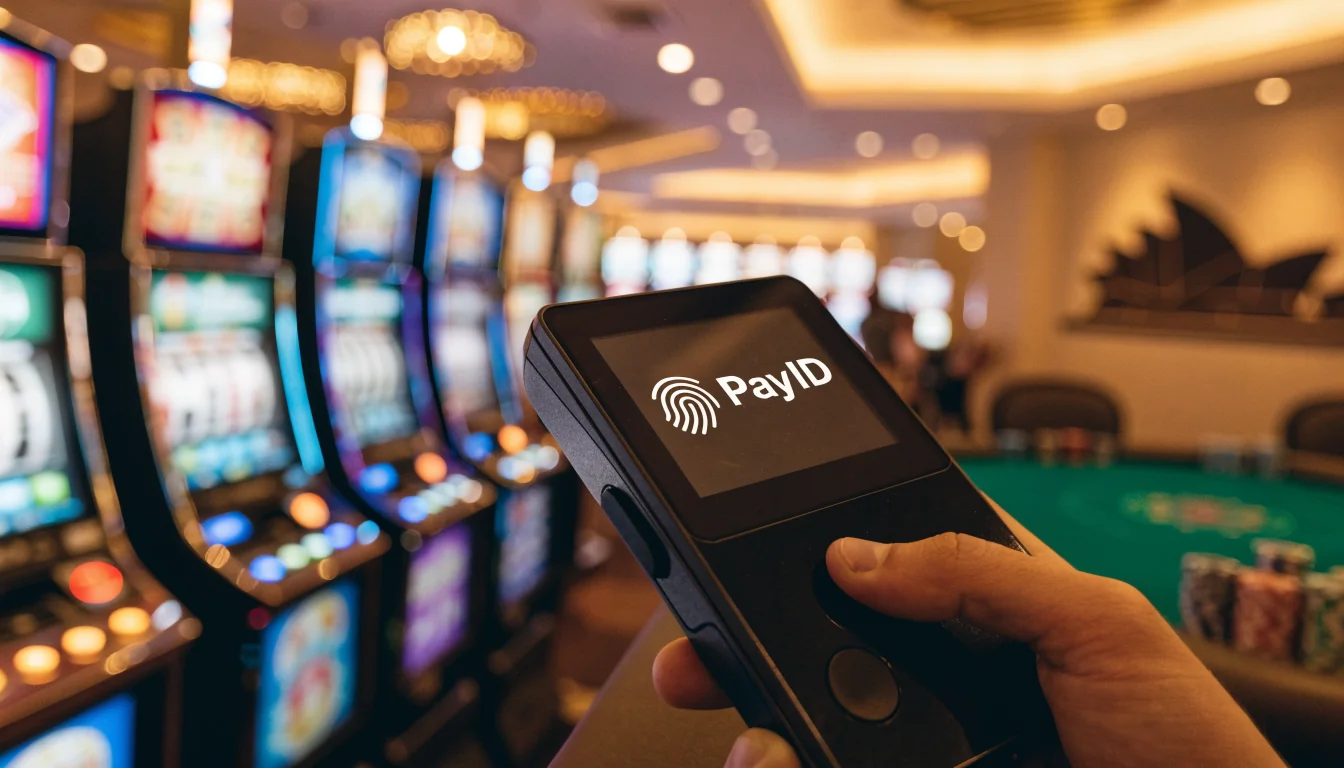
- PayID, running through the New Payments Platform, moves deposits and withdrawals in close to real time — reported turnaround sits within about 12 hours, which for a bank-linked method is fast.
- Cryptocurrency is the outright leader here. Transactions can clear in under an hour, with lower fees and less identifying information attached to the transfer than a card payment carries.
- Debit Mastercard withdrawals, by contrast, aren’t guaranteed at all. Plenty of Australian-facing casinos simply don’t send funds back to the card you deposited with — they push you toward bank transfer, an e-wallet, or crypto instead once it’s time to cash out.
That asymmetry is worth sitting with. A casino advertising "instant Mastercard" is, more often than not, talking about the deposit leg only. Nobody corrects the impression, because the impression sells.
What "instant" actually covers
Even where a casino does support Mastercard payouts, the clock rarely starts the moment you hit "withdraw." Two separate steps get bundled into one word:
- Casino processing — the operator reviewing and approving the request internally, which is where identity checks and any pending verification sit.
- Bank settlement — the actual movement of funds once the casino releases them, which is out of the operator’s hands and down to the card networks and your bank.
A method can be instant on step one and ordinary on step two. Bank transfers back to a Visa Debit card, for comparison, have been reported taking under three business days once approved — a reasonable benchmark for how the "fast" card rails actually behave once you’re withdrawing rather than depositing.
None of this makes Mastercard a poor choice. It’s still one of the more familiar, well-protected ways to move money into an account. It just isn’t the instant cashout appeal that some payment pages imply. If speed on the way out matters more than familiarity, PayID or crypto are the honest answers — not the card that got you in the door.
Withdrawing to Your Mastercard Debit – What You Need to Know
Getting money onto a Mastercard debit card is not the same guarantee as getting money off it. That asymmetry catches a lot of players out, because deposit and withdrawal are processed through different rails, and a card that takes payments happily can still get rejected on the way back.
Withdrawal Risk
A Mastercard debit deposit does not guarantee that winnings can be withdrawn to the same card; many operators only support bank transfers, crypto or e‑wallets for payouts.
Not every Australian‑facing operator sends winnings back to a Debit Mastercard. That’s a plain restriction, not a technicality: where the card option isn’t offered, the cashier menu simply won’t show it, and players need to fall back on bank transfer, cryptocurrency, or an e‑Wallet instead. Checking the withdrawal list before depositing saves a stuck balance later.
Where card‑to‑card withdrawal exists at all in this market, the pattern comes from Visa Debit rather than Mastercard — several operators (Wild Tokyo, Goldenbet, Jack.com, Slots Gallery, Boho Casino, Vegas Now) route payouts back onto a Visa Debit card, with funds landing in less than three business days. That’s the closest verified benchmark available, and it’s worth treating it as exactly that: evidence of how card withdrawals behave on this rail, not a promise of what a Mastercard payout will do.
What this means in practice
- Confirm the withdrawal method separately from the deposit method — a casino can accept Mastercard for deposits and still route payouts elsewhere.
- If card withdrawal isn’t listed, expect the operator to nominate an alternative: bank transfer, crypto, or e‑Wallet.
- Identity verification comes before any withdrawal, card or otherwise. No ID, no payout — that’s not negotiable.
None of this is a flaw specific to one operator. It’s how the payment rails are built. Card networks were designed to push money out, not necessarily to pull it back in the same direction, and gambling payouts sit in an awkward category for that plumbing. Knowing this before signing up means a smaller shock when the withdrawal page looks different from the deposit page.
Top Mastercard Deposit Bonuses You Can Claim
If you’re planning to fund your play with Mastercard, it helps to know upfront how each casino’s bonuses, deposit minimums and payout timelines actually work before you commit your card details.
Bonus: up to A$750 + 50 jackpot spins, 35x wagering · Payout speed: crypto ~90 minutes, fiat 1-5 days · Min. deposit: A$30 Offers a welcome package worth up to A$750 plus 50 jackpot spins with 35x wagering, a fairly low A$30 minimum deposit, and quick crypto payouts around 90 minutes, with fiat withdrawals taking 1-5 days.
License: Curacao Gaming Control Board OGL/2023/174/0082 (Dama N.V.) · Bonus: up to A$5,000 + 300 free spins across 4 deposits Licensed by the Curacao Gaming Control Board under Dama N.V., and stands out for a large welcome offer of up to A$5,000 plus 300 free spins spread across four deposits.
License: Curacao Gaming Control Board OGL/2023/176/0095 (Hollycorn N.V.) · Bonus: up to A$11,000 + 300 free spins (code NEO100) Operates under a Curacao Gaming Control Board license via Hollycorn N.V., and backs this with a sizeable bonus of up to A$11,000 plus 300 free spins using a dedicated promo code.
License: Curacao Gaming Control Board OGL/2023/176/0095 (Hollycorn N.V.) · Bonus: 100% up to A$10,000 + 100 free spins Holds a Curacao Gaming Control Board license through Hollycorn N.V. and pairs it with a 100% match bonus up to A$10,000 plus 100 free spins.
Bonus: up to A$7,500 + 550 free spins across 10 deposits, 50x wagering · Payout speed: crypto under 1 hour, PayID 1-3 business days · Min. deposit: A$20 (A$30 to qualify for the bonus) Provides an extensive welcome package of up to A$7,500 plus 550 free spins over ten deposits with 50x wagering, fast crypto withdrawals under an hour, PayID payouts within a few business days, and an accessible minimum deposit around A$20-30.
License: Curacao Gaming Control Board (TechSolutions Group N.V.) · Bonus: 100% up to A$250 + 100 free spins (1st deposit) Licensed by the Curacao Gaming Control Board via TechSolutions Group N.V., offering a straightforward first-deposit bonus of 100% up to A$250 plus 100 free spins.
License: Curacao eGaming (Roby Games Ltd) · Bonus: 100% up to A$750 + 200 free spins Operates under a Curacao eGaming license held by Roby Games Ltd, and offers a 100% bonus up to A$750 along with 200 free spins.
License: Curacao eGaming (Dama N.V.) · Bonus: up to A$10,000 + 180 free spins, 40x wagering Licensed under Curacao eGaming through Dama N.V., with a generous welcome bonus of up to A$10,000 plus 180 free spins and 40x wagering requirements.
Bonus: 100% up to A$750 + 200 free spins, 35x wagering · Payout speed: crypto 30-120 minutes, fiat 24-72 hours · Min. deposit: A$30 Provides a 100% bonus up to A$750 plus 200 free spins with 35x wagering, a moderate A$30 minimum deposit, and speedy crypto payouts of 30-120 minutes alongside fiat withdrawals within a few days.
License: Curacao OGL/2024/1335/0780 · Bonus: up to A$1,000 + 150 free spins, wager-free · Min. deposit: EUR 20 Licensed under Curacao with registration OGL/2024/1335/0780, offering a wager-free bonus of up to A$1,000 plus 150 free spins and a low minimum deposit of EUR 20.
Bonus terms attached to Mastercard deposits don’t differ from those tied to any other payment method — the card just triggers the deposit, the wagering rules are set by the operator, not by the network. Still, a few offers stand out enough to name, based on what operators themselves publish.
One operator markets a "wagering‑free bonus value" running up to A$16,000, or 800 free spins, credited on each deposit rather than just the first. No wagering requirement attached to that headline number is unusual enough to check the terms carefully before assuming it applies uniformly across deposit sizes.
Lucky Elf Casino runs a welcome package advertised at up to A$20,000 plus 500 free spins, spread across the first three deposits rather than dumped on the account in one go. Structuring it that way keeps players funding the account multiple times — good for the operator’s retention numbers, worth knowing before treating the headline figure as a single-deposit reward.
Neither of these numbers should be read as a market average. They come from the operators’ own promotional pages, and terms shift often enough that what’s published today may not match what’s live by the time a deposit clears.
The pattern worth noting: bonuses built around "instant cashout appeal" tend to advertise the free spins or bonus cash prominently, and the wagering conditions — if any — much less so. Read the small print before the card details.
Casino Sites That Accept Mastercard Debit
Naming which platforms actually take Mastercard debit matters more than any bonus figure attached to them — a card that gets declined at checkout makes the rest of the page academic. A handful of operators serving Australian players consistently show up on Mastercard-friendly lists, each with a slightly different pitch.
Lucky Elf Casino processes Mastercard deposits from instant to fifteen minutes, according to the terms published by the operator itself — worth checking against your own bank, since processing speed on the player’s end depends on the issuing bank too, not just the casino’s payment gateway.

Ripper Casino runs a no-deposit sign-up offer built around free spins, which is a useful way to test Mastercard withdrawal behaviour before committing real funds — sign up, claim the spins, and see how the account handles verification without risking a deposit first.
Beyond these two, most Australian-facing sites that list Mastercard debit at checkout tend to fall into the same pattern: a large slot library, a welcome offer front-loaded onto the first few deposits, and Mastercard sitting alongside Visa debit and PayID on the cashier page. Few operators build their whole identity around one card brand — Mastercard is usually one option among several, not the headline feature.
Before registering anywhere on the strength of a "Mastercard accepted" badge, it’s worth confirming that badge against the cashier page directly. Badges get outdated. Cashier pages, checked at the point of deposit, don’t lie.
Paying with Mastercard – Practical Tips and Common Issues
Most declined payments have nothing to do with the card itself. The card issuer flags the merchant category, the billing name doesn’t match the account exactly, or the verification step gets skipped somewhere in the browser. Fix those three things first before assuming Mastercard debit "doesn’t work" at a given site.
A few habits that save time:
- Match the name exactly. The cardholder name on the deposit form has to mirror the bank account, not a nickname or shortened version.
- Complete verification when asked. Mastercard ID Check (3D Secure 2.0) will occasionally trigger a one-time code from the bank’s app. Skipping it or closing the window mid-process is the most common reason a deposit stalls.
- Keep the app open. Some banks push the confirmation through their own mobile app rather than SMS, so it helps to have it installed beforehand.
- Check the card type, not just the brand. Debit works; a rejected transaction can also simply mean the site in question isn’t one of the operators that support the card, since acceptance — by one industry review’s estimate, around 90% of local sites — still isn’t universal.
None of this is complicated. It just rewards paying attention once, rather than guessing twice.
Can I use Mastercard at online casinos in Australia?
Yes, but only as a debit card — the National Consumer Credit Protection Amendment Act 2024 prohibits credit-card gambling, so Mastercard debit is the card option still available to Australian players.
Are Mastercard casino deposits instant?
Yes, deposits typically clear within a minute, since the authorisation runs directly through the card network rather than the casino’s own processing.
What are the top welcome bonuses for Australian players in 2026?
Lucky Elf Casino offers up to A$20,000 plus 500 free spins across the first three deposits, while Winz offers no-wagering bonuses of up to A$16,000 or 800 free spins on each deposit.
What payment methods are available for Australian players at online casinos?
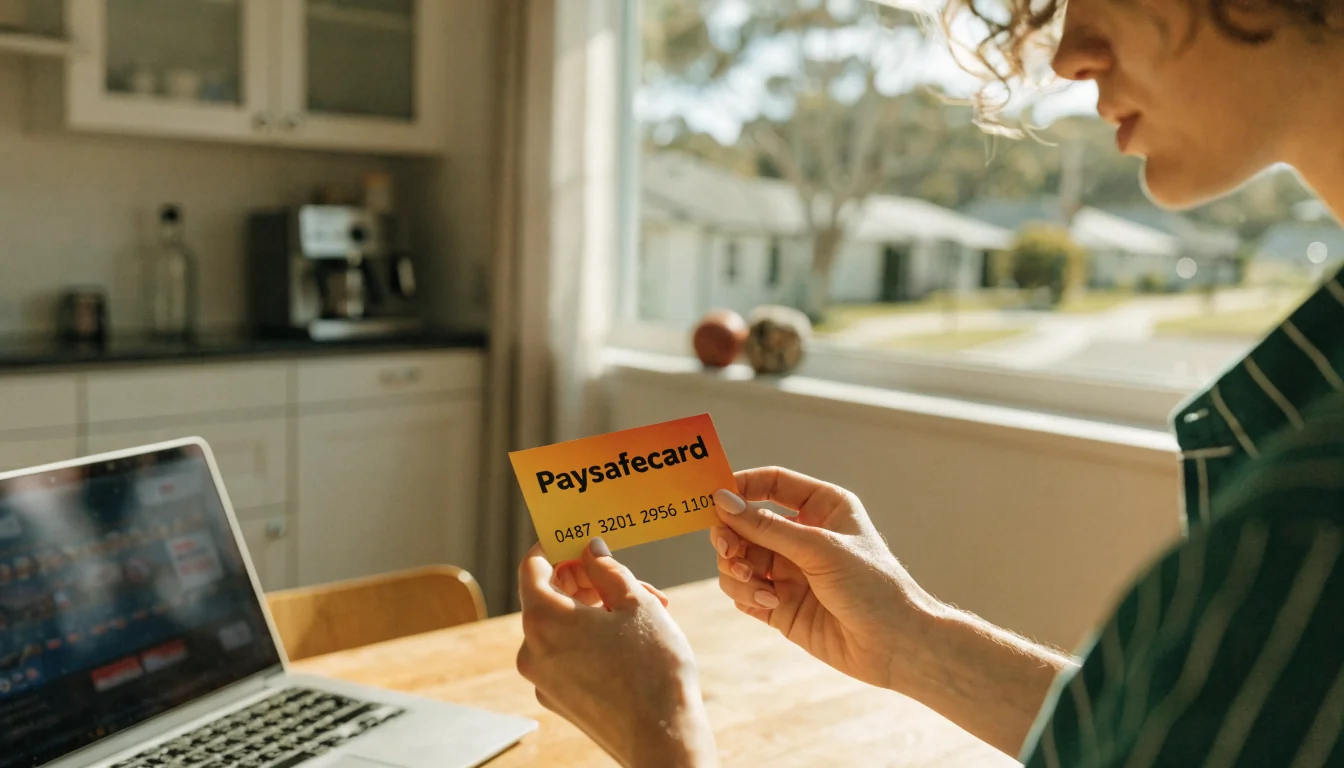
Beyond Mastercard and Visa debit cards, players can use PayID (instant deposits and withdrawals usually within 12 hours), cryptocurrencies (often under an hour), e-wallets like Neteller and Skrill, bank transfer for large withdrawals, and Paysafecard for deposits only.
How does Mastercard ensure security for casino transactions?
Payments run through Mastercard ID Check (3D Secure 2.0) with a one-time verification code, backed by real-time fraud monitoring and bank-level encryption — the same protection used for any other online purchase.
Can I use my credit card for online casinos?
No — credit-card gambling is banned in Australia under the National Consumer Credit Protection Amendment Act 2024, though debit cards like Mastercard debit or Visa Debit drawing on your own funds can still be used.