
Live Roulette Australia: English-Speaking Dealers Guide

- Online Roulette in Australia – Legal Landscape
- Land‑Based Australian Casinos Offering Live Roulette
- Roulette Game Basics: Wheels, Bets and Payouts
- How to Play Live Roulette with English‑Speaking Dealers
- Bonuses, Lightning Roulette and Deposit Options
- Understanding Odds and House Edge in Live Roulette
- Roulette Wheel Types and the Role of Live Dealers
- Table Layout, Betting Zones and Player Advantage
- Winning Strategies for Live Roulette
- Playing for Real Money – Key Considerations
Online Roulette in Australia – Legal Landscape
Ask ten people in this industry which law actually bans online roulette in Australia and you’ll get ten different answers, half of them citing a year that’s wrong. Some point to the Interactive Gambling Act 1997, others to the Interactive Gambling Act 2001. The sources disagree, and I’m not going to pretend one of them is obviously right just to make this section read cleaner. What matters is the substance, not the vintage: Commonwealth law prohibits the provision of online casino-style games to Australian residents, and roulette sits squarely inside that prohibition alongside slots, poker and blackjack.
The stated purpose of the Interactive Gambling Act is harm minimisation — protecting the public, not filling a tax base. That framing matters, because it explains a structural choice that trips up a lot of players: the Act targets the businesses offering the games, not the individuals playing them. There is no domestic offence for an Australian resident who logs into an offshore roulette table on a Friday night. The offence, on paper, belongs to whoever is running that table and taking bets from Australian soil without a local licence. It’s a distinction I’ve seen misused constantly — by operators who wave it around as if it were a green light, when really it’s just a gap the law left open on one side while closing it hard on the other.

What "prohibited" actually covers
Under the federal framework, online casino, poker and in-play betting are all prohibited. Live, in-play wagering online is illegal outright — though, oddly, placing a live bet by phone is not, which tells you something about how dated some of these provisions are relative to how people actually gamble now. Roulette played against a random number generator, live roulette streamed with a croupier, lightning variants — none of it changes the classification. It’s an online casino game, and offering it to someone sitting in Sydney or Perth is not something any operator can be licensed to do. There’s no domestic pathway to a real-money online casino licence in Australia. Not a slow one, not an expensive one — none at all. Any site claiming Australian certification for its roulette product is, at best, confused about the law, and at worst, banking on players not checking.


That’s also why there’s nothing here resembling a public register of approved online casino operators. On markets where online casino gambling is licensed, checking the regulator’s list is standard, sensible advice. Here it would be theatre — there’s no such list to check, because there’s no such licence to hold.
One country, many regulators
What confuses people almost as much as the roulette question is who actually enforces any of this. Australia doesn’t have one gambling law and one gambling cop. Regulation is split between the Commonwealth and each state and territory, and none of these bodies has full authority over the whole picture.
At the federal level, the Australian Communications and Media Authority enforces the Interactive Gambling Act. ACMA’s tools are aimed at the online space specifically — it doesn’t touch the licensing of a physical casino floor in Melbourne or Brisbane, that’s a state matter entirely, handled by state regulators and law enforcement under separate legislation. I’ll cover how those land-based licences work in the next section; the point here is just that the split exists, and it’s not a technicality — it’s the reason land-based roulette and online roulette live under two completely different rulebooks in the same country.
Below the federal layer, every state and territory runs its own regulator. Victoria has the Victorian Gambling and Casino Control Commission, which — worth noting — doesn’t limit itself to Victorian operators. It monitors wagering service providers nationally for compliance with the National Consumer Protection Framework, regardless of where those providers are based. New South Wales has its own body, and so does every other jurisdiction. None of them was built with cross-border, offshore-hosted online casino platforms in mind, which is part of why enforcement against those platforms tends to run through Canberra rather than through the states.
ACMA can block offshore gambling sites, but it has no power to recover a player’s lost funds or force an offshore operator to pay out withdrawals.
Then there’s the Northern Territory Racing Commission, which occupies an odd position in this structure. It’s not the federal regulator and it has no special constitutional status. But because it licenses the majority of Australia’s national online bookmakers — largely on the strength of a lower tax rate that made the Territory the preferred home base for sports betting brands — it’s ended up functioning as the country’s de-facto online gambling regulator in practice, even though its formal jurisdiction is sports and race wagering, not casino games. It licenses bookmakers, not roulette tables.
Where offshore operators fit
None of this stops offshore-licensed online casinos from being where the overwhelming majority of Australians who want to play roulette online actually end up. These platforms hold licences from regulators overseas — Malta, the UK, and similar jurisdictions turn up constantly in this space — and operate outside Australian licensing entirely. That’s the honest state of the market: no domestic real-money online casino exists to compete with them, and the "choice" available to an Australian player is, functionally, a choice between offshore brands.
This is where I’d push back on how a lot of comparison sites frame things. You’ll see instructions to "only play at licensed operators" or "check the operator’s licence" written as though this were neutral, universal advice that applies the same way everywhere. On a market where a local licence exists, it is neutral advice. Here, there’s no local licence to check for, so the phrase quietly shifts meaning — it stops being a safety tip and starts implying a legitimacy that doesn’t exist under Australian law. A licence from Malta or the UK is real, and it does mean something about how that specific operator is regulated in its home jurisdiction. It does not mean the operator is authorised to serve Australian players, because nothing makes that authorisation possible domestically. Worth sitting with that gap rather than papering over it.

ACMA’s actual enforcement power reflects the same asymmetry. It can order Australian internet service providers to block access to offshore gambling sites, and it has done this at scale since November 2019. It can send notices to software developers and other parties it considers ancillary to a breach, refer matters to the Australian Federal Police, notify border agencies about the directors and principals of offending operators, and liaise with foreign regulators. What it can’t do is reach into an offshore company’s bank account. It has no power to recover funds for a player who’s had a withdrawal refused, and no mechanism to settle an individual dispute with an operator sitting outside Australian jurisdiction. Blocking a domain is not the same as making a player whole. That gap is exactly where problems tend to surface — not in whether a spin was fair, but in whether money that should have come back ever does.
There’s also a narrower gap worth naming plainly: ACMA has no power to force platforms like Facebook to remove gambling advertising aimed at Australians, because of how the advertising prohibition is worded — it only bites on ads placed "in Australia," which doesn’t cleanly cover a foreign platform serving ads to Australian users. Regulators know about this hole. It hasn’t been closed.

The practical shape of it
Strip away the acronyms and the picture is fairly simple, even if it’s not tidy. Federal law bans anyone from offering online roulette to Australians and gives that ban no domestic licensing exception. It does not criminalise the player. State regulators run the land-based casino floors and, in some cases like Victoria, extend their monitoring to wagering providers regardless of home state — but none of them licenses offshore online casinos, because that’s not their jurisdiction either. The Northern Territory Racing Commission licenses sports bookmakers, not roulette platforms, even though it’s often mistaken for the country’s general online gambling authority. And ACMA, the one body with a national mandate over interactive gambling, can block a website and chase an operator’s directors, but it cannot get a player’s money back or stop a foreign platform from advertising through channels the law didn’t anticipate.
None of that makes offshore roulette illegal for the person placing the bet. It does mean the protections built into a domestically licensed market — a regulator you can complain to, a licence you can verify, a fund you can claim against — simply aren’t part of the equation here. Anyone telling you otherwise is selling something.

Land‑Based Australian Casinos Offering Live Roulette
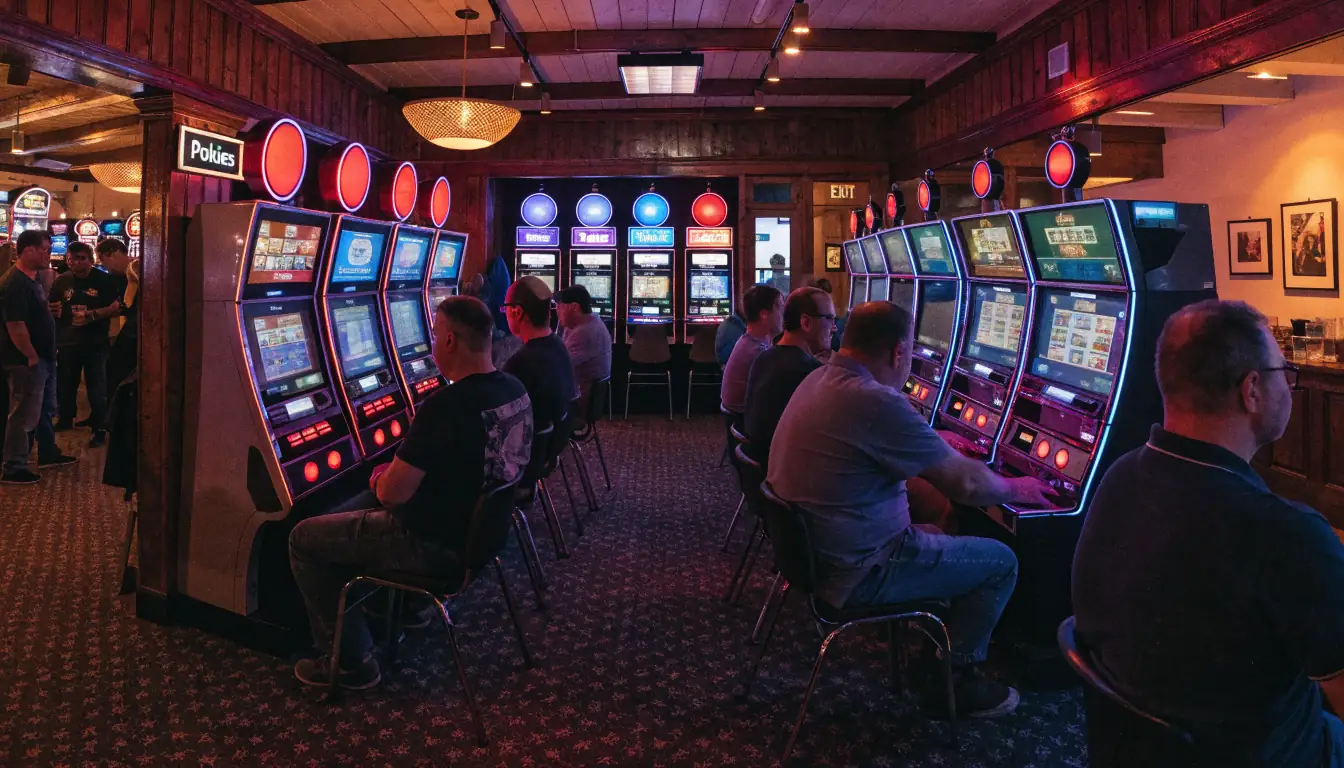
Walk into a casino floor in Melbourne, Sydney or Perth and the roulette wheel spinning in front of you sits inside a completely different regulatory world from the one governing the sites discussed earlier in this piece. That distinction gets lost in most write‑ups, so it’s worth being precise about it.
There is no single body that oversees gambling in Australia. That surprises people who assume a national regulator sits at the top of everything, the way ACMA seems to for the online space. It doesn’t work that way. ACMA enforces the Interactive Gambling Act 2001, and its jurisdiction is federal — but it applies to interactive, online services, not to a casino floor. A physical casino in Crown Melbourne or The Star Sydney answers to a different authority entirely: its state government regulator.
Who actually licenses the room you’re standing in
Each state and territory runs its own regime, with its own commission, its own licensing conditions, and its own inspectors. Victoria’s casinos fall under the Victorian Gambling and Casino Control Commission (VGCCC), which — beyond its casino remit — also monitors wagering service providers nationally for compliance with the National Consumer Protection Framework, regardless of which state those providers are based in. New South Wales runs its own structure through Liquor & Gaming NSW. Other states mirror this pattern with their own agencies. The result is a patchwork rather than a pyramid: no federal roulette regulator, no national casino licence, just eight or so separate regulatory bodies each answerable within their own borders.
This is the part rarely spelled out plainly: a "licensed casino" in Australia means licensed by a state, full stop. There’s no equivalent of a national gaming commission stamping approval on the wheel itself. The croupier standing at the table works for an operator whose entire legal existence is defined by state law, inspected by state officers, and disciplined — if it comes to that — by a state tribunal.
State and territory regulators only licence and inspect the physical casino floors in Australia; they have no jurisdiction over online roulette platforms hosted offshore.
Where the online comparison actually breaks down
It’s tempting to draw a straight line between a land‑based roulette table and a live dealer stream and assume the same rules apply to both, just delivered differently. They don’t. The moment roulette moves onto a screen and reaches a player’s home, it becomes an "interactive gambling service" under federal law, and offering it to an Australian resident is prohibited outright — this was covered in the legal landscape section above and won’t be repeated here. What matters for this section is the flip side: the state regulators that license and inspect physical casinos have essentially no reach over anything happening offshore, online. VGCCC and Liquor & Gaming NSW can monitor and discipline the wagering operators and casino floors within their own patch. They cannot touch a roulette platform hosted outside Australian jurisdiction. That’s ACMA’s lane, federally, and even ACMA’s tools there are narrower than people assume — blocking orders to internet providers, not licensing power.
So the practical divide looks like this:
| Land‑based casino roulette | Online roulette | |
|---|---|---|
| Regulator | State/territory commission (e.g. VGCCC, Liquor & Gaming NSW) | No domestic licence exists; ACMA enforces prohibition federally |
| Oversight method | On‑site inspection, licensing conditions, law enforcement | Website blocking, notices to ISPs |
| Jurisdiction reach | Limited to the physical premises and licensed operator | Federal, but largely ineffective against offshore hosts |
What that means for the "casino experience" on the floor
Because state regulators actually license, inspect and can revoke, a physical roulette table comes with a layer of accountability that has no direct equivalent online. There’s a real venue, a real gaming licence tied to a real company, and a real regulator that can walk in unannounced. That’s not a comment on fairness of outcomes — wheel mechanics are covered in the next section — it’s a comment on who answers for the operation if something goes wrong. Offshore platforms fall outside all of it. Not illegal for the person spinning the wheel from a laptop, as established earlier, but also outside the reach of any Australian state commission, whatever badge or "regulated" label the site puts in its footer.
Worth remembering next time a site claims to be "held to Australian casino standards." There’s no such single standard to be held to — only a state authority, for a venue, on a specific piece of land, with its name on the licence.
Roulette Game Basics: Wheels, Bets and Payouts
Before touching a table — live, land-based, or otherwise — it’s worth knowing what’s actually spinning in front of you. Roulette hasn’t changed much in over a century, and that’s precisely the point. There’s no house discretion once the ball drops. The wheel does the deciding.
Wheel Composition
Two wheel types dominate: European (37 pockets, single zero) and American (38 pockets, double zero). The extra zero on the American wheel isn’t cosmetic — it changes the math on every bet placed, since the casino’s edge comes directly from that additional pocket. Numbers alternate red and black, with the zero (or zeros) in green. That’s the entire physical layout. Nothing hidden, nothing configurable mid-game.
Bet Categories
Roulette bets split into two broad families:
- Inside bets — placed directly on numbers within the grid. This includes straight-up bets on a single number, splits across two adjacent numbers, streets covering three, corners covering four, and lines covering six.
- Outside bets — placed on broader categories rather than specific numbers: red or black, odd or even, high or low (1–18 or 19–36), and the dozens or columns, each covering twelve numbers.
The trade-off is straightforward: inside bets pay more because they’re harder to hit; outside bets pay less because the odds favour you more often. Neither is "better" — they just serve different appetites for risk.
Payout Structure
Payouts are fixed by bet type, not by table, not by operator, not by mood. A straight-up number pays the highest multiple; a split pays less; a street less again, and so on down to the even-money outside bets. What determines your long-run result isn’t the payout table — it’s how often the ball actually lands where you bet, which is where the extra zero on an American wheel quietly does its work.
Where This Fits for Australian Players
Here’s the part rarely spelled out on operator pages: outside of licensed venues, none of this is meant to be offered to Australians as a real-money product. Online casino games — slots, poker, blackjack, roulette among them — fall under the Interactive Gambling Act 2001, which prohibits online casino, poker and in-play betting at the federal level. There’s no local licence an operator can hold to run this legally as a domestic online product; none exists, and none can be issued.
That doesn’t erase the mechanics above — a wheel is a wheel wherever it spins — but it does mean the "which platform" question sits in a different category from "how does the game work." One is physics and arithmetic. The other is a legal landscape covered elsewhere on this page, not glossed over here as a footnote.
Knowing the wheel, the bet families, and how payouts scale with odds is the groundwork. It’s the same groundwork whether you’re standing at a table or watching a dealer through a live stream — the numbers don’t care about the medium. What changes is everything around the number: how you place the bet, how fast the dealer works, and what’s actually permitted to be offered to you as an Australian resident.
How to Play Live Roulette with English‑Speaking Dealers
Before you sit down at a live roulette table with an English-speaking dealer, it helps to know how each site handles bonuses, payouts, and licensing so you can pick one that fits your play style.
Bonus: up to A$750 + 50 jackpot spins, 35x wagering · Payout speed: crypto ~90 minutes, fiat 1-5 days · Min. deposit: A$30 Kingmaker pairs a sizeable welcome bonus with jackpot spins, and its crypto payouts are notably quick compared to the standard fiat processing window.
License: Curacao Gaming Control Board OGL/2023/174/0082 (Dama N.V.) · Bonus: up to A$5,000 + 300 free spins across 4 deposits SpinsUp operates under a Curacao Gaming Control Board license via Dama N.V. and backs this with a large multi-deposit bonus package including free spins.
License: Curacao Gaming Control Board OGL/2023/176/0095 (Hollycorn N.V.) · Bonus: up to A$11,000 + 300 free spins (code NEO100) Neospin holds a Curacao Gaming Control Board license through Hollycorn N.V. and offers one of the higher bonus ceilings on this list, paired with a bonus code for free spins.
License: Curacao Gaming Control Board OGL/2023/176/0095 (Hollycorn N.V.) · Bonus: 100% up to A$10,000 + 100 free spins GoldenCrown is licensed by the Curacao Gaming Control Board via Hollycorn N.V. and offers a straightforward percentage-match bonus with free spins attached.
Bonus: up to A$7,500 + 550 free spins across 10 deposits, 50x wagering · Payout speed: crypto under 1 hour, PayID 1-3 business days · Min. deposit: A$20 (A$30 to qualify for the bonus) Ricky Casino spreads a substantial bonus across multiple deposits and stands out for fast crypto withdrawals alongside a defined PayID payout window.
License: Curacao Gaming Control Board (TechSolutions Group N.V.) · Bonus: 100% up to A$250 + 100 free spins (1st deposit) Bizzo Casino is licensed under the Curacao Gaming Control Board through TechSolutions Group N.V. and keeps its first-deposit bonus modest but clear-cut with free spins included.
License: Curacao eGaming (Roby Games Ltd) · Bonus: 100% up to A$750 + 200 free spins Roby Casino holds a Curacao eGaming license via Roby Games Ltd and offers a percentage-match welcome bonus that includes a solid batch of free spins.
License: Curacao eGaming (Dama N.V.) · Bonus: up to A$10,000 + 180 free spins, 40x wagering JeetCity Casino is licensed under Curacao eGaming through Dama N.V. and offers a high-value bonus with free spins, subject to its stated wagering requirement.
Bonus: 100% up to A$750 + 200 free spins, 35x wagering · Payout speed: crypto 30-120 minutes, fiat 24-72 hours · Min. deposit: A$30 MrPacho combines a matched welcome bonus and free spins with quick crypto payout turnaround and a defined fiat withdrawal timeframe.
License: Curacao OGL/2024/1335/0780 · Bonus: up to A$1,000 + 150 free spins, wager-free · Min. deposit: EUR 20 Vegaz Casino operates under a Curacao license and offers a wager-free bonus structure with free spins, making its terms comparatively transparent.
Sitting down at a live table for the first time, most players expect something close to a video call with a croupier. It’s more structured than that, and the structure exists for a reason: it keeps the game auditable and the betting window fair for everyone at the table, not just the fastest clicker.
Getting into a game
Australians who play at offshore-licensed platforms aren’t breaking any law by doing so — the Interactive Gambling Act targets the operator offering the service, not the person placing a bet. That said, the process itself is the same regardless of where the operator is based:
- Pick a live room. Tables are usually labelled by wheel type, stake range and dealer language. Look for the language tag rather than assuming — not every table running in Australian hours is staffed by an English‑speaking dealer.
- Wait for the betting window. A countdown appears on screen. Bets go down before it hits zero; the software locks the table the moment the dealer calls “no more bets.”
- Place chips on the felt (virtual, but functionally identical). Click your chip value, then click the number or zone. Multiple bets stack in the same round.
- Watch the spin and call. The dealer spins the wheel, then narrates the result — this is the part where an English‑speaking dealer actually matters, because half the game is following what’s being said in real time, not just watching a ball drop.
- Payouts settle automatically. Winning chips are cleared to balance; there’s no chip‑stacking to argue over like on a physical table.
Etiquette that isn’t obvious from a lobby screenshot
Live tables run a chat window, and dealers respond to it — within limits. Asking about the wheel, the rules, or a bet type is normal. Asking a croupier to comment on outcomes, or treating them like they control the result, gets ignored, because they don’t and can’t. The wheel is a physical device; the dealer reads it.
Table etiquette also means not spamming the chat during another player’s bet window — most rooms moderate this themselves, but it’s the fastest way to look like you don’t know what you’re doing.
Where beginners actually trip up
The common mistakes aren’t about the wheel — they’re procedural:
- Betting after the window closes. The interface won’t let the bet register, but new players often think it didn’t process rather than realising the round moved on.
- Confusing “no more bets” with a pause. It isn’t one. The spin has already started.
- Ignoring the minimum/maximum per betting zone. Table limits differ from the table’s headline minimum — a $5 table can still cap a single straight‑up number bet lower than a red/black bet.
- Ignoring payment method restrictions. Credit cards and digital currencies aren’t accepted for deposits under Australian rules, so having a compliant payment method sorted before joining a table avoids a stalled session mid‑game.
None of this is complicated once you’ve sat through a few rounds. It just isn’t explained anywhere obvious — mostly because "click the chip, click the number" is a thinner explanation than any lobby wants to give you.
Bonuses, Lightning Roulette and Deposit Options
A "welcome bonus" on a roulette lobby is worded to look like generosity. It’s usually a marketing cost, priced in advance by someone who has already modelled how much of it comes back through wagering conditions. That’s not cynicism, it’s just how the arithmetic works on the other side of the screen. None of this is unique to roulette — but roulette bonuses deserve a second look because the game itself sits awkwardly inside most bonus terms, often contributing less toward clearing a bonus than pokies do, or being excluded outright.
There’s no domestic regulator putting a floor under any of this. No single overarching statute or licensing body reviews these operators or their bonus terms the way state gaming authorities do for a Sydney or Melbourne casino floor. Every offshore brand sets its own rules, and there’s no one auditing whether those rules are fair before a player signs up. That doesn’t make the bonus fake — it means the only real protection is reading the terms before depositing, not after a big win turns into a withdrawal dispute.
Bonus Pitfalls
Offshore roulette bonuses are pure marketing costs with no Australian regulator overseeing the terms, so they can be misleading and costly if you don’t read the fine print.
Lightning Roulette
Lightning Roulette is the variant built around random multiplier drops applied to straight-up numbers each round, hosted with the same live-dealer setup as standard tables. It’s popular because it adds a visual payout spike to a game that otherwise runs on quiet, repetitive rounds. Worth knowing going in: the multiplier mechanic is a Evolution Gaming-style random number game layered on top of the wheel, not a change to how the wheel itself pays. The house edge on the base game doesn’t disappear because a number lit up gold.
Deposits
Because no Australian licence for this kind of online casino product exists, there’s no domestic payment framework either — no local bank product designed for it, no consumer protection scheme built around it. Deposits run through whatever methods the offshore operator supports, and that typically includes crypto options like Bitcoin and Ethereum alongside standard e-wallets. Crypto deposits move fast and don’t ask much about where the money’s been, which is exactly why they’ve become common on these platforms — convenient for the player, and useful for an operator that isn’t answering to an Australian regulator either way.
A few things worth checking before typing in a card or wallet address:
- Whether roulette even counts toward a bonus’s wagering requirement, or is capped at a lower contribution than other games.
- Whether a “no deposit bonus” restricts withdrawals until a deposit is made anyway — a common structure that turns “free” into “conditional.”
- Whether identity verification is required before withdrawal, not just before deposit — it should be, and its absence is a red flag, not a convenience.
None of this is illegal for a player to engage with. It’s unregulated, which is a different thing, and the difference is exactly where the fine print lives.
Understanding Odds and House Edge in Live Roulette
Every bet on a roulette table carries a fixed relationship between what you risk and what the wheel actually delivers over time. That relationship — the house edge — never moves. No amount of table selection, dealer rapport, or "feeling" about a session changes the arithmetic behind it.
A single-zero wheel gives the house a built-in advantage baked into the payout structure itself: the numbers pay out as if there were 36 pockets, but there are actually 37. That single extra pocket is where the edge lives. A double-zero wheel adds a second such pocket, which widens the gap further. This is why the wheel type printed on the table — something worth checking before sitting down — matters more than most players assume.
The house edge in roulette is built into the payout table and never changes, regardless of the dealer, the wheel type, or the platform you play on.
Inside bets versus outside bets
Straight-up numbers pay the most because they land the least often. Splits, streets, and corners sit in between. Outside bets — red/black, odd/even, high/low — pay close to even money because they cover close to half the layout. None of these categories beats the house edge; they just distribute risk differently. A player betting red every spin and a player betting single numbers every spin are both handing the house the same long-run percentage — they’re just experiencing it on different timelines, with different swings along the way.
This is worth saying plainly: house edge is not a penalty applied when you lose. It’s a mathematical constant sitting inside every payout table, win or lose, spin after spin. Short sessions can and do beat it. That’s variance, not a flaw in the maths.
None of this changes the legal picture. Online casino games, roulette among them, remain prohibited under the Interactive Gambling Act 2001, and in-play betting is barred federally under the same law. Understanding odds is about reading a game correctly, not about anything being sanctioned locally.
Playing real‑money live roulette on offshore sites carries no Australian consumer‑protection scheme; if something goes wrong you have no local authority to appeal to.
What the numbers do offer is a way to set expectations before the first chip lands on the layout. Know the edge going in.
Roulette Wheel Types and the Role of Live Dealers
Two wheel formats dominate the tables: European, with a single zero, and American, which adds a second zero pocket. The extra pocket doesn’t change what’s printed on the felt or how bets are placed — that belongs to the layout itself, not the wheel. What it does change is the arithmetic behind every spin, and most live rooms aimed at Australian players default to the European wheel for exactly that reason. French wheels, sometimes offered as a third variant, use the same single-zero structure but pair it with additional call bets around the zero — a layout detail that becomes relevant once you’re actually placing chips, not something the wheel manufacturer controls.
None of this is decided in Australia. The wheel design, the felt printing, the studio setup — all of it comes from the game provider and gets streamed from wherever that studio happens to sit. Land-based casinos here run their own tables under state gambling regulators and law enforcement oversight, but that’s a separate world from the streamed tables discussed in this guide, governed by different rules entirely.
Where the dealer actually fits in
A live dealer, or croupier, doesn’t influence the wheel’s physics — the outcome is still a spin of a genuine wheel, not a "random number generator" dressed up to look like one. What the dealer changes is legibility. An English-speaking croupier calling bets clearly, confirming numbers, narrating the close of betting — that’s the entire value proposition of "live" over automated. Strip the human element out and you’re back to a screen generating numbers with a video overlay.

I’ve sat at tables where the dealer’s accent or pacing made following the game genuinely harder than the wheel itself ever could. That’s the real differentiator studios compete on — not wheel type, which is mostly standardised, but whether the person running the table communicates cleanly enough that you’re never guessing what just happened.
Federal oversight of these streamed games sits with ACMA, which enforces the Interactive Gambling Act 2001 — but that’s a legal question, covered elsewhere. Here, the wheel and the dealer are just the mechanics you’re watching.
Table Layout, Betting Zones and Player Advantage
The felt in front of a live roulette wheel is split into two zones, and mixing them up is the fastest way to burn a session. The inside section holds the numbered grid, zero included, where a chip on a single number, a line, or a corner covers a small cluster of outcomes. The outside section holds the broad groups — colour, odd or even, high or low, the dozens, the columns — where the spread is wide and the swings are gentler.
None of this changes what the wheel does. The layout is a betting interface, not a mechanism. Chips placed in different zones don’t alter the physics of the spin; they only change how a single result gets paid out. A player who understands the grid isn’t gaining an edge over the house — they’re gaining clarity over their own risk. Knowing exactly which zone a chip sits in means knowing exactly what has to happen for it to pay, and that’s the only "advantage" the table itself offers.

Table knowledge matters more, practically speaking, at a physical venue. Land-based casinos in Australia sit under state government regulators and law enforcement, and each state runs its own gambling authority — which means table minimums, seating rules and dealer procedure can differ from one property to the next, even within the same country. Reading the layout correctly before the first chip goes down avoids the awkward moment of a croupier waving off a bet placed in the wrong zone.
The house edge doesn’t move. Only the shape of the risk does.
Winning Strategies for Live Roulette
Every "system" I’ve watched dealt across a table eventually runs into the same wall: the wheel has no memory. Martingale, Fibonacci, D’Alembert — they all reshuffle how you size bets, not what the wheel owes you. None of it changes the maths sitting underneath the layout.
What actually separates players who last from those who don’t is bankroll discipline. Decide the session limit before the first spin, not after a losing run. Flat betting — same stake, spin after spin — won’t make you rich, but it keeps you at the table long enough to enjoy it, which is the only realistic goal here.
A few things worth carrying into any session:
- Set a loss limit and a walk-away point before you sit down.
- Avoid chasing losses with escalating bets — this is where progression systems quietly bleed a bankroll.
- Treat outside bets (red/black, odd/even) as the steadier option if the goal is longer play rather than big swings.
Because there’s no local licence behind any of this, and no domestic operator to appeal to, the only real safeguard is self-imposed. Nobody else is holding the limit for you.
Playing for Real Money – Key Considerations
Chasing real money on a live wheel means accepting a plain fact first: no operator holds an Australian licence for this. None exists to hold. What you’re left with is offshore platforms, and playing on one isn’t a legal breach on your end — the Interactive Gambling Act 2001 was built to catch operators, not the person placing chips. That distinction matters, but it doesn’t make the site regulated. It just means nobody’s coming after you for logging in.
Withdrawals are where the gap between "should work" and "does work" shows up. Offshore terms, offshore support, offshore timelines — none of it answered to by any Australian body. Deposits with a credit card or crypto aren’t part of the picture here either way, so budget accordingly before you sit down at the table.
Real money, real wheel, no local safety net. Worth remembering.
Are crypto casinos legal in Australia in 2026?
No. The Interactive Gambling Act 2001 prohibits offering online casino games to Australian residents, and this applies regardless of whether payment is made in crypto or fiat currency. However, the law targets operators, not individual players, so Australians who play at offshore crypto casinos are not committing a domestic offence.
What law governs online gambling in Australia?
The Interactive Gambling Act 2001 (IGA) is the primary Commonwealth law, enforced federally by the Australian Communications and Media Authority (ACMA). Gambling regulation is also split across state and territory regulators, which handle land-based casinos and sports betting licensing, so there is no single overarching gambling authority in Australia.
What is the regulatory scope of Anjouan Gaming?
It is outside the scope of this page. Australian online gambling regulation is covered by the Interactive Gambling Act 2001 and ACMA at the federal level, alongside state and territory regulators.