
Real Money Casino Table Games in Australia for 2026

- Real‑Money Casino Table Games in Australia – What’s Available in 2026
- Playing Table Games for Free Online – Legal Landscape and Options
- Where to Find Table Games Near You – Physical Casinos and Access
- Understanding Odds and House Edge for Australian Table Games
- Casino Table Games Operations: Management Software and Dealer Salaries
- House‑Edge Charts for Popular Table Games – What Players Should Know
- Free Online Table Games Without Downloads – Is It Safe?
- Bitcoin Table Games vs. Traditional Casino Table Games in Australia
- Pai Gow Poker in Australian Casinos – Rules and Availability
- Table Games in Canadian Casinos – A Comparison for Australian Players
Real‑Money Casino Table Games in Australia – What’s Available in 2026
Ask this question at a bar and you get a confident, wrong answer. Someone will tell you blackjack for real money is illegal in Australia. Someone else will swear they played roulette on their phone last week and nothing happened to them. Both of them are half right, and the reason is that Australian gambling law splits a hair most players never notice: it regulates who can offer a game, not who can play one.
That distinction is the whole story of real-money table games here in 2026.
The law that actually governs this
The Interactive Gambling Act 2001 — referred to on some older material as the 1997 Act, and I’ll flag that discrepancy rather than pretend it doesn’t exist, because the two dates genuinely show up in different sources describing the same law — is the Commonwealth statute that decides what’s on the table. It was built around harm minimisation, not prohibition for its own sake, but the practical effect is prohibition all the same for a specific category of product: online casino-style games. That includes pokies, roulette, blackjack, and poker played against a house for real money. All of it sits on the wrong side of the IGA when offered to someone in Australia.
If you’re chasing real money table games in Australia, payout speed, deposit minimums and bonus terms matter just as much as game selection, so here’s a quick rundown of what each operator brings to the table.
Bonus: up to A$750 + 50 jackpot spins, 35x wagering · Payout speed: crypto ~90 minutes, fiat 1-5 days · Min. deposit: A$30 Kingmaker pairs a sizeable welcome bonus with jackpot spins on a 35x wagering requirement, and stands out for fast crypto payouts alongside a modest A$30 minimum deposit.
License: Curacao Gaming Control Board OGL/2023/174/0082 (Dama N.V.) · Bonus: up to A$5,000 + 300 free spins across 4 deposits SpinsUp operates under a Curacao Gaming Control Board licence and backs it with a large multi-deposit bonus spread across four deposits plus a generous batch of free spins.
License: Curacao Gaming Control Board OGL/2023/176/0095 (Hollycorn N.V.) · Bonus: up to A$11,000 + 300 free spins (code NEO100) Neospin is Curacao-licensed and offers one of the larger bonus packages on this list, boosted further with a dedicated bonus code and a solid free spins allowance.
License: Curacao Gaming Control Board OGL/2023/176/0095 (Hollycorn N.V.) · Bonus: 100% up to A$10,000 + 100 free spins GoldenCrown holds a Curacao Gaming Control Board licence and offers a straightforward 100% match bonus with free spins attached.
Bonus: up to A$7,500 + 550 free spins across 10 deposits, 50x wagering · Payout speed: crypto under 1 hour, PayID 1-3 business days · Min. deposit: A$20 (A$30 to qualify for the bonus) Ricky Casino spreads a substantial bonus across ten deposits with 50x wagering, and is notable for quick crypto withdrawals plus a low entry deposit, though a higher amount is needed to unlock the bonus itself.
License: Curacao Gaming Control Board (TechSolutions Group N.V.) · Bonus: 100% up to A$250 + 100 free spins (1st deposit) Bizzo Casino is Curacao-licensed and keeps things simple with a first-deposit match bonus and free spins.
License: Curacao eGaming (Roby Games Ltd) · Bonus: 100% up to A$750 + 200 free spins Roby Casino operates under a Curacao eGaming licence and offers a 100% match bonus with a healthy free spins allocation.
License: Curacao eGaming (Dama N.V.) · Bonus: up to A$10,000 + 180 free spins, 40x wagering JeetCity Casino is licensed under Curacao eGaming and offers a large welcome bonus with free spins on a 40x wagering requirement.
Bonus: 100% up to A$750 + 200 free spins, 35x wagering · Payout speed: crypto 30-120 minutes, fiat 24-72 hours · Min. deposit: A$30 MrPacho matches deposits 100% with free spins on 35x wagering, and is worth noting for its quick crypto and fiat payout turnaround with a low minimum deposit.
License: Curacao OGL/2024/1335/0780 · Bonus: up to A$1,000 + 150 free spins, wager-free · Min. deposit: EUR 20 Vegaz Casino carries a Curacao licence and offers a wager-free bonus structure with free spins, making its terms notably straightforward.
Here’s the part that trips people up. The Act targets the operator. It does not criminalise the player. There is no domestic path to a real-money online blackjack or roulette licence — none exists, and none is coming, because it’s not possible to obtain one under current law, full stop. But an individual sitting in Perth or Hobart who opens an account with an offshore-licensed casino and plays blackjack for cash is not committing an offence. The illegality lives entirely on the business side of the transaction.
I’ve heard this called a "grey area" more times than I can count. It isn’t grey. It’s a very specific, deliberately drawn line — operators are banned, players are not — and the confusion mostly comes from people who’ve never actually read past the headline.
What "available" means when nothing is licensed
So what can an Australian actually sit down and play for real money in 2026?
Land-based tables. Physical casinos operate under state and territory regulation, entirely separate from the federal IGA framework that governs online gambling. Walk into a licensed venue in your state and blackjack, roulette, baccarat, and poker are sitting there, dealt by a croupier, running on the same rules as any casino floor anywhere. This is the one segment of the market where "real money table games in Australia" is a straightforward yes, no asterisks, because state regulators — not ACMA — hold jurisdiction here. I’ll leave the venue-by-venue detail for later in this piece; the point for now is that this channel exists and is fully legitimate.

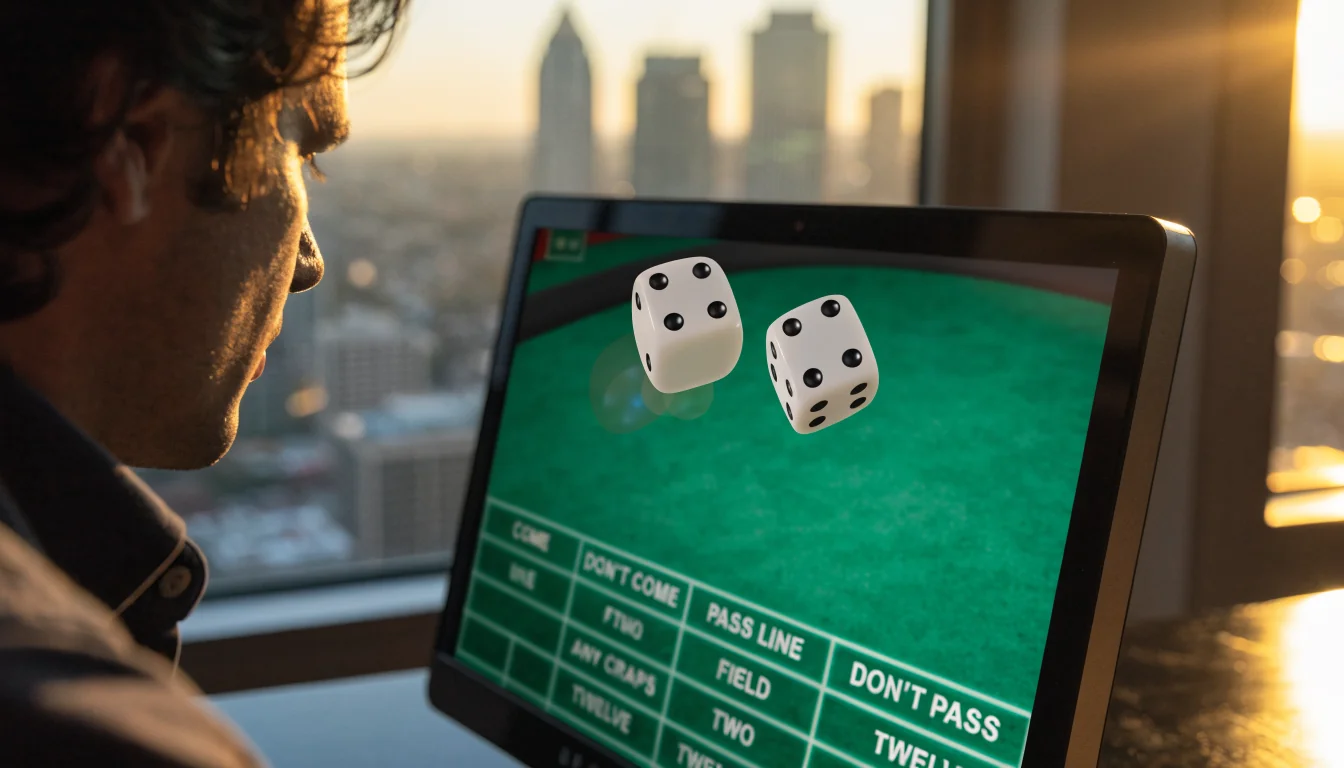
Offshore-licensed online platforms. This is where almost all real-money digital table gaming for Australians actually happens, and it’s worth being blunt about the mechanics instead of dressing it up. Sites licensed in jurisdictions like Malta or the UK — bodies such as the Malta Gaming Authority or the UK Gambling Commission — are not permitted to offer these services to Australian residents under the IGA. That doesn’t stop the traffic. It means the traffic exists in a space where the operator is in breach of Australian law and the player is not, and where Australian regulators have essentially no reach.
I want to be precise here rather than coy: I am not telling anyone to go find one of these sites, and I’m not going to pretend a "trusted" or "licensed" recommendation means something it doesn’t. There is no Australian licence for this activity. A gambling licence from Malta or the UK is real, but it is not a licence for the Australian market, and there’s no public register here to check an operator against, because domestically there’s nothing to register. Any site telling you to "check the licence" as reassurance is technically asking you to verify a document that has nothing to do with whether you’re protected under Australian consumer or gambling law. It doesn’t.
Attention! Playing on offshore-licensed online casinos puts you at risk of no recourse if the operator breaches the law.
Where the regulators actually sit
Australia doesn’t have one gambling cop. It has a patchwork, and knowing who does what tells you a lot about why enforcement looks the way it does.
- ACMA (Australian Communications and Media Authority) is the federal body enforcing the IGA. Its jurisdiction is online gambling — the offshore casino sites, the illegal in-play betting operators.
- State and territory regulators — the Victorian Gambling and Casino Control Commission (VGCCC), Liquor & Gaming NSW, and their counterparts elsewhere — handle licensing and compliance within their own borders, including land-based casinos and the wagering operators domiciled there.
- The Northern Territory Racing Commission (NTRC) occupies an odd but important position: because it licenses the majority of Australia’s national online bookmakers (who base themselves there partly for the tax treatment), it functions as something close to a de-facto national online gambling regulator — even though its formal authority is territorial, not federal.
None of these bodies, individually or together, licenses or oversees an online real-money table games operator serving Australians, because that activity is prohibited outright. VGCCC can monitor wagering providers for consumer-protection compliance even when they’re based in another state. What it and its state-level peers cannot do is meaningfully police an operator sitting on a server in Malta. That’s a jurisdictional wall, not an oversight.
What ACMA can and can’t actually do about it
This matters because it explains why offshore table games sites keep operating despite years of enforcement action, and I think most explanations of this online skip the mechanics entirely.
ACMA’s main tool is the blocking notice. Since November 2019, it’s had the power to order Australian internet service providers to block access to illegal offshore gambling sites — the online casinos, the in-play betting services, the products the IGA doesn’t allow. It’s used that power repeatedly. Public figures on how many sites have been blocked vary depending on when and who’s counting — one account puts the number at 975 blocked illegal gambling and affiliate sites as of a 2024 publication; a later figure, reported as of August 2025, puts it at 1,296 sites and affiliates blocked since 2019, alongside roughly 220 services said to have exited the market voluntarily. I’m citing both because they don’t agree and I’m not going to smooth that over — the trend is upward, the exact count depends on the source and the date it was pulled.
Separately, one industry account (theiaga.org) has claimed more than 100 illegal gambling services exited the Australian market since ACMA started enforcing tightened rules in 2017. Treat that as a claim from a specific source describing a moving target, not an audited market statistic.
ACMA has blocked between 975 and 1,296 illegal gambling sites since 2019, reflecting ongoing enforcement.
What ACMA cannot do is arguably more revealing than what it can. It has no power to force platforms like Facebook to block gambling ads aimed at Australians, because the legislation’s wording prohibits advertising "in Australia" — a phrase that, read literally, doesn’t clearly capture ads served from overseas into Australian feeds. It can’t recover a player’s lost funds or settle an individual dispute with an offshore operator; if a site refuses to pay out, ACMA is not your avenue for getting that money back. What it can do is refer matters to the Australian Federal Police, issue warning notices, notify border authorities about the people running offending operations, contact foreign regulators, and lean on third parties — software developers, payment facilitators — that it considers ancillary to a breach.
Put plainly: ACMA can make a site harder to reach and make life uncomfortable for the people behind it. It cannot make you whole if things go wrong with one. That gap is the practical risk of playing real-money table games through an offshore operator, and it’s the one thing every "licensed and trusted" banner conveniently leaves out.
In-play betting — a rule that surprises people
One quirk worth knowing because it changes what "real money" even means in context: live, in-play online betting is illegal in Australia, but placing that same live bet over the phone is not. It’s a distinction that makes no intuitive sense until you remember the law was written around channels, not around the underlying activity. I mention it here because it’s a useful illustration of the broader pattern in Australian gambling law — the what is often less regulated than the how.
Table games specifically, sorted by legal reality
| Channel | Real-money table games available? | Governed by |
|---|---|---|
| Land-based Australian casinos | Yes — blackjack, roulette, baccarat, poker and more, dealt on-site | State/territory regulators |
| Domestically licensed online operators | No such operators exist | N/A — no licence obtainable |
| Offshore-licensed online sites | Technically accessible to players; illegal for the operator to offer | Foreign regulator (e.g. MGA, UKGC) for the operator; unprotected by Australian law for the player |
| Online in-play/live betting on table-adjacent products | Prohibited online; phone-based live betting is legal | IGA / ACMA |
I’ve laid it out this bluntly because most pages on this topic either say "online casinos are illegal, full stop" — which ignores land-based venues and misstates the player’s legal position — or they say "here’s where to play" and quietly skip past the fact that no Australian licence underwrites any of it. Neither version is honest about what’s actually happening.
What this means walking in
If you’re after a real-money table game and want a straightforward legal footing, a state-licensed land-based casino is the only channel where the operator, the regulator, and your legal position are all aligned and unambiguous. Everything else — every offshore site, every "recommended casino" list — is a transaction where the operator is outside Australian law’s permission, you as a player are not committing an offence, and the consumer protections you’d expect from a domestically regulated product (dispute resolution, enforceable payout obligations, a regulator who’ll actually take your call) simply aren’t there in the way people assume.
Illegal Offshore Offer
Engaging with offshore operators that claim “licensed” status can lead to loss of funds with no legal protection.
"Fully licensed" on a casino homepage is doing a lot of quiet work in that sentence. Licensed where. Licensed for whom. Not for you, technically — not in the sense that matters if the site decides not to pay.
Understanding that isn’t about scaring anyone off table games. It’s about knowing which floor you’re standing on before you put money down.
Playing Table Games for Free Online – Legal Landscape and Options
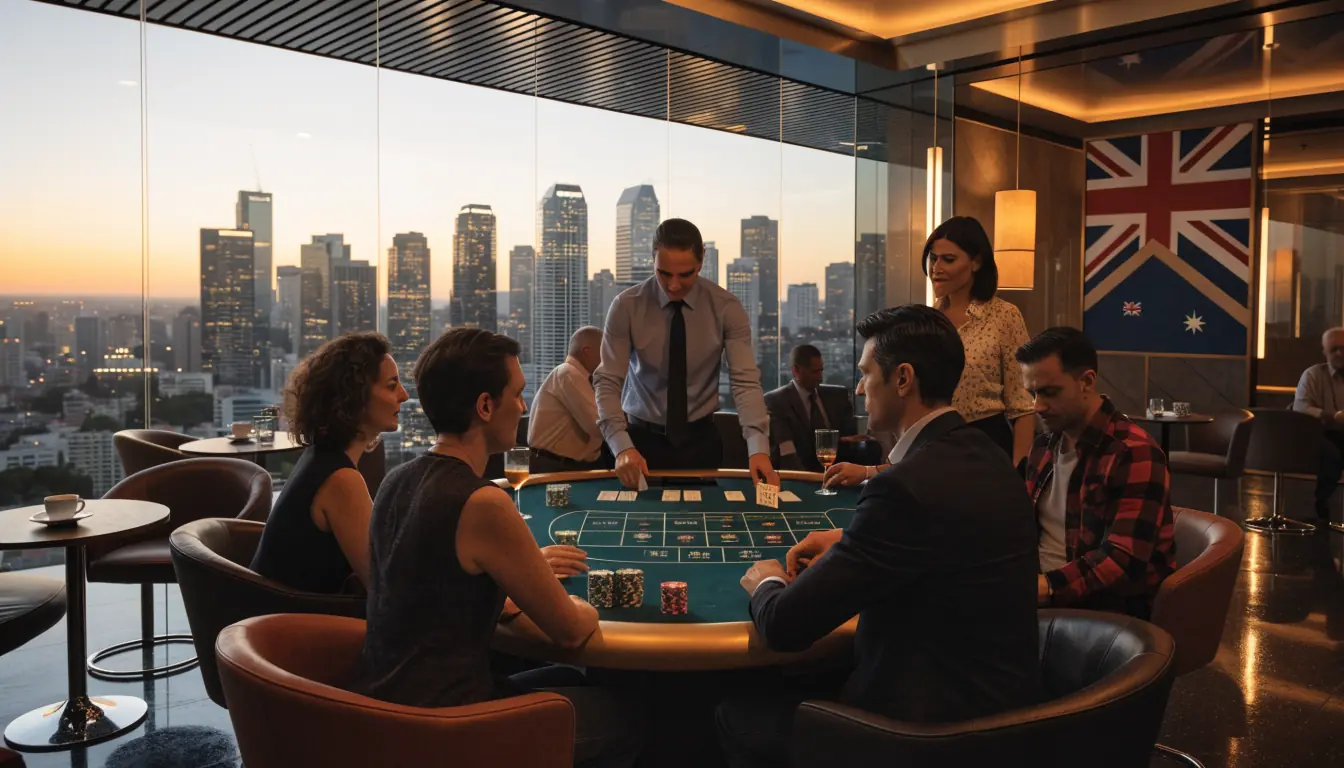
Free-play is where most of this conversation actually happens, and it’s worth being precise about why. Under the Interactive Gambling Act 2001, what’s prohibited is the provision of online casino games — blackjack, roulette, poker, the lot — for real money. A demo version of blackjack, where nothing is staked and nothing can be withdrawn, doesn’t fall under that same prohibition. No money changes hands, so there’s no "interactive gambling service" being provided in the sense the Act cares about. That’s the loophole free-play sites live in, and it’s a legitimate one — not a grey area dressed up to look legal.
I’ve spent time on these platforms testing exactly where the line sits, and it’s fairly consistent. You get a stack of virtual credits, usually replenished when you run out, and you play blackjack, roulette, baccarat against a random number generator with no financial consequence either way. It’s practice, or it’s boredom, depending on why you’re there. What it is not — and no free-play site legitimately claims otherwise — is a path to withdrawing cash. Any platform that suggests free credits convert into real winnings is describing something else entirely, and that something else is exactly what the IGA was built to keep out of this market.

What free-play actually offers
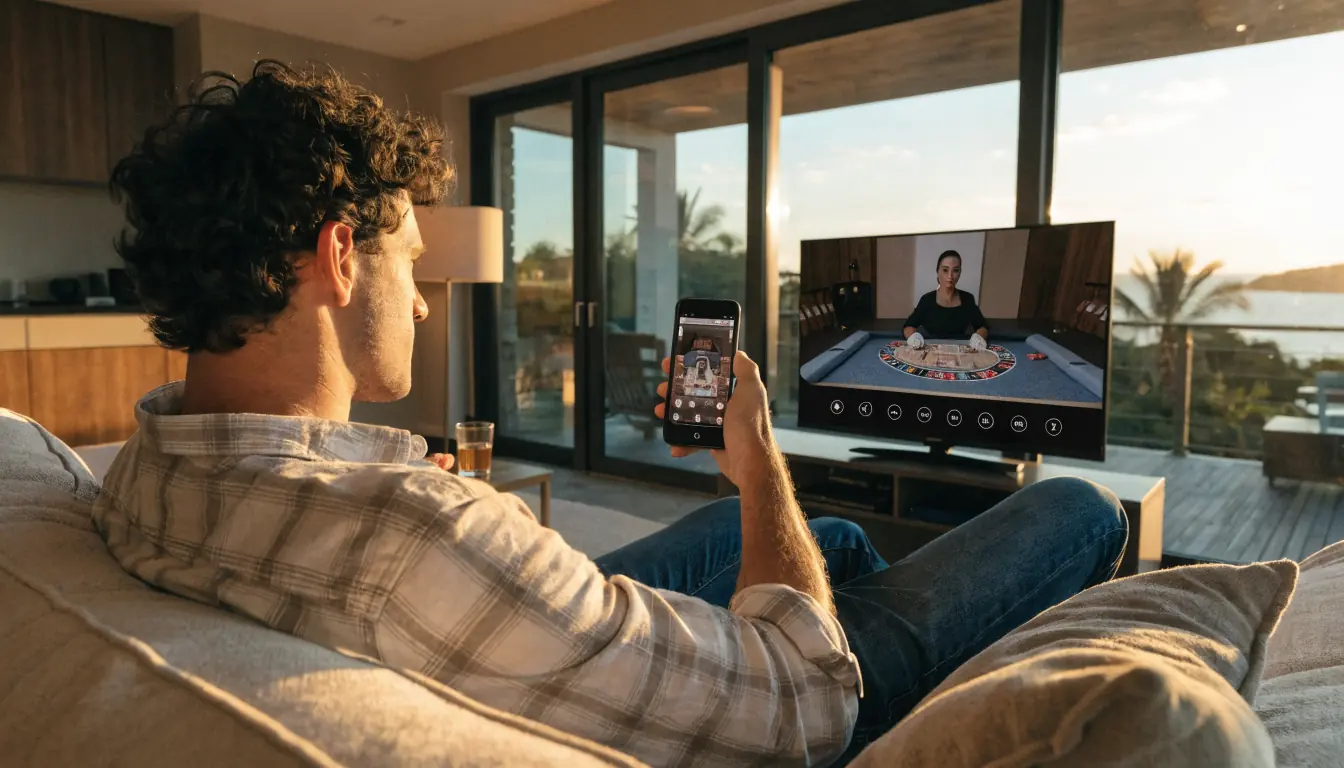
The honest pitch for demo tables is learning the game, not winning money. Roulette’s betting layout, the sequence of a blackjack hand, how a baccarat shoe runs — all of that is easier to absorb without a balance ticking down in real time. Software providers whose products turn up in these demo libraries — Pragmatic Play, Microgaming, NetEnt — build the free versions off the same math as their paid ones, so the mechanics you see are the mechanics you’d get if money were involved. That much is a fair trade: you get accurate rules and RNG behaviour, minus the stakes.
What you don’t get is the live-dealer experience. Live dealer games — the ones with an actual croupier running a real wheel or shoe on camera — are built around real-time wagering. There’s no free version of a live table with a human dealer, because the entire cost structure of running that stream depends on players staking money. So "free casino table games" almost always means RNG-driven, computer-dealt versions of blackjack, roulette and similar games — not the live product. If a section further down this page describes what live dealer games actually look like, that’s a different product to what you’ll find on a no-cost demo table.
Free‑play demo tables provide virtual credits only; they cannot be converted into real cash withdrawals.
Where this gets murky
The restriction that matters isn’t on you playing for free — it’s on what happens next. A number of offshore sites use "free play" as the front door: play a few hands with no stakes, get prompted to deposit, and suddenly you’re on the real-money version of a service that was never permitted to offer itself to Australian residents in the first place. That’s not a free-play problem, it’s an unlicensed-casino problem wearing a free-play costume. ACMA has been ordering Australian ISPs to block these offshore operators since November 2019, and the number of sites it’s had to act against has kept climbing — a sign of how many operators keep setting up under the same model rather than evidence the model has been shut down.
Two figures on this point don’t agree with each other, and I’d rather flag that than pretend they do. One account puts the number of illegal gambling sites and affiliates blocked since November 2019 at 975, as of a 2024 report. A separate 2025 count puts the figure at 1,296 blocked sites and affiliates, with 220 services said to have withdrawn from the Australian market voluntarily. Neither of these is a "current total" you can rely on going forward — they’re snapshots taken at different points, from different sources, and the gap between them tells you enforcement is ongoing, not finished. Separately, one industry source has claimed more than 100 illegal gambling services exited the market after ACMA’s rules tightened in 2017 — again, one source’s figure, not an audited market statistic, and worth treating as a data point rather than a settled fact.
What "free" should mean for you
If a table game is genuinely free, there’s no deposit screen behind it, no ID check, no withdrawal button that lights up after a lucky streak. Those are the tells of a service that’s actually offering — or trying to funnel you toward — real-money online casino gambling, which no domestic operator is licensed to provide and no offshore operator is licensed to provide to you either. Free-play, done properly, is a closed loop: credits in, credits out, nothing convertible. Anything that breaks that loop isn’t free-play anymore.
The practical read: use demo tables to learn a game’s rhythm, not as a stepping stone the site is quietly building toward a deposit. If real money enters the picture at any point, you’re no longer in the free, legally uncomplicated part of this market — you’re in the part governed by the IGA’s ban on providing online casino games to Australians, and that’s a different conversation entirely.
Where to Find Table Games Near You – Physical Casinos and Access
Land-based venues are the one part of this market where the word "regulated" actually means something you can check on a wall plaque rather than take on faith. Every state and territory in Australia has its own licensed casino properties, and blackjack, roulette, baccarat and poker variants are dealt on real tables with a real croupier standing behind them. No app, no offshore server, no argument about jurisdiction — you walk in, show ID, sit down.
Why State Regulators Matter
Physical casino floors are overseen by state gambling commissions, which handle disputes, fairness audits, and dealer conduct, separate from the federal ACMA’s online focus.
What trips people up is assuming there’s one national body that oversees all of it. There isn’t. Gambling regulation in Australia splits along a line that rarely gets explained clearly: the Australian Communications and Media Authority handles online gambling under federal law, while physical casinos answer to a separate regulator in whichever state they operate. A casino floor in one state is licensed and policed entirely differently from a betting site the federal government is trying to block. Same industry, two different rulebooks, no single office that owns both.
That split matters more than it sounds. It means the rules around game fairness, dealer conduct, complaint handling and responsible-gambling measures on a casino floor come from the state, not from Canberra. If something goes wrong at a table — a dispute over a hand, a question about how a shoe was shuffled — the path for raising it runs through the state regulator’s complaint process, not through the federal body that everyone associates with "gambling law" in Australia.
Finding a venue
There’s no single directory that lists every casino floor with live tables. Each state licenses and publishes information about its own venues, so the practical approach is checking with the regulator in the state you’re actually in rather than searching for a national list that doesn’t exist.
Before making the trip, it’s worth knowing:
- Age requirement — every venue enforces the same national minimum, but ID checks happen at the door, not after you’ve sat down.
- State-specific rules — table limits, game variants and operating conditions are set at state level and differ from venue to venue.
- Regulatory contact — complaints or questions about a specific floor go to that state’s gambling regulator, not to ACMA.
None of that federal-versus-state distinction shows up on the casino’s own signage. Worth knowing before you assume one complaint line covers everything.
Understanding Odds and House Edge for Australian Table Games
House edge is the mathematical margin built into every table game — the reason a casino can afford to keep the lights on. It’s not a trick, it’s arithmetic: over enough hands, the game returns less to players than they put in, by a fixed percentage baked into the rules. Ask any croupier and they’ll tell you the same thing — nobody at the table is "due" for a win. The cards don’t remember what happened last shoe.
What varies is how much of that margin gets handed back to you through skill. Blackjack rewards correct strategy decisions — hit, stand, split, double — and punishes guesswork. Baccarat strips out decision-making almost entirely; you’re picking a side and letting the shoe run. Roulette sits at the other end: pure random number games, no input from the player changes the outcome, only the bet type changes the spread of risk.
House‑edge percentages for table games are not published by Australian regulators; they vary by provider and jurisdiction.
None of this is regulated in the sense of a published, government-mandated payout table. In Australia, oversight runs through state-based bodies — the Victorian Gambling and Casino Control Commission, for instance, monitors wagering providers for compliance with consumer protection standards, but that’s a conduct framework, not a numbers audit published for punters. Land-based venues answer to state regulators and local law enforcement, a separate track entirely from the federal machinery that governs online betting.
So the honest answer to "which game gives the best odds" isn’t a single number — it’s a structural one: games with player decisions built in tend to close the gap further than games running purely on chance.
Casino Table Games Operations: Management Software and Dealer Salaries
Nobody selling you a "world-class gaming experience" mentions what actually runs it. Land-based venues use table management systems to track buy-ins, shuffle schedules, dealer rotations, and pit-boss oversight — the same unglamorous logistics you’d find behind any retail floor, just with more cash and more cameras. None of this touches players directly, which is exactly why it never shows up in marketing.
Staffing sits in a similar blind spot. Dealer pay isn’t published anywhere I’ve found — not by state regulators, not by venues themselves. Licensing bodies like the VGCCC or Liquor & Gaming NSW oversee land-based operators’ conduct and compliance, not their payroll. The NTRC, despite being the de-facto authority for most national online bookmakers thanks to its lower tax regime, has no remit here either — its jurisdiction stops at licensed wagering, well short of the pit.

So: real numbers, nowhere official.
Worth knowing before you assume the industry is more transparent than it is.
House‑Edge Charts for Popular Table Games – What Players Should Know
A chart is only as good as what sits behind it. I’ve seen operators lift the same "house edge" table from site to site without ever naming which game variant, which rule set, which provider it describes — a number floating free of any source is not information, it’s decoration.
That matters more in this market than most. Online casino, poker, and in-play betting are prohibited federally under the Interactive Gambling Act 2001, and ACMA can request that internet providers block sites offering exactly these games. So any house-edge chart circulating for online blackjack, roulette or baccarat aimed at Australians is describing a service that has no legal path to operate here. It’s borrowed from jurisdictions where those tables exist under licence.
No verified, sourced figures for these specific games are published for the Australian market. Publishing invented percentages next to a real dollar decision would be worse than publishing nothing.
Blank space, honestly labelled.
Free Online Table Games Without Downloads – Is It Safe?
No-download browser games sound like the safe middle ground: nothing installed, nothing to uninstall, just a page that loads a blackjack table and runs. "No download" gets marketed as "no risk." It isn’t the same thing.
Caution! Browser‑based offshore casino sites are still illegal to offer to Australians, regardless of download requirements.
The download method was never what made an offshore casino illegal. Under the Interactive Gambling Act 2001, an online casino service offered to someone in Australia is prohibited regardless of whether it runs through an app, a client, or straight in a browser tab. ACMA doesn’t distinguish by delivery method when it acts — since November 2019 it has been ordering internet service providers to block offshore gambling sites, and the notices it issues to ISPs target the site itself, not a piece of installed software.
So a blocked domain stays blocked whether it asked you to download anything or not. Browser-based isn’t a loophole. It’s just a different front door to the same building.
Bitcoin Table Games vs. Traditional Casino Table Games in Australia
Crypto doesn’t change the legal picture. Whether a site takes Bitcoin, Ethereum, or a credit card, offering online casino gambling to Australians is illegal, and no domestic licence exists for either model. "Crypto casino" gets marketed as a workaround — decentralised, harder to trace, somehow outside the law’s reach. It isn’t. The prohibition sits with the operator and the game, not the currency used to fund it.
Where crypto platforms genuinely differ is exposure. Offshore sites accepting Bitcoin still run ads on social platforms, and ACMA has no power to force something like Facebook to pull gambling ads aimed at Australians, because the law only bans advertising "in Australia" — a jurisdictional gap that doesn’t touch the platform hosting the ad. So crypto table games often circulate more freely in feeds than traditional offshore sites do, not because they’re more legal, just less policed at the advertising layer.
Same restriction, different visibility.
Pai Gow Poker in Australian Casinos – Rules and Availability
Ask a pit boss about Pai Gow Poker and you’ll usually get a shrug. It’s not a game that shows up on many Australian floor plans — nowhere near the footprint of blackjack or roulette. Where it does exist, it’s a land-based, in-person offering, dealt by a live croupier at a physical table, not something you’re logging into from a browser.

That distinction matters more than it looks. Live in-play betting online is illegal in Australia — the "live" part of "live dealer" only stays legal when the dealer and the table are physically in front of you, in a licensed venue, under state oversight. Move the same mechanic online and it falls into exactly the territory ACMA was built to police. And ACMA’s reach has a hard limit here too: it can chase down and block an offshore service running a game like this, but it can’t get anyone’s money back or arbitrate a dispute over a hand gone wrong. That’s worth remembering before treating any offshore "Pai Gow" table as equivalent to a floor game.
Table Games in Canadian Casinos – A Comparison for Australian Players
Canada comes up a lot in forums whenever Australians start asking where else table games actually get dealt in a licensed room rather than a grey-market app. I don’t have verified figures on what Canadian venues offer or how their tables compare in variety — nobody I’d trust has published a proper side-by-side. What I can say is where the comparison actually matters: regulation, not game selection.
In Australia, land-based casinos answer to state regulators and law enforcement, entirely separate from ACMA, which only polices online gambling federally. Canada runs on a similar split — provincial bodies oversee physical venues, separate from whatever federal rules touch online offerings. That structural similarity is the real takeaway, not a features list.
Where it gets relevant offshore: ACMA can’t licence or police a Canadian operator directly, but it can notify border agencies about the people behind an offending offshore operator and liaise with foreign regulators. "International" doesn’t mean untouchable.
Comparing menus of games without real data is just guessing. I won’t do that here.