
Live Blackjack Online Casino Australia: Legal Guide 2026
- Online Blackjack Casinos Accessible to Australian Players
- Live Dealer Blackjack: Real‑Money Options and the Australian Legal Landscape
- Understanding Blackjack in the Australian Online Casino Context
- How to Play Live Blackjack at an Online Casino
- Bitcoin and Other Crypto Payments: What Australian Players Need to Know
- Basic Blackjack Strategy for Australian Players
- Choosing the Right Online Blackjack Platform for Australian Players
- Winning Techniques: Blackjack Switch and Other Variants
- Blackjack Game Variants and Their Features
- Fundamental Rules of Blackjack in Online Casinos
Online Blackjack Casinos Accessible to Australian Players
I’ve spent enough time around gambling operations to know that the first question a new player asks — "is this even legal?" — usually gets answered with a shrug or a vague link to terms and conditions nobody reads. In Australia the answer is more specific than that, and it’s worth getting straight before anything else.
There’s no single law that governs all gambling here. Regulation splits between the states and territories and the federal government, and nobody sits above the whole thing with final say. The federal piece that matters for blackjack is what’s commonly cited as the Interactive Gambling Act — though even the sources disagree on the year, with some pointing to 1997 and others to the 2001 version. I won’t pretend to settle that here. What both versions agree on is the substance: providing online casino games to people in Australia is prohibited. Blackjack sits on that list alongside slots, poker, and roulette. Not because blackjack is treated as more dangerous than the rest — it’s grouped with every other "casino style" game under the same ban.
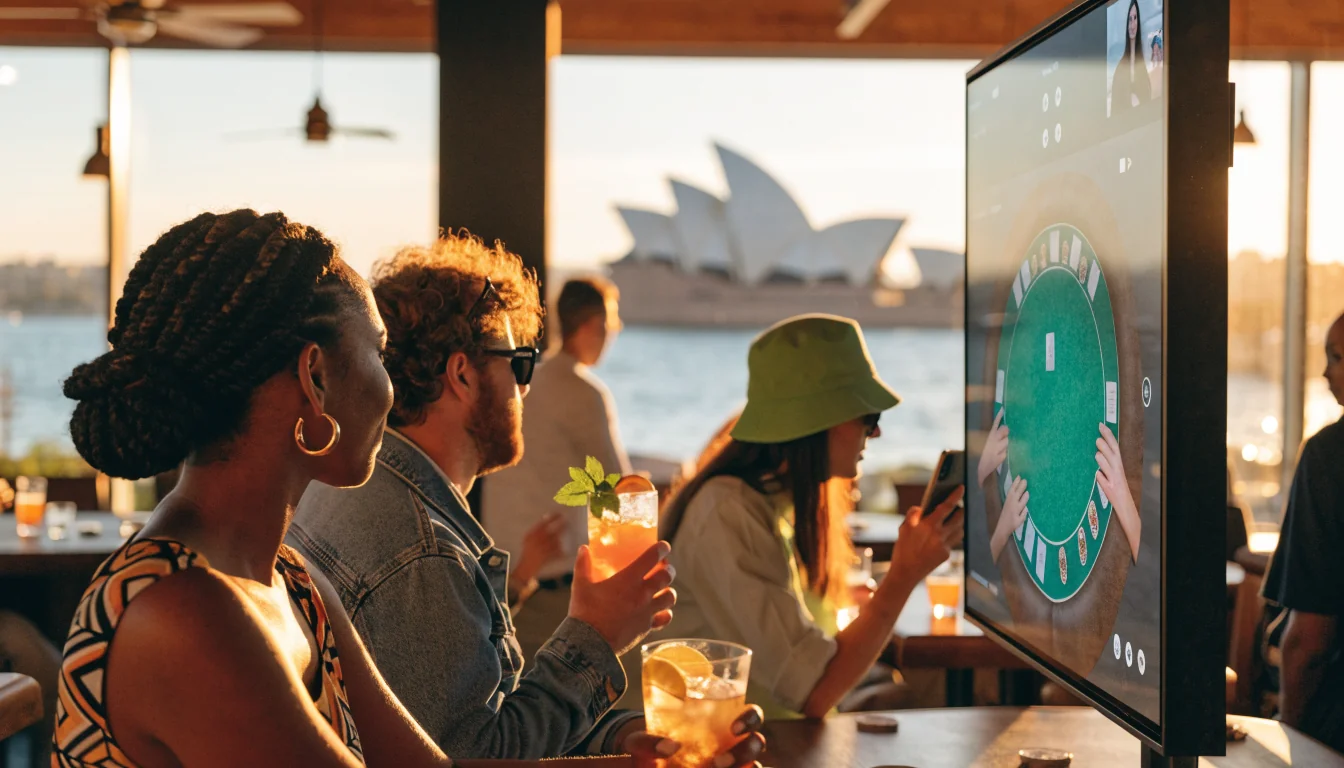
Live blackjack fans weigh in on real-time dealer action, so it pays to check what each casino offers before you sit down at the table for 2026.
Bonus: up to A$750 + 50 jackpot spins, 35x wagering · Payout speed: crypto ~90 minutes, fiat 1-5 days · Min. deposit: A$30 Kingmaker offers a welcome package of up to A$750 plus 50 jackpot spins with 35x wagering, a A$30 minimum deposit, and fast crypto payouts around 90 minutes, with fiat withdrawals taking up to five days.
License: Curacao Gaming Control Board OGL/2023/174/0082 (Dama N.V.) · Bonus: up to A$5,000 + 300 free spins across 4 deposits SpinsUp operates under a Curacao Gaming Control Board licence held by Dama N.V. and backs its offering with a sizeable welcome bonus of up to A$5,000 plus 300 free spins spread across four deposits.
License: Curacao Gaming Control Board OGL/2023/176/0095 (Hollycorn N.V.) · Bonus: up to A$11,000 + 300 free spins (code NEO100) Neospin is licensed by the Curacao Gaming Control Board under Hollycorn N.V. and pairs this with a generous bonus of up to A$11,000 plus 300 free spins, unlocked with a code.
License: Curacao Gaming Control Board OGL/2023/176/0095 (Hollycorn N.V.) · Bonus: 100% up to A$10,000 + 100 free spins GoldenCrown holds a Curacao Gaming Control Board licence via Hollycorn N.V. and offers a 100% match bonus up to A$10,000 alongside 100 free spins.
Bonus: up to A$7,500 + 550 free spins across 10 deposits, 50x wagering · Payout speed: crypto under 1 hour, PayID 1-3 business days · Min. deposit: A$20 (A$30 to qualify for the bonus) Ricky Casino provides a substantial bonus of up to A$7,500 plus 550 free spins across ten deposits with 50x wagering, fast crypto withdrawals under an hour, PayID processing within a few business days, and a low minimum deposit.
License: Curacao Gaming Control Board (TechSolutions Group N.V.) · Bonus: 100% up to A$250 + 100 free spins (1st deposit) Bizzo Casino is licensed in Curacao through TechSolutions Group N.V. and offers a first-deposit bonus of 100% up to A$250 plus 100 free spins.
License: Curacao eGaming (Roby Games Ltd) · Bonus: 100% up to A$750 + 200 free spins Roby Casino carries a Curacao eGaming licence under Roby Games Ltd and offers a 100% bonus up to A$750 together with 200 free spins.
License: Curacao eGaming (Dama N.V.) · Bonus: up to A$10,000 + 180 free spins, 40x wagering JeetCity Casino is licensed by Curacao eGaming via Dama N.V. and offers a bonus of up to A$10,000 plus 180 free spins with 40x wagering requirements.
Bonus: 100% up to A$750 + 200 free spins, 35x wagering · Payout speed: crypto 30-120 minutes, fiat 24-72 hours · Min. deposit: A$30 MrPacho offers a 100% bonus up to A$750 plus 200 free spins with 35x wagering, a A$30 minimum deposit, and quick crypto payouts within a couple of hours, with fiat withdrawals processed in one to three days.
License: Curacao OGL/2024/1335/0780 · Bonus: up to A$1,000 + 150 free spins, wager-free · Min. deposit: EUR 20 Vegaz Casino operates under a Curacao licence and stands out with a wager-free bonus of up to A$1,000 plus 150 free spins, along with a low minimum deposit.
Here’s the part that trips people up. The law targets the businesses that offer these games, not the people who play them. An Australian resident sitting down at an online blackjack table isn’t breaking the law by doing so. The operator running that table without the right footing, on the other hand, is the one exposed. That asymmetry is why the market looks the way it does: no domestic operator can get licensed to run an online casino in this country at all — the licence simply doesn’t exist to be granted — yet Australians play blackjack online every day, on sites based somewhere else entirely.
Why offshore is the only option
Ask a compliance officer at any local gaming authority whether they’ll license an online blackjack site and you’ll get a straight no. It’s not a matter of paperwork or waiting lists — the framework doesn’t provide for it. So every real-money online blackjack table an Australian can actually sit down at is run by an operator licensed somewhere else: Malta, the UK, Curaçao, and similar jurisdictions that do issue licences for this kind of product. These sites aren’t hiding from Australian players. They’re just not licensed by anyone in Australia, because nobody in Australia is in the business of issuing that licence.
This is where the "regulated site" language gets slippery. On markets where a domestic online casino licence exists, telling someone to "check the licence" is sound advice — there’s a register, there’s a regulator, there’s something to check. Here, there isn’t. Any blackjack site reachable from an Australian IP address is, by definition, operating outside the domestic system. The licence you’re looking at, if there is one, was issued by a foreign body reviewing a foreign application. That doesn’t make the site illegitimate — plenty of well-run rooms operate this way — but it does mean the safety net is a different one, built elsewhere, for a different jurisdiction’s players.

How live dealer tables, mobile apps and instant withdrawals actually work at casinos serving Australian…

Who’s actually watching
The Australian Communications and Media Authority enforces the federal law on the online side, which in practice means going after the offshore operators and the infrastructure that connects them to Australian players, not chasing individuals at their laptops. Separately, the Northern Territory Racing Commission has become something like the default regulator for the wider Australian online betting industry, mainly because it licenses most of the national bookmakers who set up there for the tax treatment. Neither of these bodies licenses blackjack sites. Their remit sits elsewhere — sports and race wagering, and blocking or pursuing unauthorised operators, not approving casino tables.
That absence matters more than it sounds. When there’s no local licence to point to, there’s also no local authority you can ring if a hand gets disputed or a withdrawal stalls. Whatever recourse exists comes from wherever the operator’s actual licence sits, and the quality of that recourse varies a lot depending on which regulator issued it.
What this means sitting down at a table
Practically, an Australian player looking for blackjack online is choosing between offshore rooms, full stop — there’s no domestic alternative waiting in the wings, licensed and just not yet discovered. The game itself, the rules at the table, the deck, none of that changes because of where the licence was issued. What changes is who stands behind the operator if something goes wrong, and that’s a question worth asking before backing it with money, not after.
There is no Australian domestic licence for online blackjack, so you have nowhere to verify a casino’s legitimacy locally.
I’ve seen plenty of casino copy that tells you to "always play at a licensed and regulated casino" as though that’s a self-evident safety check. On this market, it’s an instruction with nowhere to point. There’s no local register to consult. The licence that matters is the foreign one, and checking it means checking a foreign regulator’s records, not an Australian one’s — a genuinely different exercise from what that phrase usually implies.
Live Dealer Blackjack: Real‑Money Options and the Australian Legal Landscape
A live dealer table is a different animal from an RNG blackjack game, and anyone who has sat at both knows it within a hand or two. The software‑based version deals cards from a random number generator, resolves instantly, and never has a bad night. The live version has a croupier working from a physical shoe, a camera feed, a shuffle you can actually watch happen, and the small delays that come with a human running the table. That difference matters to players who want to see the mechanics rather than trust a number generator they can’t observe. It’s why “live dealer games” get marketed as the closer experience to a land-based pit — and on the mechanics alone, that claim holds up. The card comes off a real shoe, dealt by a real person, streamed in real time.
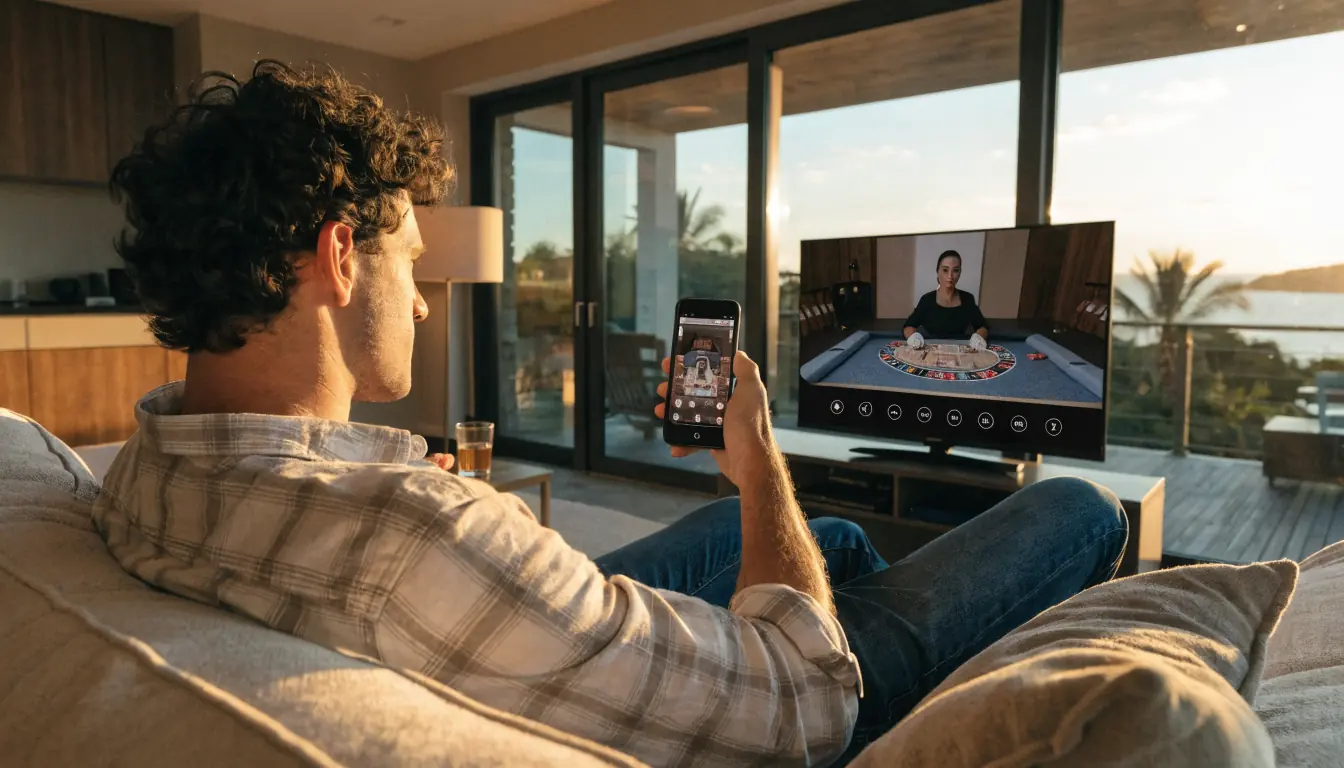
Where the claim stops holding up is on the legal side, because "real money" and "live" both carry weight in Australian gambling law that they don’t carry elsewhere.
What "live" actually means under Australian law
In Australia, "live" has a specific and narrow legal meaning that has nothing to do with video streaming. Live, or in-play, online betting is illegal — full stop — but that prohibition was written with sports wagering in mind, not casino tables. Betting on the outcome of a match after it has started, placed online, is the thing the law targets. Curiously, the same wager placed by phone call is legal. That’s a quirk of how the legislation was drafted, not a considered policy position on which channel is riskier, and it’s worth knowing if you ever wonder why a bookmaker will happily take your call mid-match but won’t let you tap the same bet into an app.
Live dealer blackjack sits outside that specific rule, but it doesn’t escape the broader one. Online casino games — and blackjack is named specifically among them — are prohibited for any operator serving Australian residents, whether the table is run by software or by a croupier on camera. The "live" branding doesn’t create a legal category of its own here. It’s a product description, not a loophole. A live blackjack table streamed from an offshore studio falls under the same prohibition as a computer-dealt one; the streaming technology changes the experience, not the legal status.
Where enforcement actually lands
None of this criminalises the player. The restriction is aimed at whoever offers the game, not whoever sits down to play it, and that’s the detail that keeps offshore live tables accessible to Australians in practice even though no local licence for this kind of product exists or could exist.
Blocking orders have removed 975 gambling sites by 2024 and 1,296 by August 2025, illustrating a steadily growing list of prohibited operators.
The enforcement effort is aimed upstream, at the supply side. Since November 2019, the Australian Communications and Media Authority has had the power to order internet service providers to block access to offshore gambling sites operating illegally, and it has used that power steadily rather than symbolically. By the time of reporting in 2024, the tally sat at 975 blocked gambling and affiliate sites since the blocking regime began. A later account puts the running total at 1,296 by August 2025 — the two figures come from different points in an ongoing campaign rather than contradicting each other, but it’s worth naming the gap rather than picking one number and presenting it as settled. Either way, the direction is the same: more sites blocked over time, not fewer.
One industry account (theiaga.org) also reports that more than 100 illegal gambling services, including online casinos, left the Australian market of their own accord after ACMA started enforcing the newer rules from 2017 onward. That’s one source describing a moving target, not an industry-wide statistic to lean on — but it does describe the general pressure: sites that can’t or won’t compete with blocking orders eventually stop bothering.
For a player sitting down at a live blackjack table, the practical effect of all this is indirect. Blocking orders and market exits mean the landscape of available sites shifts — a table you played on last year might be gone this year, blocked at the ISP level or wound up voluntarily. There’s no register of who’s been blocked and who hasn’t that a player can check before signing up; the enforcement runs at the infrastructure level, between the regulator and the internet provider, not in a form visible to someone opening an account.


What doesn’t shift is the basic legal shape of the thing. Live dealer blackjack, offered by an offshore operator, watched by an Australian player — none of that is illegal for the player, and none of it is a grey area invented by the "live" label. It’s the same prohibited-operator, permitted-player structure that governs every other casino game reachable from Australia, dressed up with a camera and a real dealer.
Understanding Blackjack in the Australian Online Casino Context
Blackjack doesn’t sit in some special legal category of its own. It’s one line item in a much longer list of games that the Interactive Gambling Act 2001 puts firmly outside the boundary of what can be offered domestically. The Act is the primary Commonwealth statute governing online gambling in Australia, and it was drafted with harm minimisation as its stated purpose — not as a general ban on gambling, but as a filter on which forms of it are allowed to reach people through a screen. Sports betting made it through that filter. Blackjack didn’t.
That distinction matters because it explains why a blackjack table looks so different from a betting slip, legally speaking, even though both are just numbers on a website to the person using them. Under the IGA, online casino games, poker, and in-play betting are prohibited at the federal level. Blackjack falls inside that prohibited group by definition — it’s a casino table game, full stop, regardless of whether it’s dealt by software or by a "croupier" on a video feed. The law doesn’t carve out an exception for live formats. It doesn’t need to. The ban operates on the category, not the delivery method.
Enforces the federal Interactive Gambling Act and can order ISPs to block offshore gambling sites.
Acts as the default regulator for many national bookmakers, but does not licence online casino games.
Oversee licensed wagering providers within their borders, yet have no jurisdiction over offshore casino operators.
Where the enforcement actually lands
Here’s the part that rarely makes it into the marketing copy of any site offering these games: the IGA was written to constrain operators, not to chase individual card players. Enforcement is built around the supply side. The Australian Communications and Media Authority is the body that acts on this — it can request that internet service providers block websites offering games not permitted under Australian law, and that list explicitly includes online casinos, online slots, and in-play sports betting. Blackjack tables sit inside "online casinos" for this purpose. No separate mention needed.
What ACMA can’t do is just as telling as what it can. It can investigate a prohibited service and push for it to be blocked, but it has no mechanism to recover a player’s funds or settle a dispute with an offshore operator. That’s not a technicality — it’s the whole shape of the framework. Regulatory power stops at the border, roughly speaking, right where a lot of the industry actually operates.
Why blackjack keeps showing up anyway
If casino games are banned, why does blackjack remain so visible online for Australian users? Because the ban targets the entity offering the game, not the market it’s viewed from in every practical sense, and enforcement against operators based overseas runs into the same jurisdictional wall that limits ACMA’s remedies for players. A prohibition that can order a local ISP to block a URL is not the same tool as one that can shut down a company registered somewhere else. The gap between those two things is where blackjack, in practice, keeps existing for Australian players — not because it’s been legalised in some quiet amendment, but because the mechanics of federal enforcement have a defined edge, and offshore operators sit past it.
I’ve seen this framed as some kind of loophole in forum threads, and it isn’t one. It’s just what happens when a national statute meets an industry that doesn’t respect national lines. Nothing about that changes what the IGA says blackjack is: a prohibited category of online gambling, sitting in the same bracket as slots and poker, with no separate live-dealer carve-out and no state authority that reaches over the border to fix it.
What this means in plain terms
For a player, the practical upshot isn’t complicated, even if the statute behind it is layered:
- Blackjack is treated as an online casino game under the IGA, not as something adjacent to sports betting.
- The law’s enforcement machinery is aimed at the operator side, using tools like site-blocking requests to ISPs.
- Those tools stop at investigation and blocking — there’s no federal mechanism to chase down money or arbitrate a complaint against an offshore business.
- None of this changes based on whether the table is dealt by “random number games” software or streamed with a live croupier. The category is the category.
None of that is a workaround, a grey area, or a wink-and-nod arrangement. It’s just where the current law draws its line, and where its reach happens to end.
How to Play Live Blackjack at an Online Casino
Getting to a live table is less complicated than most first-timers expect. It’s the part before and after that trips people up.
Setting up the account
Registration asks for the usual: name, date of birth, email, sometimes an address. The date of birth field isn’t decorative — operators are required to keep under-18s off the platform, and that check happens again later, in more detail, before any withdrawal. You’ll be asked for a government-issued ID at that point, not at sign-up. I’ve seen players skip this step mentally, assume it’s a formality, then get frustrated weeks later when a payout stalls on verification. Better to have the ID ready from day one.
Prepare before you start playing live blackjack
- Have a government‑issued ID ready for KYC verification.
- Complete the operator’s identity check before attempting a withdrawal.
- Confirm that your chosen deposit method is accepted for Australian players.
- Review the table’s betting limits and rule set before placing your first bet.
After the account exists, you fund it. Deposit methods vary by operator, and the mechanics of which ones are actually usable in Australia deserve their own explanation — that’s covered separately. For this section, assume the balance is sitting there and you’re ready to sit down.
Finding the table
Live blackjack sits in its own lobby, separate from the pokies and the automated, random number games. Tables are usually organised by bet limits — low-stakes tables for casual play, higher-limit tables for players wanting bigger swings. Each table shows the minimum and maximum bet, the croupier currently dealing, and how many seats are open. Some tables let you sit properly with a fixed spot; others run on a "bet behind" model where you place chips on a hand a seated player controls, without holding a seat yourself.
Check the limits before you commit real money — they differ table to table, and there’s no universal number that applies across a platform.
The flow of a hand
Once seated, the rhythm is the same every time:
- Betting window opens. A timer counts down, usually shown as a circle or bar around the betting spot.
- Place your chip. Click or tap the chip value, then the betting circle. You can adjust before the timer runs out.
- Cards are dealt. The croupier deals live, on camera, following the same physical sequence you’d see at a land-based table.
- Decision time. Hit, stand, double, split, or surrender — buttons appear on screen with a short window to act. Miss it, and most platforms default to a standing hand.
- Resolution. The croupier plays out the dealer’s hand according to house rules, and winnings post automatically.
There’s no need to signal with hand gestures the way you would at a physical table — everything is clicked. But the dealer is real, dealing in real time, which is the entire point of choosing a live table over a software-dealt one.
A few habits worth building
Watch the betting timer rather than the chat — it’s easy to get absorbed talking to other players and miss the window. Confirm your bet before the countdown ends; a missed round doesn’t refund. And check the table’s rules panel, usually a small icon near the screen, before your first hand — payout structure and dealer rules aren’t identical everywhere.
None of this replaces knowing when to hit or stand. That’s a different conversation, and worth having properly rather than folded into "how to log in."
Bitcoin and Other Crypto Payments: What Australian Players Need to Know
Ask around any forum where Australians compare blackjack sites, and Bitcoin comes up within the first few replies. The pitch is always the same: faster payouts, no bank noticing the transaction, "anonymous" play. Worth unpacking that last word, because it does a lot of quiet work in marketing copy it shouldn’t be allowed to do.
Accepting Bitcoin or other cryptocurrencies does not bypass the Interactive Gambling Act; the prohibition targets the online casino game itself, not the payment method used.
None of it changes the legal position. Under the Interactive Gambling Act 2001, offshore operators are not permitted to offer online casino games — including blackjack — to Australian residents, regardless of the currency used to fund the account. The law is written around the activity, not the payment rail. A site running on Bitcoin instead of a debit card hasn’t found a loophole; it’s found a different wrapper for the same prohibited product.
Why crypto shows up on offshore tables anyway
Offshore casinos accepting Australian players sit outside the reach of local banking rules, so they can offer payment methods that a licensed Australian operator never could. That’s the whole story. It’s not permission, it’s distance — the same reason these sites can offer blackjack in the first place while no domestically licensed real-money online casino exists for Australians to use instead.
Ethereum and Bitcoin are the two names players will run into most often on the sites that do accept them. Litecoin gets mentioned less than the marketing suggests; when it appears, it’s usually as a footnote next to the two bigger coins, not a standalone drawcard.
Interactive Gambling Act
The Australian federal legislation that prohibits the supply of online casino games, including blackjack, to Australian residents, regardless of where the operator is based.
What the restriction actually blocks
There’s a distinction worth being precise about. Australian law does not criminalise an individual for playing at an offshore site — the Act targets operators, not players. What it does restrict, at the level of local rules governing licensed gambling generally, is the acceptance of credit cards or digital currencies for deposits or betting. That restriction sits with what a compliant, regulated operator is permitted to do. It says nothing about what an unlicensed offshore site chooses to accept, because that site was never inside the system the restriction was written for.
That gap is exactly where "crypto casino" marketing lives. It’s not that crypto payments are somehow sanctioned for gambling in Australia — it’s that the operators offering them were already operating outside the rules that would have stopped them.
What this means before typing in a wallet address
- Speed and low fees on a withdrawal don’t say anything about whether the site is answerable to anyone if a dispute happens.
- “Anonymous” deposits cut the other way at withdrawal time — identity verification is standard practice before funds move, crypto or not, and a site skipping that step is a bigger warning sign than a reassurance.
- A licence badge, Bitcoin logo, or “provably fair” seal on a casino’s footer is not a substitute for a functioning complaints process.
None of this is an argument for or against using crypto specifically. It’s an argument for noticing that the currency isn’t the risk. The absence of oversight underneath it is.
Basic Blackjack Strategy for Australian Players
Basic strategy is the one piece of "insider knowledge" that isn’t actually a secret. It’s a fixed set of decisions — hit, stand, double, split — for every combination of your hand and the dealer’s up card. Casinos know most players won’t follow it properly. That gap between optimal play and actual play is where the house edge quietly widens.
I learned this the slow way, playing hunches instead of the chart. Guessing feels like skill. It isn’t.
Reading the table before you sit down
Whether it’s a live dealer table or a random number game, the table layout tells you the rules before a single card is dealt. Look for how many decks are in play, whether the dealer stands or hits on soft 17, and what the payout is for a natural blackjack. These details change the house edge more than most players realise, and they’re printed right on the felt — you just have to read it instead of the bet spot.
The basic strategy chart
A proper chart covers three situations:
- Hard totals — hands with no ace, or an ace counted as 1. Standing or hitting depends entirely on the dealer’s up card.
- Soft totals — hands with an ace counted as 11, which gives more flexibility to double down.
- Pairs — when splitting is worth the extra bet and when it just doubles your exposure for no gain.
Memorising this isn’t optional if you want the odds working with you rather than against you. Most reputable strategy charts are freely available and identical in structure regardless of where you’re playing — the maths behind blackjack doesn’t change at the border.
Bankroll management
Strategy only protects you from the house edge; it does nothing about bad luck across a losing run. Decide what you’re willing to lose before you sit down, and treat that number as final. Bet sizes should scale to that figure, not to how the last few hands went. Chasing losses by raising bets is the single fastest way to turn a manageable session into an expensive one.
Common mistakes
- Taking insurance — it feels like protection, but the maths rarely favours the player.
- Splitting tens — a strong hand broken into two mediocre ones, purely on impulse.
- Standing on soft totals too early — a soft 18 against a dealer’s 9 or higher usually wants a hit.
- Ignoring the dealer’s up card — every decision should reference it, not just your own hand.
None of this guarantees a win. Blackjack keeps its house edge regardless of how well you play. What basic strategy does is close the gap between the game’s built-in advantage and the far larger one you hand the casino by playing on instinct.
If a session stops feeling like entertainment, Gambling Help Online and BetStop exist for exactly that moment.
Choosing the Right Online Blackjack Platform for Australian Players
Ask which regulator "approves" a blackjack site for Australian players and you’ll hit a wall, because none does. There’s no domestic licence for this, so the usual advice — check the licence, confirm the regulator, look them up in the register — doesn’t map onto this market the way it does elsewhere. What’s left is a different kind of homework.
Victoria’s VGCCC is a useful example of why the confusion persists. It monitors wagering providers for compliance with the National Consumer Protection Framework, and it does this even for operators based in other states. That’s real oversight — but it’s oversight of licensed Australian wagering companies, mostly sportsbook operators, not offshore casino sites running blackjack tables from Curaçao or Malta. Liquor & Gaming NSW runs a similar patch, watching venues and licensed operators within its own borders. Neither has any real reach into a platform hosted outside the country. I’ve seen players assume that because a state body exists and sounds authoritative, it must be watching the casino site in front of them. It isn’t.
A well‑known European regulator that issues licences to many offshore casino operators serving Australian players.
Provides a robust licensing framework and is often cited by offshore sites as a mark of credibility.
Issues inexpensive licences to a large number of online gambling operators, many of which accept Australian players.
Land-based casinos sit in a separate regulatory world entirely — state governments and law enforcement agencies license and inspect physical premises, an apparatus with no online equivalent. Every state and territory runs its own regulator, which is part of why there’s no single body to point to and say "that one covers online blackjack." There isn’t one, at state or federal level.
So evaluating an offshore site means relying on signals other than "is this legal here," because legality of the operator was never going to be the test. What’s worth checking instead:
- Whether the site publishes its own foreign licence — Malta, the UK, or similar — even though no Australian authority verifies it for you.
- Whether age verification is enforced, not just mentioned, before real-money play starts.
- Whether identity checks happen before withdrawal, not after a dispute arises.
- Whether responsible-gambling messaging appears in the promotional material itself, not buried in a terms page.
- Whether bonus terms are stated before you accept the offer, including any wagering conditions — not revealed after you’ve already deposited.
None of this replaces a licence check, because there’s no register here to check against. It’s closer to due diligence you’d run on any unregulated counterparty: read what they disclose, notice what they don’t, and treat silence on withdrawal conditions as a data point rather than an oversight. The gap between "regulated wagering" and "offshore casino" is where most of the confusion in this market lives — and it’s the first thing worth sorting out before comparing bonuses or table limits.
Winning Techniques: Blackjack Switch and Other Variants
There’s no "winning technique" that beats the math. What actually changes your odds is knowing which rule set you’re sitting down at, because the fine print on a variant table can shift the house edge in either direction, and most players never read it.
Blackjack Switch is the clearest example. You play two hands side by side and get to swap the top card between them — trade a weak second card into a strong one, or vice versa. It feels generous. It’s designed to feel generous. The catch sits in the payout structure: dealer blackjack pushes against everything except a player blackjack, and a dealer total of 22 typically pushes rather than busts. That second rule alone claws back most of what the swap gives you. Players who treat the switch mechanic as free value, without adjusting for the push-on-22 rule, end up betting bigger than the actual edge justifies.
Other rule-twist tables follow the same pattern — one attractive feature, one quiet offset elsewhere:
- Double-deck or single-deck games often restrict doubling down to specific totals, or limit splitting to one re-split, clawing back the advantage a smaller shoe would otherwise give the player.
- Side-bet variants (pairs, perfect pairs, 21+3-style bets) run on a completely separate paytable from the main hand. They’re marketed next to the table because they carry a much heavier house edge than standard blackjack, not because they improve your position at it.
- Multi-hand and spread tables let you play several boxes at once, which speeds up losses and wins at the same rate — useful for pace, not for edge.
None of this is disclosed as "the catch" anywhere on the table felt or the promotional copy. It’s in the rule sheet, usually a tab or a small "i" icon away from the betting circle, and it’s worth reading before the first hand, not after a losing streak makes you go looking for reasons.
The honest approach: treat every variant as its own game with its own math, not a flavour of the classic one. A rule that sounds like a bonus is frequently a rebalancing act. Check what it costs elsewhere.
Blackjack Game Variants and Their Features
Walk into the "classic" section of any offshore lobby and the tables look identical at first glance. They aren’t. The differences sit in the rules printed in small type, not in the felt colour.
The baseline version is what most people picture: one deck (physically or in software), standard payout for a natural, dealer standing on a fixed total. Everything else is a variation on that skeleton — more decks shuffled together, different rules on doubling down, different limits on splitting pairs. None of these changes are cosmetic. Each one moves the house edge a fraction in one direction or another, and the operator picks the combination that suits them, not the player.
- Check the foreign licence displayed by the operator.
- Complete identity verification before attempting a withdrawal.
- Read the table’s rule sheet and betting limits carefully.
- Assume a site is legally approved in Australia just because it accepts Australian players.
- Rely on the perceived anonymity of crypto payments for safety.
- Ignore ACMA blocking notices or assume they are irrelevant.
Side-bet versions layer an extra wager on top of the main hand — a bet on the dealer’s up-card, on the player’s first two cards forming a pair, on a run of matching suits. These sit next to the original bet, settle independently of it, and carry their own odds. They’re marketed as a way to make the game "more exciting." What that phrase usually means is a bet with a worse expected return than the hand you’re already playing.
Multi-hand formats let one player run several hands at once against the same dealer. Useful for speeding through a session, less useful for anyone tracking a bankroll, since it multiplies exposure per round rather than spreading it out.
Then there are rule-twist variants that change something structural — how a bust is handled, how blackjacks pay, what a player can do with certain starting hands. These get their own name because the core mechanic isn’t standard blackjack anymore, even though the cards and the dealer look the same.
Reading the rules panel before betting matters more than which table looks busiest.

Fundamental Rules of Blackjack in Online Casinos
Strip away the marketing dressing and blackjack casino rules come down to one arithmetic goal: get closer to 21 than the croupier without going over. Cards two through ten count at face value, face cards count as ten, and an ace counts as one or eleven, whichever helps the hand. Every round starts with two cards to the player and two to the dealer, one of the dealer’s kept hidden until the hand resolves.
From there, the standard choices are the same at every table: hit, stand, double down, or split a pair. A dealer showing certain low cards must keep drawing under fixed house rules until reaching a set threshold — that part isn’t negotiable and isn’t where operators compete.
Where tables actually differ is the fine print around the edges: whether doubling after a split is allowed, how many decks are in play, whether the dealer checks for blackjack early. None of that changes the core game. It just shifts the house edge slightly, table by table — worth reading before you sit down, not after.
Are crypto casinos legal in Australia in 2026?
Yes, in the same way other online casinos are: the Interactive Gambling Act prohibits operators from offering casino-style games like blackjack to Australians, but it targets the businesses, not the players. An individual Australian playing at an offshore crypto casino is not breaking the law, though no domestic licence for such a site exists.
Can I play on an Australian online casino on mobile?
Yes, but only at offshore-licensed sites — there are no domestically licensed real-money online casinos in Australia at all. Every mobile blackjack table available to Australians is run by an operator licensed overseas, such as in Malta, the UK or Curaçao.
How can a player verify that an online casino holds a valid licence in Australia?
No Australian licence for an online casino exists to verify — no domestic regulator can grant one, so any site reachable from Australia operates under a foreign licence. Checking it means consulting the foreign regulator’s records (e.g. Malta, the UK or Curaçao), not any Australian register, since neither ACMA nor the Northern Territory Racing Commission licenses casino sites.